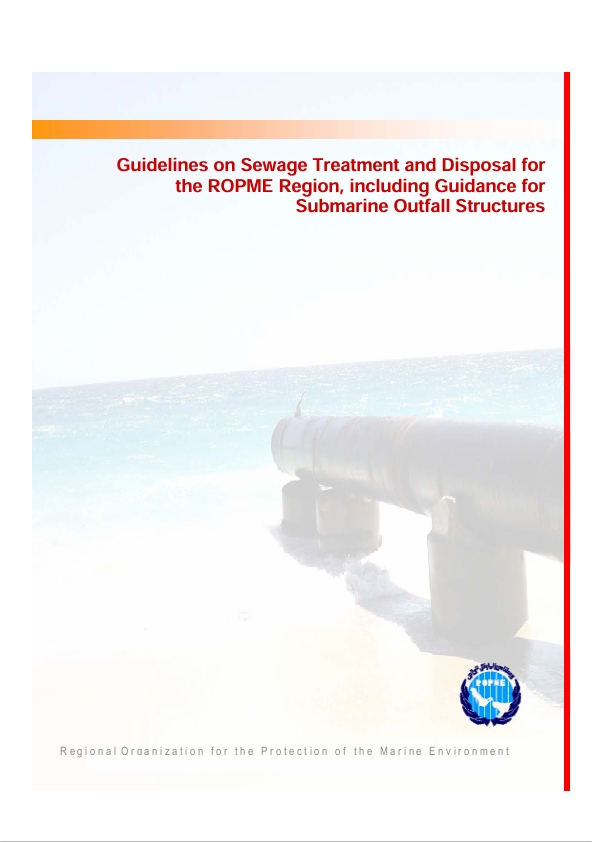


The ROPME Guidelines on Sewage Treatment and Disposal (2005) provide a comprehensive framework for managing municipal wastewater in the ROPME Sea Area (RSA), aiming to protect the marine environment from pollution caused by land-based activities. Recognizing the region’s semi-enclosed nature and limited water circulation, the guidelines stress that improper discharge of wastewater can have amplified and long-lasting environmental and public health impacts.
The document outlines an integrated approach to wastewater management, covering planning, design, treatment, disposal, and monitoring systems. It emphasizes the importance of understanding marine environmental conditions, including water quality, ecological sensitivity, and the assimilative capacity of receiving waters, before implementing wastewater solutions. Both point and non-point pollution sources—such as municipal sewage, industrial discharges, agricultural runoff, and urban stormwater—are identified as major contributors to marine degradation.
Key environmental risks from untreated or poorly treated wastewater include the spread of pathogens, eutrophication from excess nutrients, oxygen depletion, toxic contamination, and habitat destruction. To address these risks, the guidelines advocate for appropriate treatment technologies, adherence to effluent standards, and the use of submarine outfalls where suitable, all tailored to local environmental, economic, and social conditions.
The guidelines also highlight the need for environmental impact assessments (EIA), continuous monitoring, and enforcement mechanisms to ensure compliance and system effectiveness. Economic instruments and cost recovery mechanisms are recommended to support sustainable implementation.
A central theme is the adoption of a flexible, policy-driven framework involving multiple stakeholders—including governments, local authorities, and wastewater operators—guided by principles such as pollution prevention, the “polluter pays” approach, and sustainable resource use. Ultimately, the guidelines aim to support ROPME member states in developing efficient, context-specific wastewater management systems that safeguard marine ecosystems and public health while accommodating future development needs.