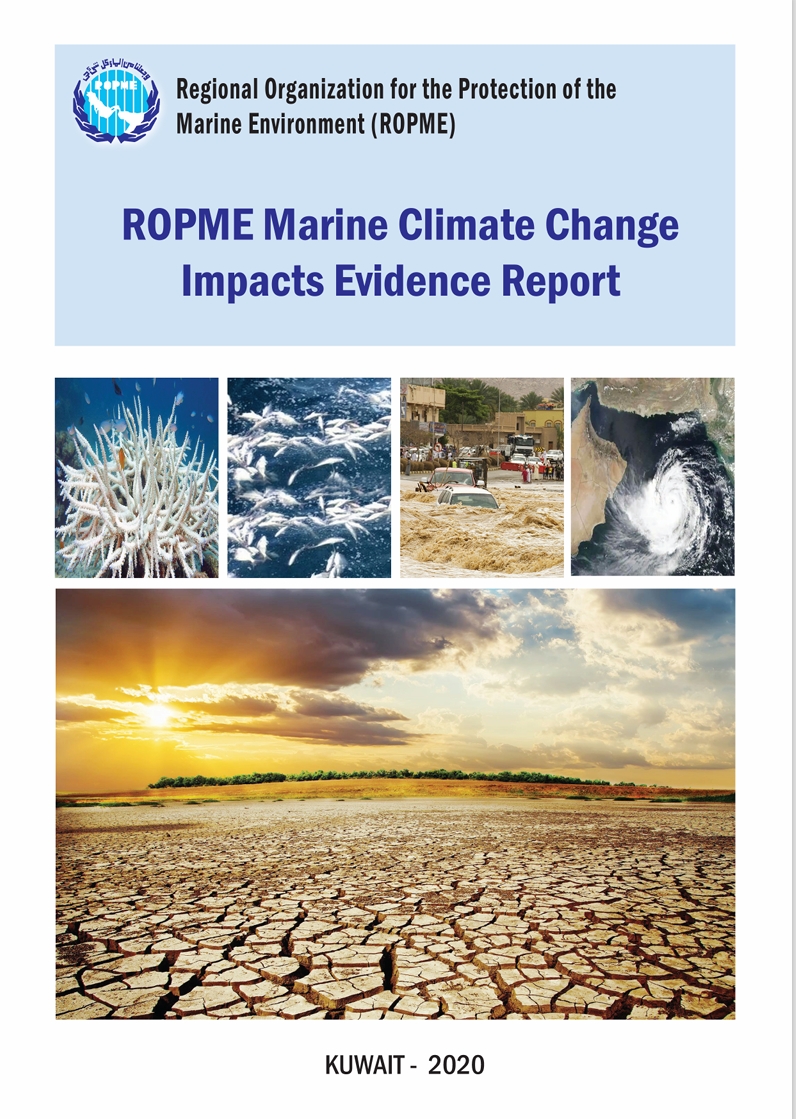


The ROPME Marine Climate Change Impacts Evidence Report (2020) provides a comprehensive scientific assessment of current and projected climate change impacts on marine and coastal ecosystems, communities, and industries within the ROPME Sea Area (RSA), which includes the waters of eight member states in the Gulf and surrounding regions. The RSA is one of the world’s most environmentally extreme and warmest marine regions, making it particularly vulnerable to climate change. Observed and projected changes include rising sea temperatures, increasing salinity, declining dissolved oxygen levels, ocean acidification, and sea-level rise. These physical and chemical changes are expected to intensify throughout the 21st century. Marine heatwaves are becoming more frequent and severe, with sea surface temperatures projected to rise by up to 4°C by 2100 under high-emission scenarios. Salinity levels are increasing due to high evaporation rates, reduced freshwater inflows, and desalination discharges, while dissolved oxygen levels are declining, leading to widespread hypoxia and expansion of oxygen minimum zones—some of the most intense globally. Ocean acidification is progressing due to increased CO₂ absorption, though regional data remain limited. Sea level is rising at rates comparable to or slightly above the global average, posing significant risks to coastal infrastructure and ecosystems.
Climate change, combined with human pressures, is causing severe degradation of key marine habitats, including coral reefs, mangroves, seagrasses, and saltmarshes. Coral reefs are particularly vulnerable to rising temperatures, with frequent bleaching events and expected long-term declines. Phytoplankton productivity—forming the base of the marine food web—is projected to decline overall, despite localized increases linked to upwelling. This may negatively impact fisheries and marine biodiversity. Additionally, harmful algal blooms and jellyfish outbreaks are expected to increase, disrupting ecosystems, fisheries, desalination plants, and public health. Coastal communities and infrastructure are highly exposed to sea-level rise, flooding, erosion, storms, and cyclones. Key sectors such as fisheries, aquaculture, oil and gas, shipping, desalination, and tourism are at increasing risk. Fish stocks and seafood production may decline due to habitat loss and changing environmental conditions. Desalination and power plants may face reduced efficiency due to warmer seawater and biofouling from jellyfish. Coastal protection services provided by ecosystems like mangroves and seagrasses are also threatened.
While the Inner RSA is less affected by tropical cyclones, the Middle and Outer RSA may experience increased cyclone intensity and frequency shifts. Dust storms—common in the region—may intensify, influencing marine productivity and air quality. Monsoon dynamics play a critical role in shaping ocean circulation, productivity, and regional climate variability. Despite available evidence, the RSA remains relatively understudied compared to other regions. Significant gaps exist in long-term monitoring, high-resolution climate projections, and understanding ecosystem responses to combined climate and human pressures. The report emphasizes the need for enhanced regional monitoring systems, high-resolution climate modeling, integrated climate adaptation and mitigation strategies, strengthened cooperation among member states, and alignment with international frameworks such as UNFCCC, CBD, and SDGs. It supports the development of a Regional Marine Climate Change Adaptation and Mitigation Strategy and contributes to identifying priority risks and actions for ensuring environmental sustainability and resilience in the RSA.