
Historical Overview
The evolution of Regional Cooperation for Marine Environmental Protection
The State of Kuwait, along with five other countries in the region, participated in the 1972 Stockholm Conference on the Human Environment. The conference resulted in a recommendation to establish the United Nations Environment Programme (UNEP), which was created during this international meeting
Stockholm Conference
The State of Kuwait, along with five other countries in the region, participated in the 1972 Stockholm Conference on the Human Environment. The conference resulted in a recommendation to establish the United Nations Environment Programme (UNEP), which was created during this international meeting. UNEP subsequently launched the Regional Seas Programme, which became responsible for administering agreements related to (18) regional seas. Among other recommendations was Recommendation No. (86), concerning the protection of marine environments in enclosed and semi-enclosed seas from pollution.
Beginning of 1973
In light of the growing concern among countries in the region regarding this issue, Kuwait took the initiative at the beginning of 1973 to call for a regional conference aimed at protecting the marine environment from pollution. Kuwait continued its efforts in advocating, preparing, and organizing this conference, particularly as its initiative received strong support from international and regional organizations, as well as from countries in the region.
March 30 – April 14, 1976
As a culmination of these sustained efforts, Kuwait submitted a draft resolution to the Governing Council of UNEP during its fourth session (Nairobi, 30 March–14 April 1976) concerning the convening of the Kuwait Regional Conference on the Protection of the Marine Environment from Pollution, with the aim of reaching a regional agreement for cooperation in protecting the marine environment in the region. The draft resolution was unanimously adopted.
December 6–9, 1976
The Kuwait Technical Preparatory Meeting (Kuwait, 6–9 December
1976), attended by technical experts from regional countries to develop an action plan for the protection and development of the marine environment and coastal areas from pollution.
January 24–29, 1977
The Bahrain Legal Preparatory Meeting (Bahrain, 24–29 January 1977), attended by legal experts from the region, which resulted in drafting the Kuwait Regional Convention for Cooperation on the Protection of the Marine Environment from Pollution.
June 13–20, 1977
The Third Technical Preparatory Meeting (Nairobi, 13–20 June 1977), attended by experts, specialists, technicians, and legal advisors, to finalize recommendations on the general framework of the Kuwait Regional Convention at the ministerial level.
Kuwait Convention
Following fruitful technical, legal, and administrative efforts by member states and relevant international organizations—foremost among them UNEP—the Kuwait Regional Convention (1978) and its associated Emergency Protocol were signed on 24 April 1978. These instruments were subsequently ratified by all member states, with five states depositing their instruments of ratification at the Kuwaiti Ministry of Foreign Affairs, in its capacity as the depository state. The Convention entered into force on 1 July 1979.
UNEP administered the Kuwait Action Plan from April 1978 to April 1981. The Executive Director of UNEP presented a report on this period during the first meeting of the Organization’s Council, held in April 1981 at the invitation of Kuwait, in accordance with Article 3(b) of the 1978 Kuwait Convention
Marine Emergency Mutual Aid Centre (MEMAC)
The first meeting of the Organization’s Council was held from 21–24 April 1981, chaired by Dr. Abdulrahman Abdullah Al-Awadi, Minister of Public Health of Kuwait, in his capacity as representative of the host country and Acting Executive Secretary. Administrative and financial matters were discussed to facilitate the Organization’s operations. During this meeting, the Council decided to establish the Marine Emergency Mutual Aid Centre (MEMAC) effective July 1981
1984
At the Council’s third meeting in 1984, it was decided to grant an annual award on Regional Environment Day to distinguished individuals and institutions from member states—such as scientists, journalists, writers, and research institutions—who have made outstanding contributions to marine environmental protection.
Celebrating Regional Environment Day
To facilitate implementation, UNEP initially operated from the Regional Seas Activity Centre in Geneva as a temporary headquarters until relocating to the interim secretariat headquarters in Kuwait in 1981. Following the establishment of the Organization’s permanent secretariat, it was headquartered at the Dasman Complex in Kuwait City.
The first meeting of the Organization’s Council was held from 21–24 April 1981, chaired by Dr. Abdulrahman Abdullah Al-Awadi, Minister of Public Health of Kuwait, in his capacity as representative of the host country and Acting Executive Secretary. Administrative and financial matters were discussed to facilitate the Organization’s operations.
1989–1990
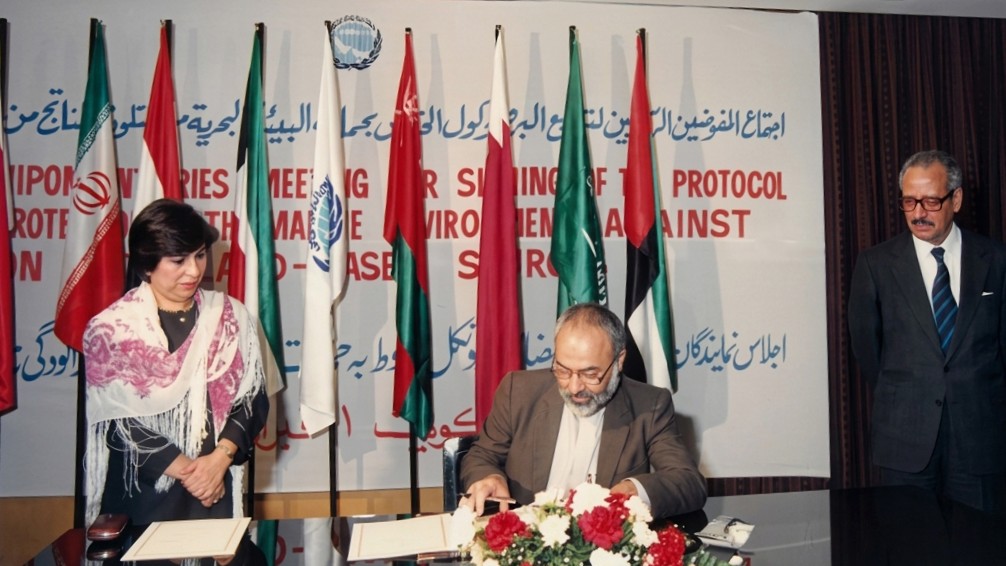
Protocol concerning marine pollution from exploration and exploitation of the continental shelf (signed 29 March 1989; entered into force 17 February 1990).
1990–1993
Protocol for the Protection of the Marine Environment from Land-Based Sources (signed 21 February 1990; entered into force 2 January 1993).
Timeline Expeditions
First major marine expedition, Mt. Mitchell Expedition (1992): Conducted in cooperation with NOAA and IOC to assess environmental damage following regional wars, including major oil spills and oil well fires during the Gulf War
Umitaka Maru Expeditions (1993–1994): Conducted under ROPME/UNEP/IOC/Japan to monitor environmental changes.
Remote Sensing Unit (RSU)
Established in 1996, the RSU uses satellite data to monitor marine environmental conditions, detect oil spills, harmful algal blooms, dust storms, and other hazards.
A satellite receiving station was installed in 2003 and upgraded in 2018 at ROPME headquarters in Granada, Kuwait.
.
ROPME Sea Area as a Special Area
Due to heavy maritime traffic exceeding 50,000 vessels annually and increasing environmental pressures, ROPME advocated for special protection measures. The International Maritime Organization (IMO) designated the ROPME Sea Area as a Special Area under MARPOL, effective 1 August 2008..
2016
Following extensive marine surveys, ROPME established an information bank in 2016 to store environmental samples, including biological remains and sediments, for future comparative studies.
2018
Headquarters relocated to Granada, Kuwait, built according to the highest international standards.
RSU upgraded with advanced satellite systems.
Present
ROPME continues to lead regional cooperation on marine environmental protection. It manages specialized centres like MEMAC, oversees monitoring programs through the Remote Sensing Unit, and programs such as the Information Bank and satellite monitoring. ROPME remains a vital hub for safeguarding the ROPME Sea Area against pollution and supporting sustainable development across member states.
ROPME Environment Award
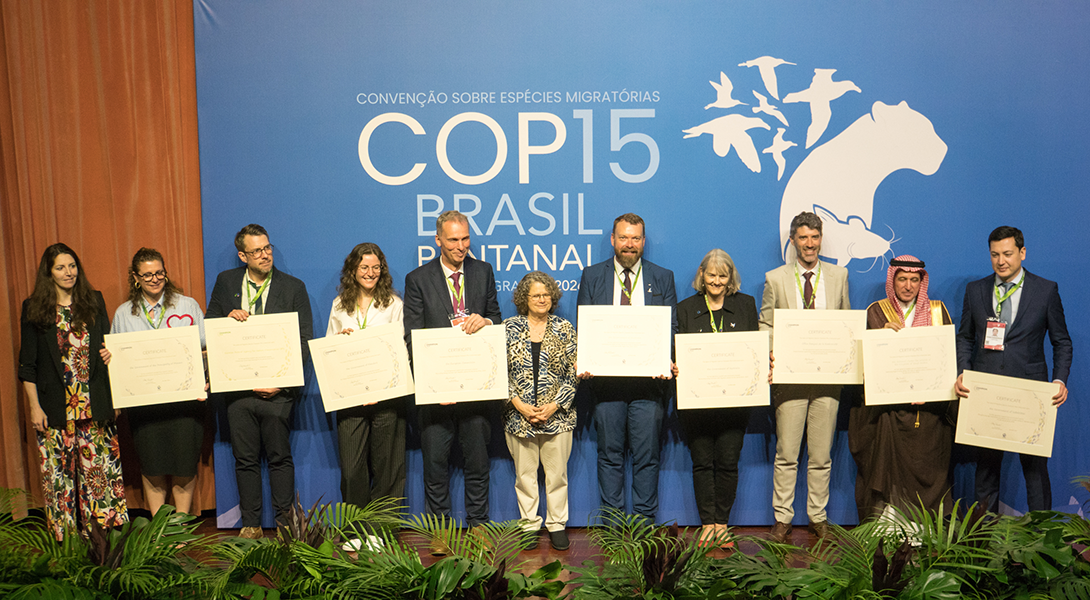
At the Council’s third meeting in 1984, it was decided to grant an annual award on Regional Environment Day to distinguished individuals and institutions from member states—such as scientists, journalists, writers, and research institutions—who have made outstanding contributions to marine environmental protection.
Objectives of the Award:
Promote environmental awareness across member states.
Encourage public interest in environmental protection, particularly marine conservation, in line with the Kuwait Convention and its protocols.
Award Recipients:
Captain Ahmed bin Saeed Al Busaidi (Sultanate of Oman)
Institute of Research – Water Resources and Environment Department, University of Petroleum and Minerals (Saudi Arabia)
(Joint award)
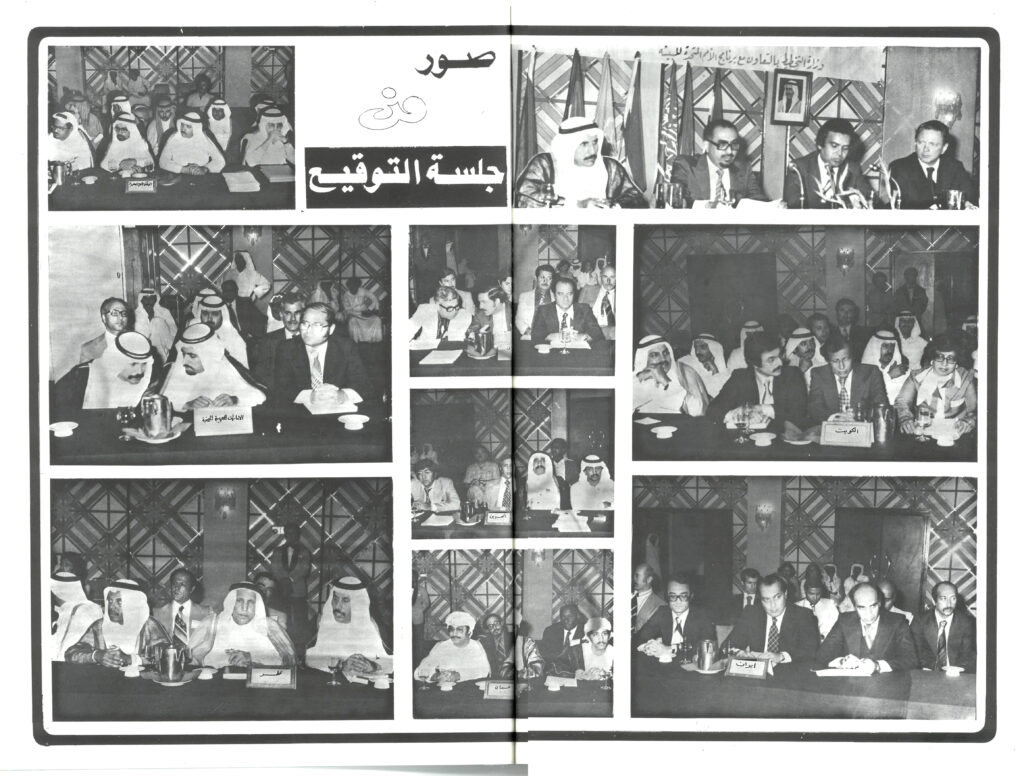
Protocols Developed After the 1978 Kuwait Convention
| Year | Protocol | Details |
| 1989 | Protocol concerning marine pollution from exploration and exploitation of the continental shelf | Signed 29 March 1989; entered into force 17 February 1990 |
| 1990 | Protection of the Marine Environment from Land-Based Sources | Signed 21 February 1990; entered into force 2 January 1993 |
| 1998 | Protocol on the Control of Transboundary Movement of Hazardous Wastes | Signed 17 March 1998; In Tehran, entered into force 23 May 2005 |
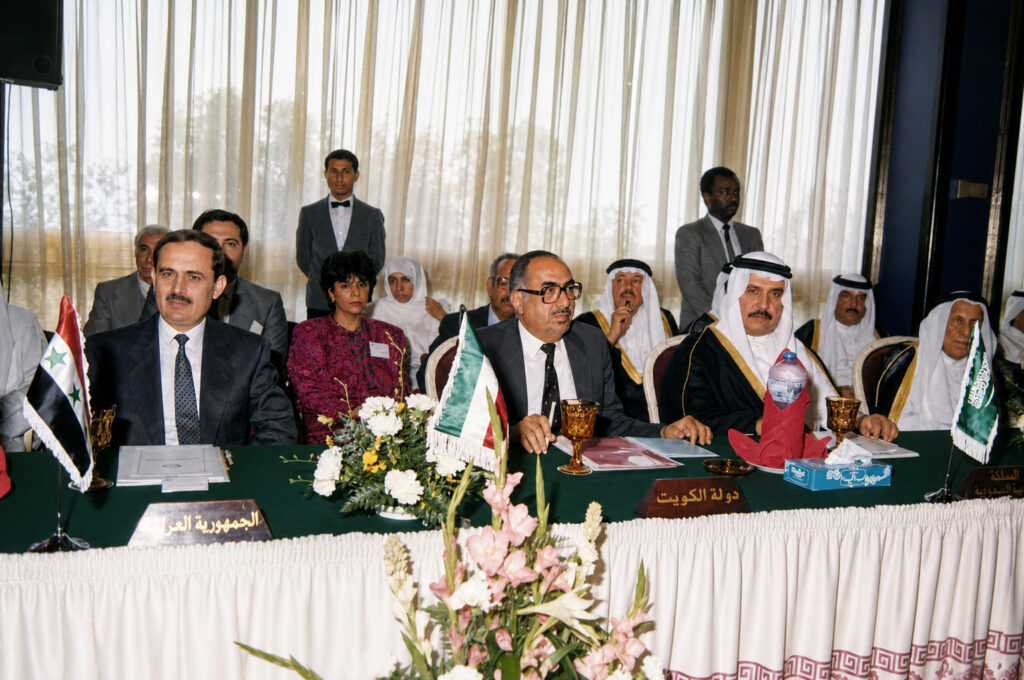
Protocol concerning marine pollution resulting from exploration and exploitation of the continental shelf- 1989