
The Regional Conference of Plenipotentiaries on the Protection and Development of the Marine Environment and the Coastal Areas of Bahrain, I.R. Iran, Iraq, Kuwait, Oman, Qatar, Saudi Arabia, and the United Arab Emirates was convened in Kuwait from 15-23 April 1978. The Conference adopted on 23 April 1978 three main documents:
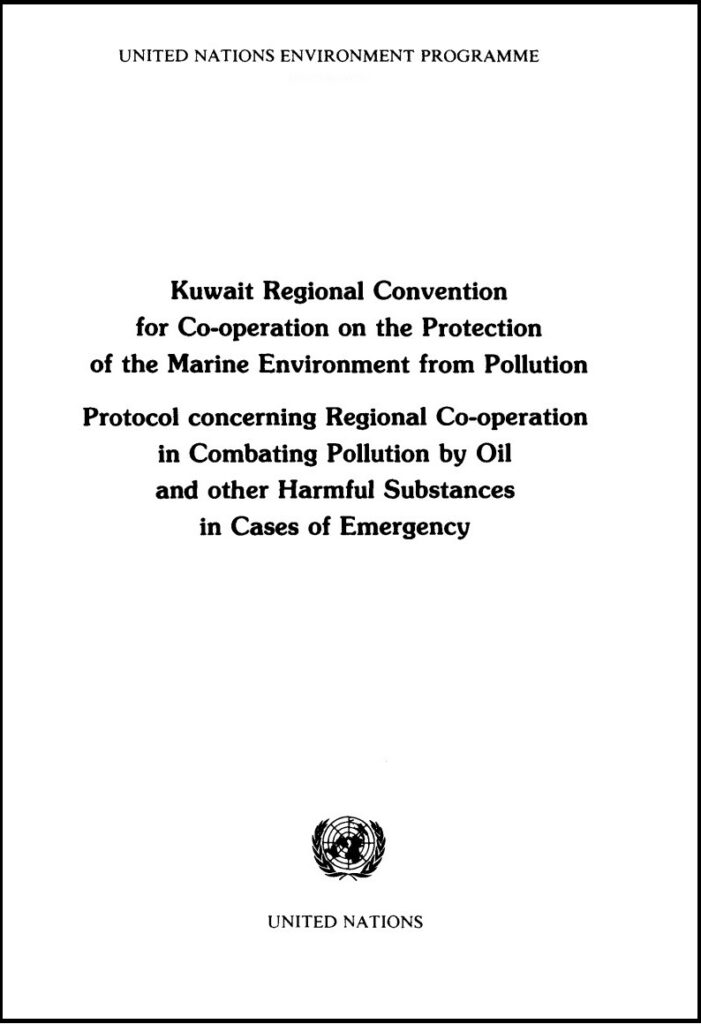
– The Kuwait Action Plan (KAP) for the Protection and Development of the Marine Environment and the Coastal Areas.
– The Kuwait Regional Convention for Co-operation on the Protection of the Marine Environment from Pollution.
– The Protocol concerning Regional Co-operation in Combating Pollution by Oil and Other Harmful Substances in Cases of Emergency.
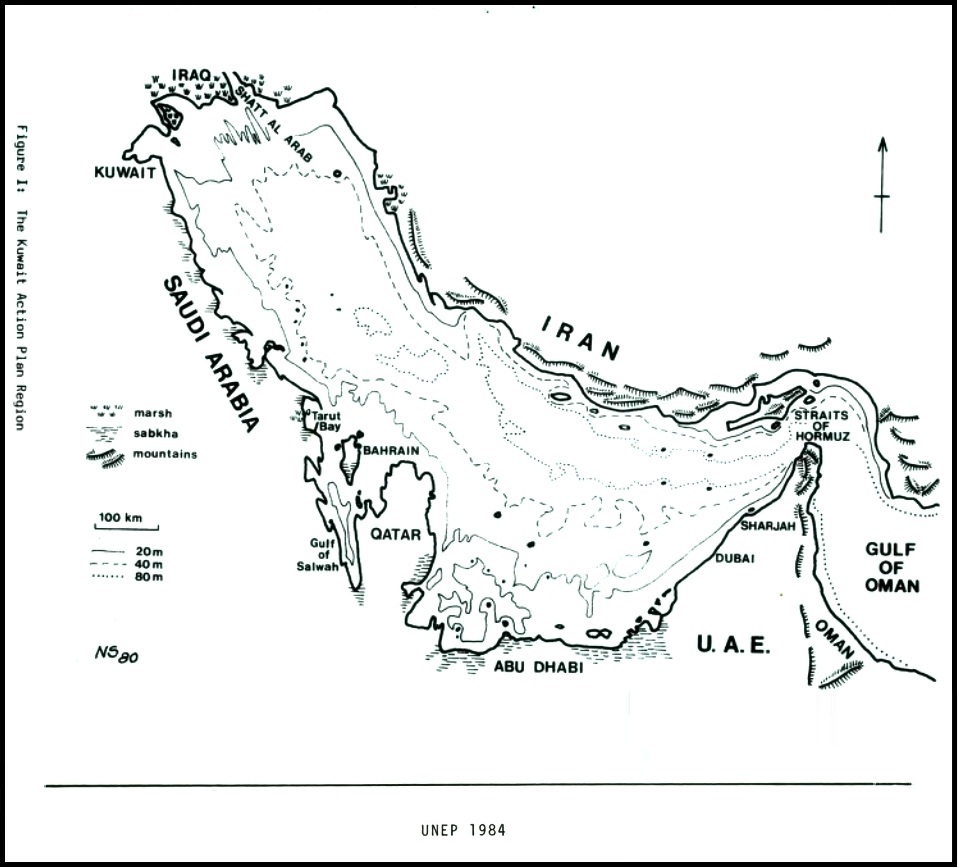
The Kuwait Action Plan Region term was commonly used to refer to the area we currently name the Inner ROPME Sea Area and the western part of the Sea of Oman (Middle ROPME Sea Area). This Part (as shown in this outdated map) was given a higher importance due to the degree of damage that was happening within it, in comparison with the Sea of Oman and the Arabian Sea.
ROPME Sea Area
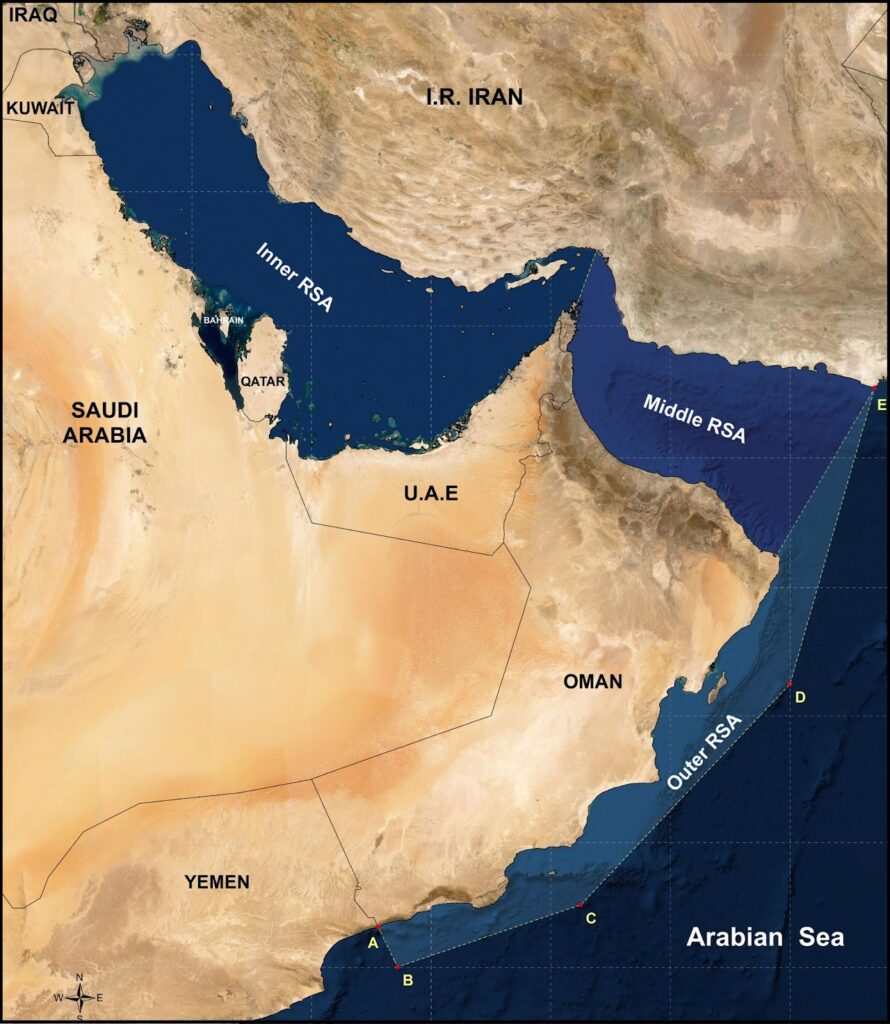
The term “ROPME Sea Area” was coined by Plenipotentiaries of the Member States to achieve unanimity in denoting the area covered by the Kuwait Regional Convention of 1978. It reflects the goodwill of the Member States to cooperate in protecting their shared marine environment, despite existing geopolitical boundaries.
Geographic boundaries
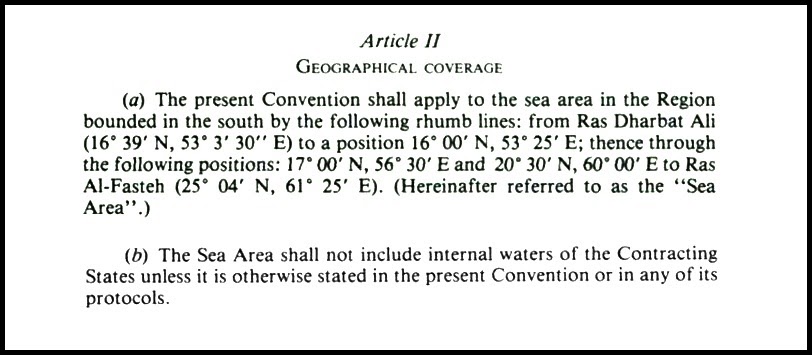
According to Article II of the Kuwait Regional Convention, the ROPME Sea Area (RSA) is defined as extending between the following geographic latitudes and longitudes, respectively:
A- 16°39’N, 53°3’30”E
B- 16°00’N, 53°25’E
C- 17°00’N,56°30’E
D- 20°30’N, 60°00’E
E- 25°04’N, 61°25’E
Regional Seas Programme
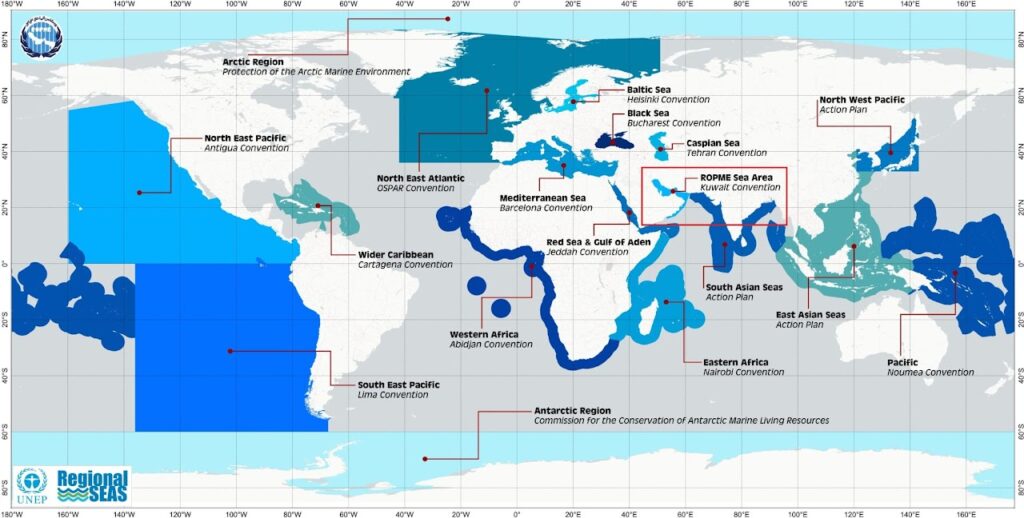
The UNEP Regional Seas Programme is a global initiative launched in 1974 to promote the sustainable management and protection of the marine and coastal environment through regional cooperation. Today, the programme includes 18 Regional Seas (presented in the map above), each addressing the specific challenges and priorities of their marine areas. While many of these seas are administered directly by UNEP, ROPME is independently managed and operates as a self-governing body, established by the Member States through the Kuwait Regional Convention.
Although ROPME is not administratively run by UNEP, it actively participates in the global environmental community and maintains full alignment with international marine protection goals, including the Sustainable Development Goals (SDGs), particularly SDG14 (Life Below Water). What sets ROPME apart is its tailored regional strategic directions, which address the unique characteristics of the RSA while remaining committed to the shared vision of healthy oceans worldwide.