
Environmental Pressures
The ROPME Sea Area (RSA) faces a range of environmental pressures that explain the need for ROPME to exist as a regional coordinating body. These challenges threaten marine biodiversity, food security, and the livelihoods of coastal communities.
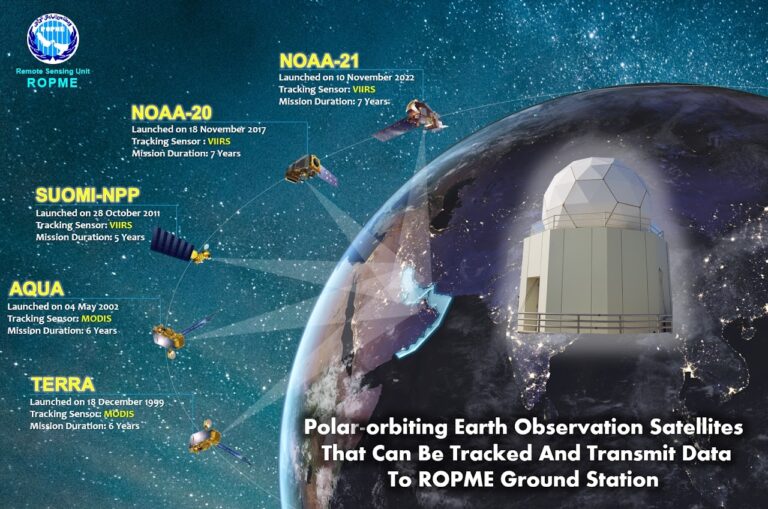
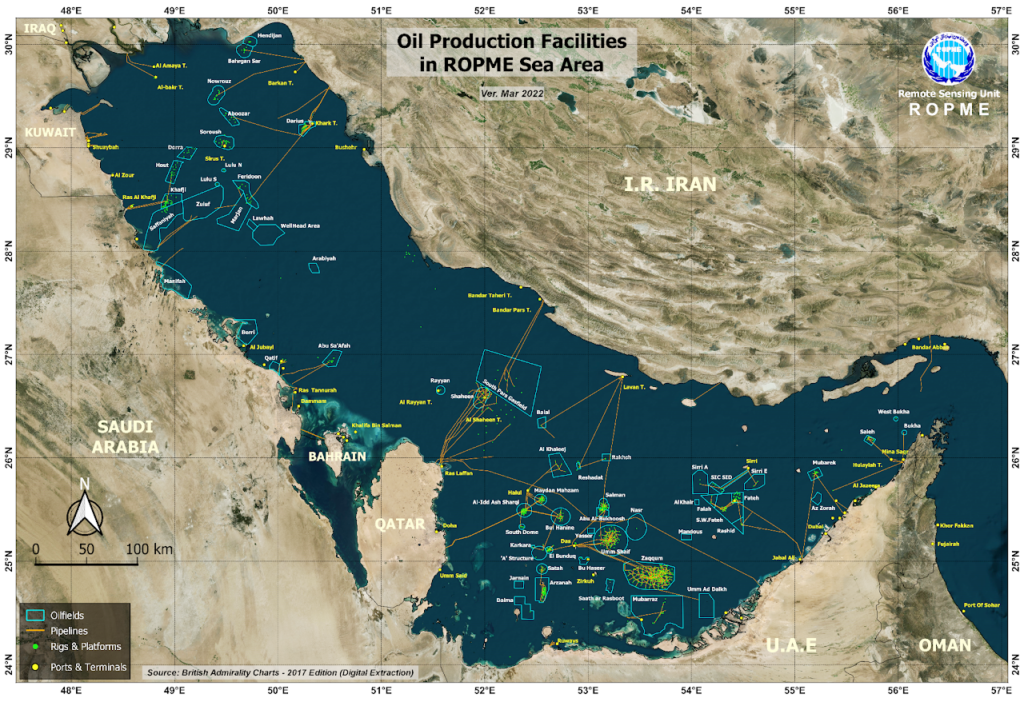
With over 65 active oilfields and 865 offshore rigs, linked by an extensive 7,000 km network of pipelines across the waters of the eight Member States, the ROPME Sea Area (RSA) stands among the world’s busiest oil-producing and exporting regions. This intense activity brings economic importance but also heavy environmental pressure. Chronic oil leaks, industrial effluents, and large-scale coastal development place continuous stress on the marine ecosystem, threatening the health of coral reefs, seagrass meadows, and mangrove forests that are vital for biodiversity and coastal protection. In just the first half of 2024, ROPME’s Remote Sensing Unit detected and documented over 150 oil spills through satellite monitoring, together covering more than 3,600 km² of sea surface. These figures underscore the scale of the challenge and the need for vigilant monitoring to safeguard the region’s marine environment.
Pollution from oil and industry
With some of the busiest shipping lanes globally, especially the Strait of Hormuz, RSA faces significant environmental risks from oil spills, ship-based pollution, and invasive species introduced through ballast water, all of which disrupt native ecosystems.
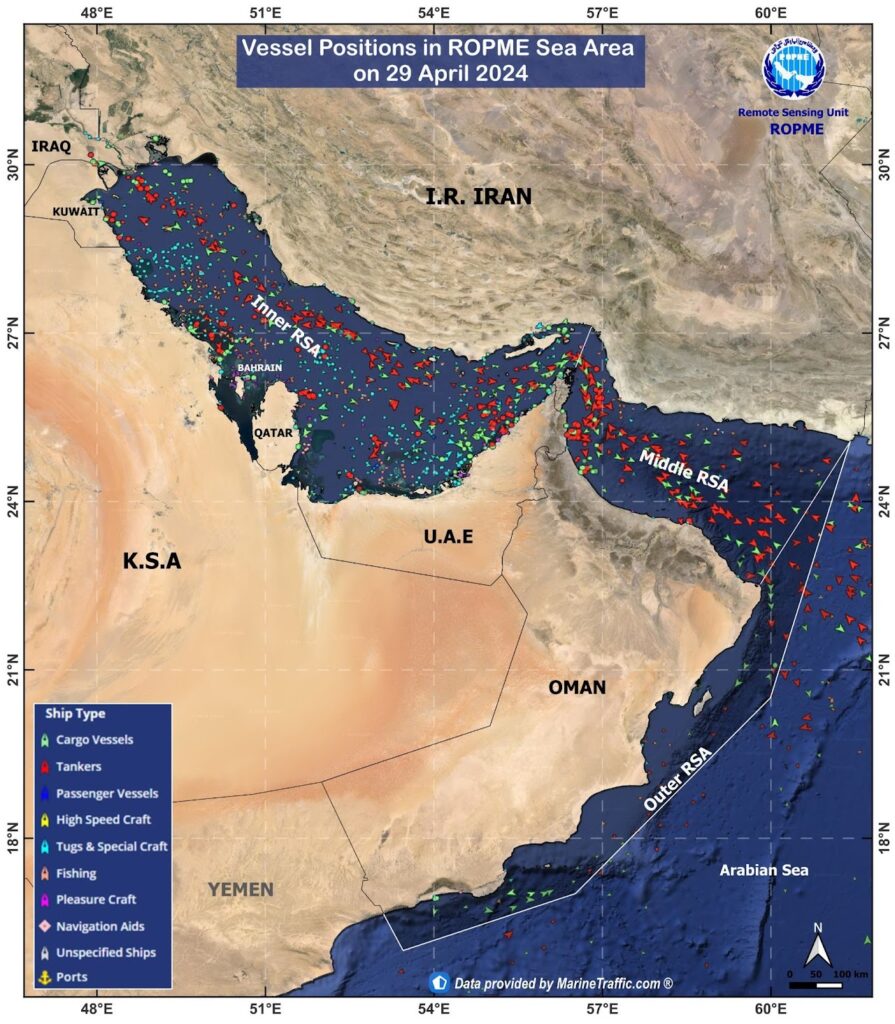
Vessel Positions in ROPME Sea Area on 29 April 2024
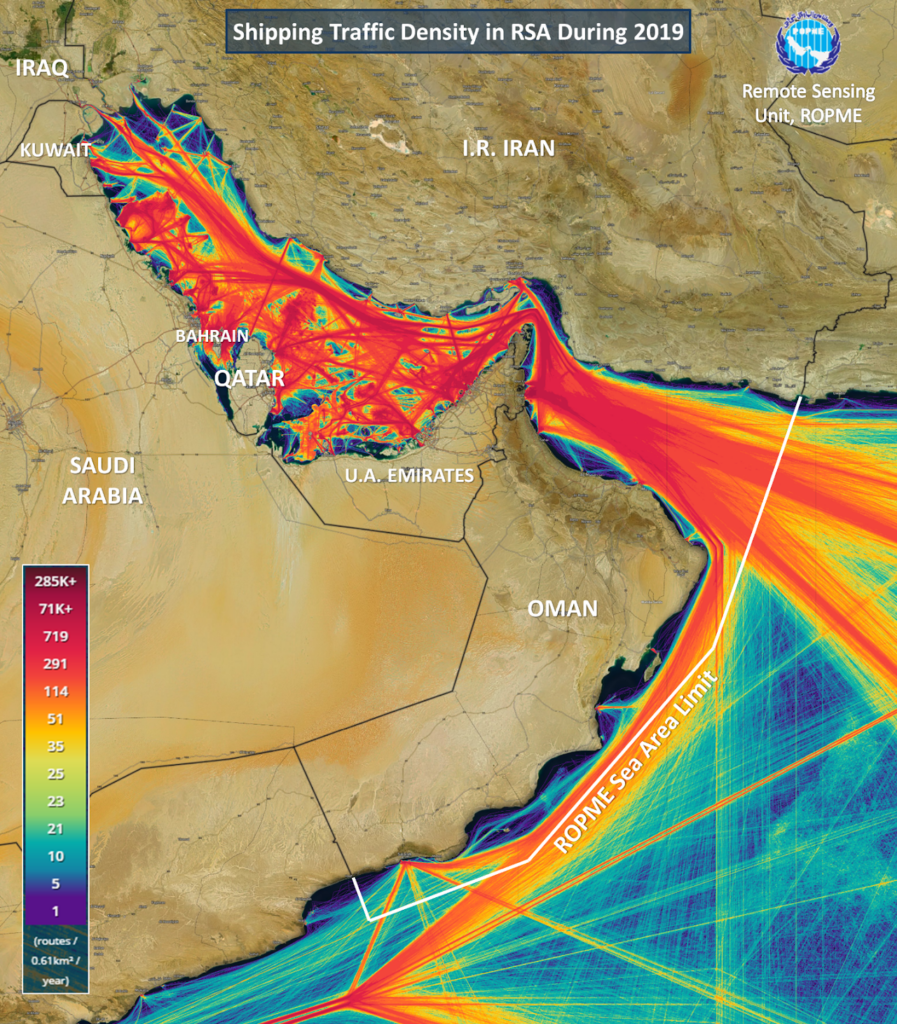
Shipping Traffic Density in RSA During 2019
40,000+
Annual Hormuz Transit
11,000+
Internal RSA Circulation
50,000+
Estimated Total Annual Traffic
Every day, around 115 vessels (≥1,000 GT) transit the Strait, totaling more than 40,000 vessels annually (Office for National Statistics, Wikipedia).
But that number doesn’t account for additional traffic inside the RSA itself. Automatic Identification Systems (AIS) show that an extra 11,000–12,000 vessels circulate within the IRSA and are bound for ports like Fujairah or engaging in regional transport without passing through Hormuz.
In total, the annual vessel circulation in the RSA likely surpasses 50,000 vessels, underscoring the immense pressure on its marine environment and the critical need for vigilant monitoring and regulation.