
The Maritime Gateway of the Gulf… A Geological and Strategic Story Shaped by Earth’s Movements Over Millions of Years
The Strait of Hormuz is considered one of the world’s most important and sensitive maritime passages, not only because it serves as a major artery for global energy trade, but also because it represents a unique geological phenomenon formed over millions of years through continental plate collisions and major natural transformations that reshaped the region.
The strait connects the Gulf with the Gulf of Oman and the Indian Ocean, forming the only maritime outlet for the Gulf states to open waters. This has made it a vital hub for international navigation, trade, and energy, as well as a permanent focus of political, economic, and environmental attention.
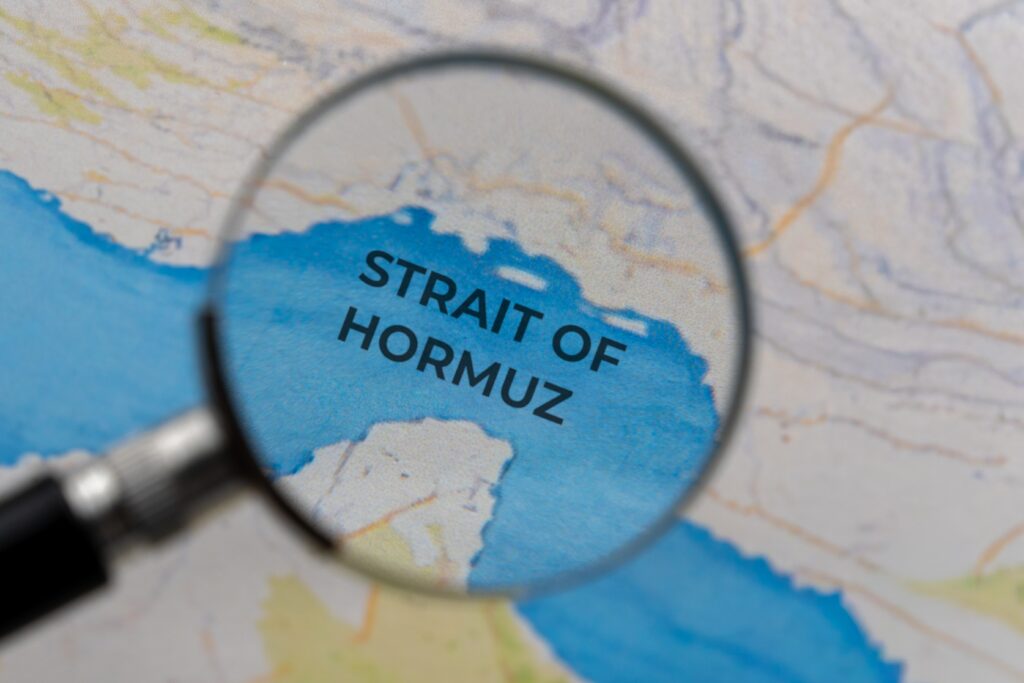
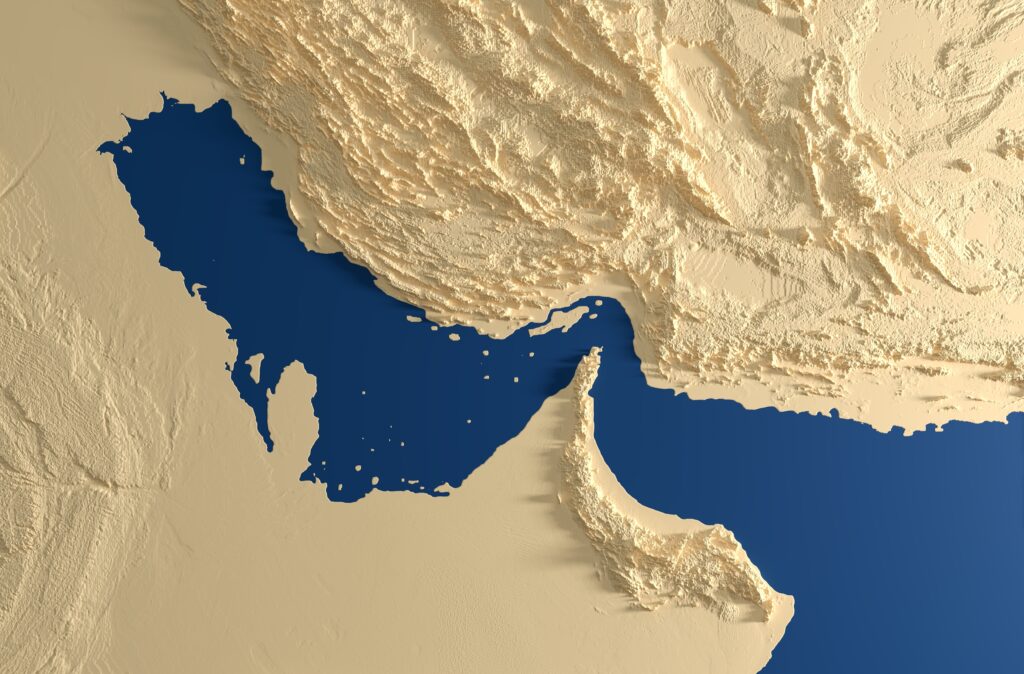
The Strait of Hormuz lies between the southern coast of Iran to the north and the Omani Musandam Peninsula to the south. It extends approximately 167 kilometres in length, while its width ranges between 39 and 96 kilometres depending on the location.
The strait is deep enough to accommodate the world’s largest oil tankers and liquefied natural gas carriers, with depths ranging in some areas between 60 and 100 meters, making it one of the busiest maritime corridors globally.
Maritime traffic is managed under an international traffic separation scheme, where separate lanes are designated for inbound and outbound vessels in order to reduce collision risks and ensure smooth maritime movement.
The Beginning of the Story 35 million Years Ago
The formation of the Strait of Hormuz began approximately 35 million years ago due to the gradual convergence between the Arabian Plate to the south and the Eurasian Plate to the north, which were once separated by an ancient ocean known as “Tethys.”
As tectonic plate movement continued at a rate of nearly 20 millimetres annually, the ancient ocean gradually closed, leading to the emergence of one of the world’s most geologically active and complex regions.
The Birth of the Zagros Mountains
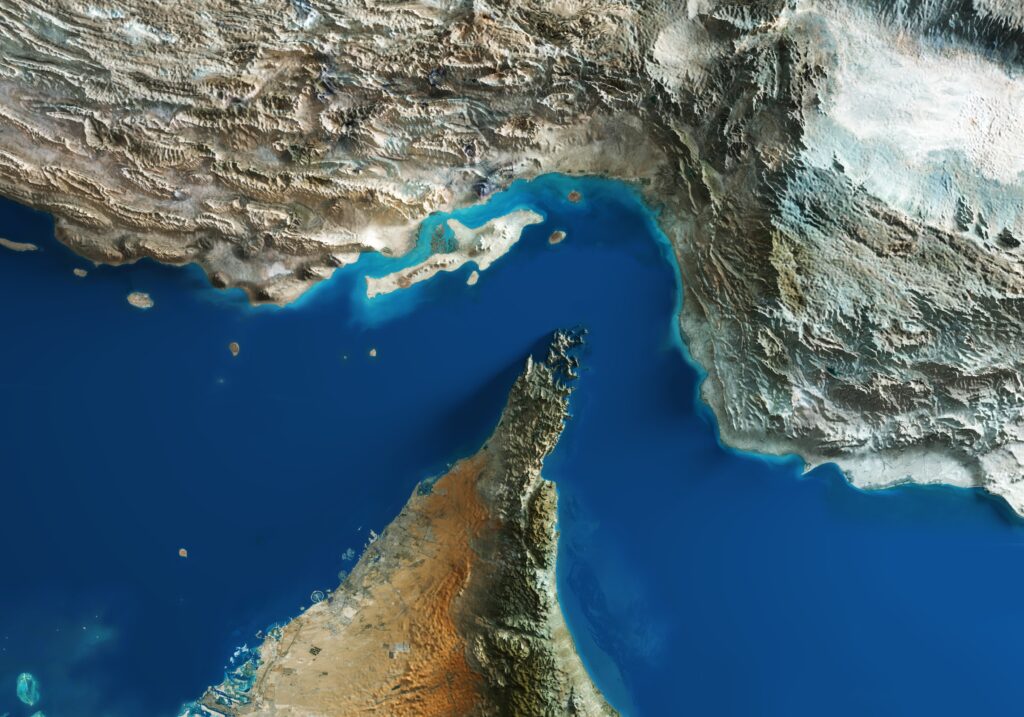
The continental collision caused compression and uplift of the Earth’s crust, resulting in the formation of the Zagros Mountain Range, stretching across Iran, Iraq, and Türkiye for approximately 1,500 kilometers.
This mountain chain is regarded as one of the clearest global examples of continental plate collision, where folds, fractures, and tectonic deformations caused by ongoing tectonic pressure remain clearly visible today.
The Formation of the Gulf and the Strait
As massive mountain loads accumulated from the collision process, sections of the Arabian Plate subsided, creating a vast geological depression that gradually filled with water, forming the Gulf and the Strait of Hormuz.
The rise in sea levels following the end of the last Ice Age around 20,000 years ago also played a major role in flooding the region, as global sea levels rose by nearly 100 meters over a relatively short geological period.
Scientists believe that the present-day shape of the strait was completed during the Late Miocene Epoch approximately 10 to 15 million years ago.
Third: An Open Geological Laboratory on Earth’s Surface
The region surrounding the Strait of Hormuz is considered one of the richest geological areas in the world, as its terrain reveals successive stages of Earth’s history.
Ophiolite Rocks
The mountains of Oman and Musandam contain one of the largest and clearest ophiolite formations worldwide. These are sections of oceanic crust and the Earth’s upper mantle that were thrust onto land due to tectonic movements.
These rocks include basalt, gabbro, pillow lava formations, and peridotite rocks rich in olivine and pyroxene minerals. These formations represent a “natural geological museum” that allows direct study of the Earth’s deep layers.
Salt Domes
The region is also famous for widespread salt domes dating back to ancient geological eras, where masses of salt rose from deep underground through sedimentary rocks to create unique landscapes.
These domes are particularly visible on Hormuz Island, Qeshm Island, and Larak Island. In some areas, the salt formations resemble “rock rivers” flowing down slopes.
Musandam Peninsula
The Musandam Peninsula represents one of the most geographically distinctive areas in the region, extending into the sea as a rugged mountainous arc characterized by drowned valleys, marine inlets, towering mountains directly connected to the sea, and steep rocky cliffs.
Musandam forms the primary contact point between the Arabian Plate and the Central Iranian Plate, giving it exceptional geological and strategic importance.
Fourth: The Strait of Hormuz and Global Energy
The Strait of Hormuz represents one of the world’s most important energy arteries, with enormous quantities of oil and liquefied natural gas passing through it annually.
Key Indicators:
- Between 20% and 25% of globally traded seaborne oil passes through the strait.
- Approximately one-third of the world’s liquefied natural gas trade transits through it.
- Dozens of massive oil tankers cross the strait daily toward Asian and European markets.
- Oil exports from Saudi Arabia, Kuwait, Iraq, the UAE, Qatar, and Iran rely heavily on the strait.
- Asian markets, particularly China, India, Japan, and South Korea, are among the largest importers of energy transported through the strait.
Fifth: Strategic Importance of the Strait
The Strait of Hormuz is classified as one of the world’s most important maritime chokepoints, as any disruption within it can immediately impact:
- Global oil prices
- Maritime trade movement
- International supply chains
- The global economy
For this reason, the strait has remained a constant center of geopolitical tensions and regional and international competition.
Sixth: Maritime Navigation and Legal Framework
Navigation in the strait depends on a “traffic separation scheme,” whereby inbound and outbound vessels use designated lanes separated by buffer zones.
A significant portion of navigation routes passes through the territorial waters of both Iran and the Sultanate of Oman, while transit movements are governed by international law and the United Nations Convention on the Law of the Sea (UNCLOS).
Over past decades, the strait has witnessed repeated legal and political discussions concerning freedom of navigation, transit passage rights, military vessel movement, and territorial water boundaries.
Seventh: The Strait at the Heart of International Events
The Strait of Hormuz has witnessed numerous military and political events throughout its modern history, including:
- The Tanker War of the 1980s
During the Iran-Iraq War, oil tankers and commercial vessels were subjected to reciprocal attacks in what became known as the “Tanker War.”
- The Downing of the Iranian Airliner in 1988
An Iranian passenger aircraft was shot down over the strait, resulting in the deaths of 290 people.
- Recurring Maritime Tensions
The region has witnessed confrontations, vessel and tanker seizures, and escalating tensions among regional and international powers.
- The Strait of Hormuz Crisis of 2026
In 2026, unprecedented tensions emerged following escalating regional military confrontations, leading to navigation disruptions and heightened global concerns over energy security.
Eighth: The Geological Future of the Strait of Hormuz
The region remains geologically active today, as the Arabian Plate continues moving northward toward the Eurasian Plate at a rate of approximately 2 to 3 centimeters annually.
Scientists believe that this ongoing collision may, over millions of years, lead to increased mountain folding, uplift of the Earth’s crust, gradual narrowing of maritime passages, and major transformations in the shape of the Gulf and surrounding regions.
The region is therefore expected to remain one of the world’s most geologically active and complex environments.
Ninth: The Strait of Hormuz Within the Framework of Regional Environmental Concern
In addition to its economic and strategic significance, the Strait of Hormuz represents an extremely sensitive part of the regional marine environment due to:
- Intense maritime traffic
- Continuous passage of oil and gas tankers
- Extensive industrial and energy activities
- Important marine and coastal biodiversity
The importance of regional cooperation in protecting the strait’s environment is highlighted through:
- Enhancing maritime safety
- Reducing oil and marine pollution
- Developing environmental emergency response systems
- Supporting geological and marine research
- Protecting coastal and marine ecosystems
The Strait of Hormuz remains an exceptional model that combines geography, geology, energy, politics, and environmental significance, standing as one of the most influential maritime passages in the modern world