

“A growing threat to marine ecosystems, biodiversity, and the communities that depend on them.“
What is Marine Desertification?
Marine desertification is the rapid degradation of productive marine ecosystems, transforming them into nutrient-poor areas with low biodiversity. Similar to desertification on land, it results in the severe loss of marine vegetation and biological resources, reducing the ability of ecosystems to provide essential environmental services and support coastal communities.
Key Drivers
- Climate change and global warming
- Marine pollution
- Coral bleaching
- Habitat destruction
- Overfishing
- Eutrophication and oxygen depletion
These pressures collectively accelerate the degradation of marine habitats and biodiversity.
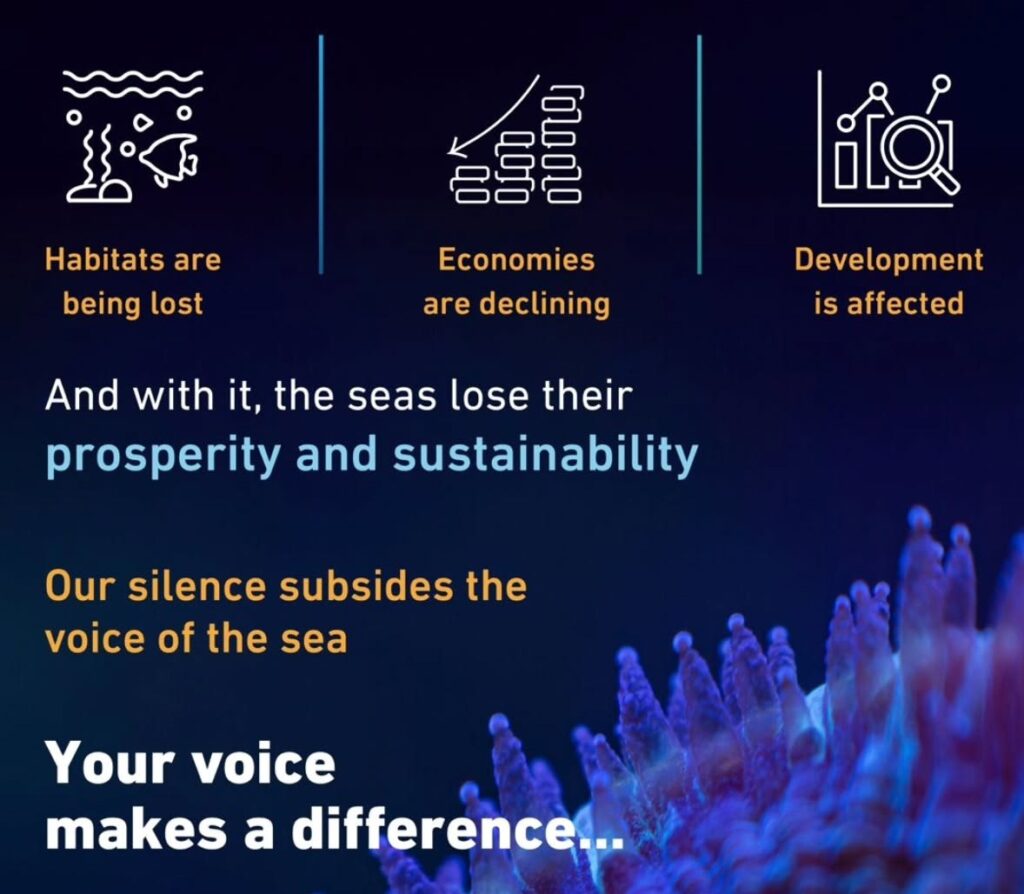
Environmental & Socioeconomic Impacts
- Loss of marine biodiversity
- Decline of fisheries and threats to food security
- Reduced biological productivity
- Loss of vital ecosystem services, including carbon sequestration and climate regulation
These impacts affect both marine ecosystems and the livelihoods of coastal communities.
How Can We Combat It?
- Restore mangrove ecosystems
- Rehabilitate coral reefs
- Expand marine protected areas
- Prevent pollution, especially plastic waste
- Apply modern environmental management practices
- Implement international biodiversity agreements
Protecting and restoring marine habitats is essential for maintaining healthy oceans and resilient coastal ecosystems.
Why It Matters
Healthy marine ecosystems regulate the climate, support biodiversity, provide food and natural resources, and sustain millions of people. Raising awareness of marine desertification is a key step toward protecting these invaluable ecosystems for future generations.