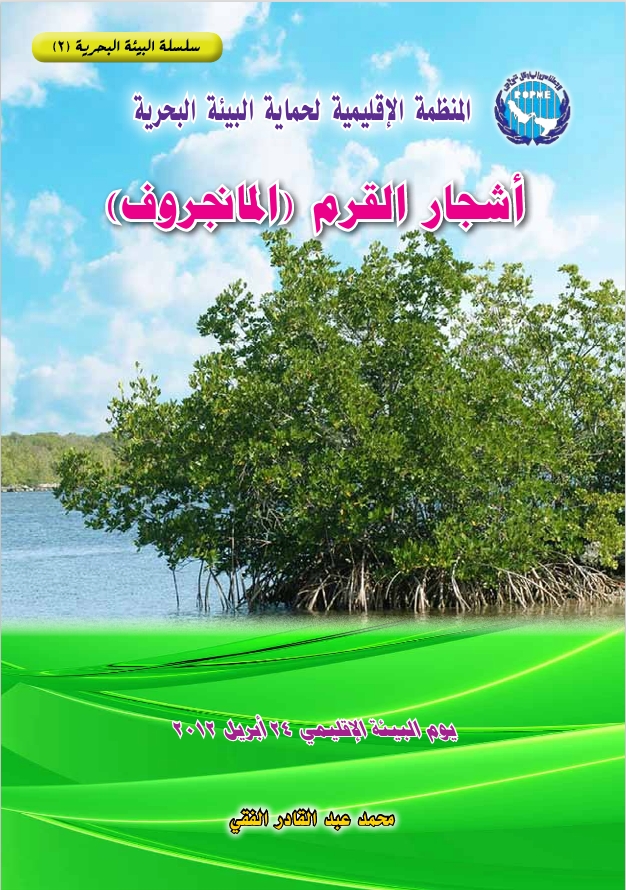


This special publication, issued on the occasion of Regional Environment Day (April 24, 2012), highlights the significance of mangrove trees as one of the most vital and productive coastal ecosystems. It provides a comprehensive overview of their environmental, historical, scientific, and economic importance, with particular focus on their status within the Regional Organization for the Protection of the Marine Environment (ROPME) Sea Area.
The content begins by portraying mangroves as critical habitats that support a wide range of marine and terrestrial life. They offer safe breeding grounds and feeding areas for fish, crustaceans, and birds, while also playing a key role in shoreline protection, reducing erosion, improving water quality, and enhancing coastal environmental stability. Mangroves also provide direct benefits to humans through various uses, including fodder, timber, and industrial applications.
The publication presents a historical perspective, tracing mangroves back ملايين of years and outlining their distribution in tropical and subtropical regions, along with their uses in ancient civilizations. It further explains the unique biological characteristics of mangroves, such as their ability to tolerate high salinity, adapt to harsh environmental conditions, and develop specialized root systems for aeration and soil stabilization.
It reviews global mangrove diversity, with emphasis on species found in the Arab region, particularly Avicennia marina (grey mangrove), the dominant species in the ROPME Sea Area. The text also explains the ecological requirements for mangrove growth and reproduction, including temperature conditions, sediment characteristics, and tidal dynamics.
A major section is dedicated to the wide-ranging benefits of mangroves, including biodiversity support, enhancement of fisheries, coastal protection, water purification, and contributions to ecological balance. In addition, it highlights their economic, industrial, tourism, and educational value.
At the same time, the publication warns of the significant threats facing mangroves, both natural—such as climate variability and reduced freshwater input—and human-induced, including coastal reclamation, urban expansion, oil pollution, solid and liquid waste disposal, overgrazing, and destructive practices. These pressures have led to a notable decline in mangrove coverage worldwide, including within the ROPME region.
The document also outlines ongoing efforts by member states to restore and protect mangroves through reforestation programs and the establishment of protected areas, emphasizing the importance of regional cooperation in safeguarding this critical ecosystem.
The publication concludes with a strong call for collective action to conserve mangroves as an invaluable natural resource and a cornerstone of sustainable coastal and marine environments for future generations.