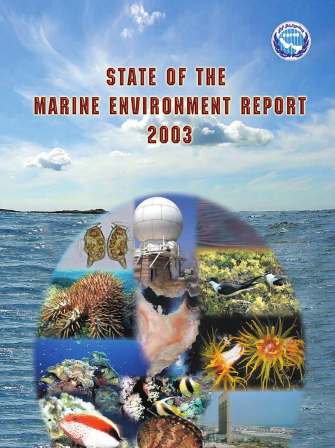


The Regional Report of the State of the Marine Environment (SOMER), published by the Regional Organization for the Protection of the Marine Environment (ROPME) in 1999, represents the first comprehensive scientific assessment of the marine and coastal environment within the ROPME Sea Area (RSA). Prepared in accordance with the Kuwait Regional Convention, the report evaluates the environmental condition of the region, identifies major sources of pollution and ecological degradation, and proposes strategic actions for environmental protection and sustainable development.
The report highlights the growing environmental pressures affecting the RSA as a result of rapid industrialization, urbanization, oil production, maritime transport, coastal development, and the consequences of regional conflicts and wars. It emphasizes that the marine ecosystem of the region has undergone significant ecological stress due to both chronic human activities and acute war-related environmental disasters, particularly during the Iraq-Iran War and the 1991 Gulf War.
The RSA, shared by Bahrain, Iran, Iraq, Kuwait, Oman, Qatar, Saudi Arabia, and the United Arab Emirates, is geographically and environmentally unique. It consists of three major zones: the shallow Inner RSA (Arabian Gulf), the deeper Gulf of Oman, and the Outer RSA connected to the Arabian Sea and the Indian Ocean. The region is characterized by extreme climatic conditions, including high temperatures, limited rainfall, intense evaporation, dust storms, and complex oceanographic circulation patterns.
The report provides an extensive scientific review of the physical, geological, chemical, and biological characteristics of the marine environment. It examines oceanographic processes such as tides, water circulation, sediment transport, salinity, and water balance. It also documents critical habitats and ecosystems including coral reefs, mangroves, seagrass beds, algal communities, mudflats, and their ecological significance.
A major component of the report focuses on marine biodiversity and living resources, including fish stocks, crustaceans, marine mammals, reptiles, and birds, as well as non-living resources such as oil and gas reserves. It underscores the economic importance of the marine environment to the region, particularly due to the dependence of coastal populations and national economies on petroleum exports, desalination, fisheries, and maritime trade.
The report identifies numerous pollution sources affecting the RSA, including industrial liquid and solid wastes, atmospheric emissions, municipal wastewater discharges, dredging activities, oil spills, shipping operations, and pipeline networks. Detailed assessments are presented on marine contaminants such as heavy metals, petroleum hydrocarbons, nutrients, persistent organic pollutants (POPs), radioactive substances, and marine litter. The report also includes contaminant screening studies conducted in cooperation with international organizations.
Special attention is devoted to environmental disasters and episodic events. The report documents the severe impacts of major oil spills, tanker accidents, eutrophication events, and mass mortalities of marine organisms. It also provides a comprehensive analysis of war-related environmental destruction, including the Nowruz oil spill, the massive 1991 Gulf War oil spill, oil well fires in Kuwait, destruction of coastal habitats, and their long-term ecological consequences on seawater quality and marine life.
In response to these challenges, the report reviews regional and national efforts aimed at preventing and controlling marine pollution. These include environmental policies, legislation, environmental impact assessment procedures, contingency planning, protected areas, emergency response mechanisms, public awareness programs, and implementation of the Kuwait Convention and its protocols. The report also highlights the role of regional cooperation, institutional coordination, and international environmental agreements.
Furthermore, the report identifies current and emerging environmental issues facing the region, including pollution from oil production and transport, industrial emissions, municipal waste releases, habitat degradation, biodiversity loss, overexploitation of marine resources, and the need for harmonized environmental regulations and continuous regional monitoring.
Finally, the report proposes a comprehensive framework for sustainable environmental management in the RSA. Recommended priority actions include Integrated Coastal Area Management (ICAM), strengthening regional protocols, enhancing environmental monitoring technologies, controlling land-based pollution sources, improving oil spill response systems, restoring mangroves and coral reefs, protecting wetlands, promoting public awareness, strengthening institutional capacities, and fostering regional and international cooperation to ensure the long-term protection and sustainability of the marine environment in the ROPME Sea Area.