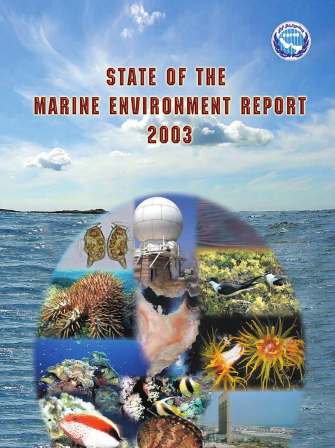


The State of the Marine Environment Report (SOMER) 2003, prepared by the Regional Organization for the Protection of the Marine Environment (ROPME), provides a comprehensive and updated assessment of the environmental conditions of the ROPME Sea Area (RSA). The report builds on earlier editions (1999 and 2000) and is based on contributions from member states, scientific studies, oceanographic surveys, and international collaboration.
Objectives and Scope
The report aims to:
Assess and document the current state of the marine and coastal environment. Identify major environmental concerns and emerging issues. Propose regional strategies and priority actions to support sustainable development and informed decision-making.The RSA, located in the northwestern Indian Ocean, includes three main zones: the inner Gulf, the Gulf of Oman, and the outer Arabian Sea region. Each zone has distinct physical and ecological characteristics.
Major Environmental Issues
The region faces significant environmental pressures resulting from rapid development, industrialization, and population growth. Key challenges include: Marine and coastal habitat degradation due to land reclamation, dredging, and urban expansion. Declining water quality from untreated sewage, industrial discharges, and land-based pollution. Oil pollution, with approximately 1.2 million barrels spilled annually, makes hydrocarbon levels among the highest globally. Overfishing, destructive fishing practices, and loss of biodiversity.
Introduction of invasive species and ecosystem imbalance. Thermal pollution from desalination and power plants. Pollution and Contamination Pollution in the RSA originates from multiple sources:Industrial effluents (petrochemicals, refineries, desalination plants).Sewage discharges, often untreated or partially treated.Atmospheric emissions from industries and vehicles.Oil spills and tanker operations.
Monitoring studies show:
Persistent oil contamination with slow environmental recovery. Presence of trace metals and organic pollutants, with localized “hotspots.” Generally low but notable levels of POPs, PCBs, and pesticides. Unusual high concentrations of arsenic in some marine organisms and cadmium accumulation in fish, requiring further research.
Environmental Characteristics The RSA is characterized by extreme environmental conditions: High temperatures (up to 49°C) and high salinity (up to 42% or more). Strong winds (especially Shamal) causing dust storms and sediment deposition. Low rainfall and high evaporation rates. Complex circulation patterns driven by density, evaporation, and inflow from the Strait of Hormuz. These conditions influence nutrient distribution, biological productivity, and ecosystem dynamics. Marine Resources and Biodiversity Despite harsh conditions, the RSA hosts diverse marine ecosystems: Coral reefs adapted to extreme environments but highly vulnerable. Seagrass beds and mangroves (mainly Avicennia marina) supporting biodiversity. Rich fisheries, though declining due to environmental stress. Significant populations of marine turtles, seabirds, and marine mammals (including globally important dugong populations). Over 85 marine and coastal sites have been designated or proposed as protected areas. Socio-Economic Pressures Economic activities heavily impact the marine environment:
Coastal development, tourism, and infrastructure projects.
Oil and gas extraction and transportation.
Desalination and power generation.
Fisheries exploitation and maritime transport.
These activities contribute to habitat destruction, pollution, and ecosystem stress.
Major Accidents and Events
The region has experienced severe environmental damage from wars and oil spills:
The Iran-Iraq War and the 1991 Gulf War caused massive oil discharges (over 9 million barrels in 1991 alone).
Oil fires and spills created long-term ecological damage.
Shipwrecks and ongoing maritime risks continue to threaten the environment.
Conclusion and Recommendations
The report emphasizes the urgent need for:
Strengthened regional cooperation and environmental governance.
Continuous monitoring and data collection.
Pollution control and sustainable resource management.
Public awareness and stakeholder engagement.
SOMER 2003 serves as a critical reference for understanding environmental trends and guiding future policies to protect the marine environment of the ROPME Sea Area.