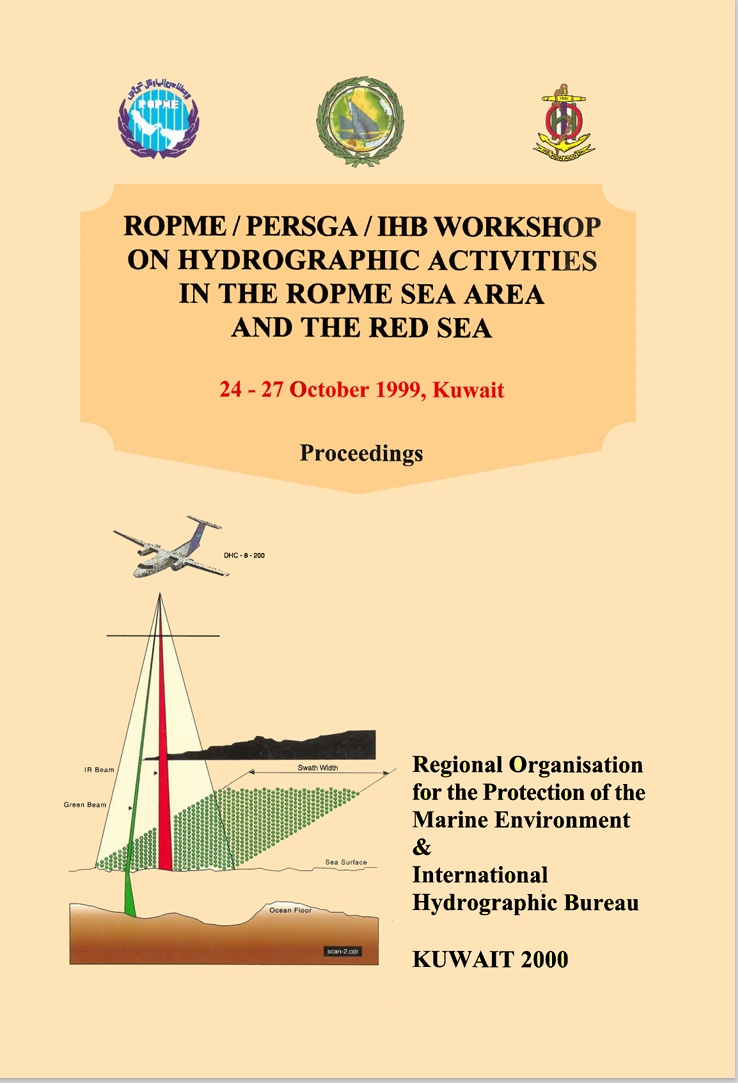


The ROPME/PERSGA/IHB Workshop on Hydrographic Activities in the ROPME Sea Area and the Red Sea (Kuwait, October 1999) focused on strengthening regional cooperation and advancing hydrographic capabilities to enhance navigation safety, environmental protection, and marine resource management.
Hydrography, defined as the science of measuring and describing navigable waters and coastal areas, plays a critical role in producing accurate nautical charts and spatial data. Its primary objective is to ensure safe navigation, prevent shipwrecks, and reduce marine pollution, particularly oil spills caused by groundings or collisions. Advances in GPS and electronic charting systems have significantly improved navigation safety and reduced human error, while vessel traffic systems (VTS) further support collision prevention.
The workshop emphasized that prevention through hydrographic services is more effective and economical than responding to maritime accidents. International frameworks such as SOLAS, UNCLOS, and Agenda 21 highlight the importance of hydrography in maritime safety, environmental protection, and sustainable development. Hydrographic data also underpin Geographic Information Systems (GIS), supporting marine research, coastal zone management, and the administration of Exclusive Economic Zones (EEZs).
Despite its importance, hydrographic coverage in the ROPME Sea Area remains incomplete, increasing risks to navigation and limiting environmental understanding. The high cost and technical complexity of surveys require stronger governmental commitment, investment, and regional collaboration. The workshop stressed the need for coordinated hydrographic services, standardized data, and shared responsibilities among nations.
Presentations from member states (Bahrain, Iran, Kuwait, Qatar, Saudi Arabia, and the UAE) highlighted varying levels of hydrographic development. While progress has been made in data collection, chart production, and digital transformation (including GIS and S-57 standards), challenges remain in capacity, infrastructure, and coordination. Many countries rely partly on external charts or are still developing national hydrographic systems.
Key operational priorities for hydrographic offices include: ensuring data availability, maintaining high-quality standards, continuously updating databases, and efficiently distributing products to users. The transition from paper charts to digital formats, including Electronic Navigational Charts (ENCs), presents both opportunities and challenges, particularly in quality assurance, data management, and technical expertise.
The workshop concluded that hydrography is essential for safe navigation, environmental protection, and economic development. It called for enhanced regional cooperation, investment in modern technologies, capacity building, and alignment with international standards to strengthen hydrographic services across the region.