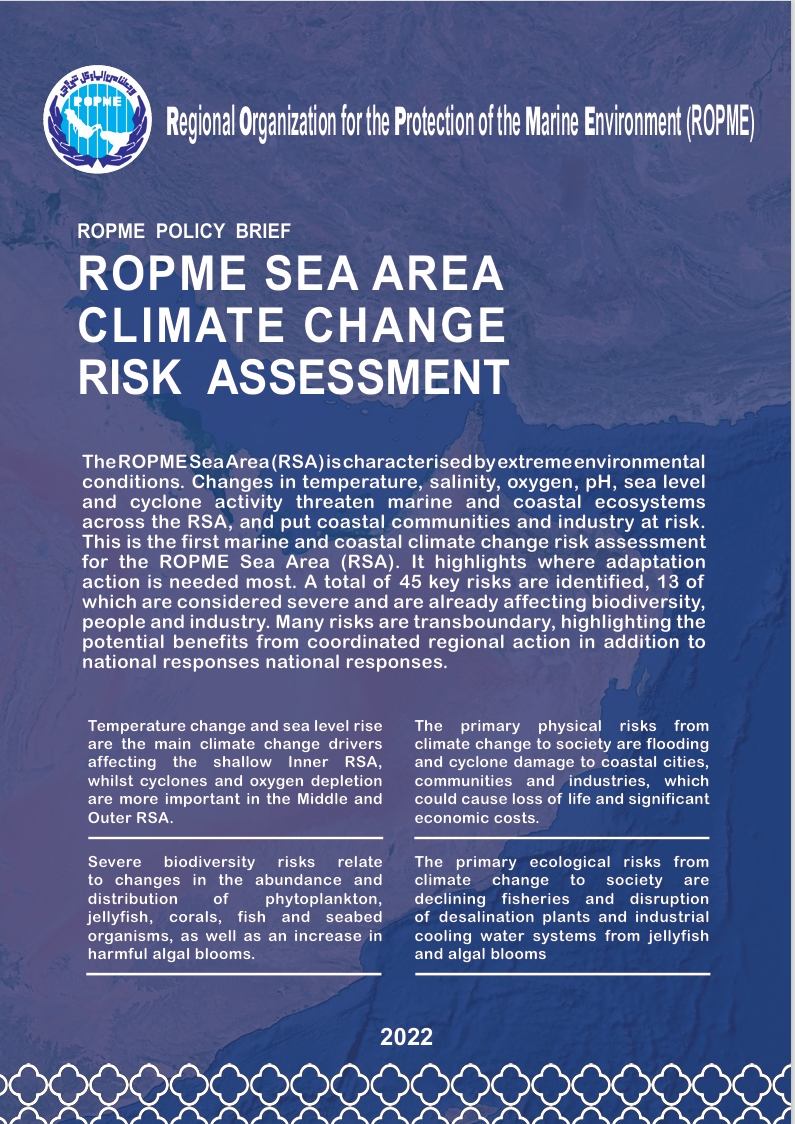


This document presents the first regional Climate Change Risk Assessment for the ROPME Sea Area (RSA), conducted under the Regional Organization for the Protection of the Marine Environment (ROPME). The RSA includes the territorial waters of Bahrain, Iran, Iraq, Kuwait, Oman, Qatar, Saudi Arabia, and the United Arab Emirates, and is divided into three sub-regions: the Inner, Middle, and Outer RSA. The assessment identifies 45 key climate-related risks, of which 13 are classified as severe, already impacting biodiversity, ecosystems, and socio-economic systems. Many of these risks are transboundary, highlighting the necessity of coordinated regional action alongside national adaptation efforts. Key Climate Drivers The RSA is affected by multiple interacting climate drivers, including sea-level rise, increasing air and sea temperatures, ocean acidification, declining oxygen levels, changing salinity, altered monsoon timing, increased storm and cyclone activity, dust storms, and coastal erosion. Impacts vary across sub-regions: the shallow Inner RSA is more sensitive to temperature and salinity changes, while the Middle and Outer RSA are more exposed to cyclones and oxygen depletion. Biodiversity Risks Severe ecological impacts include:
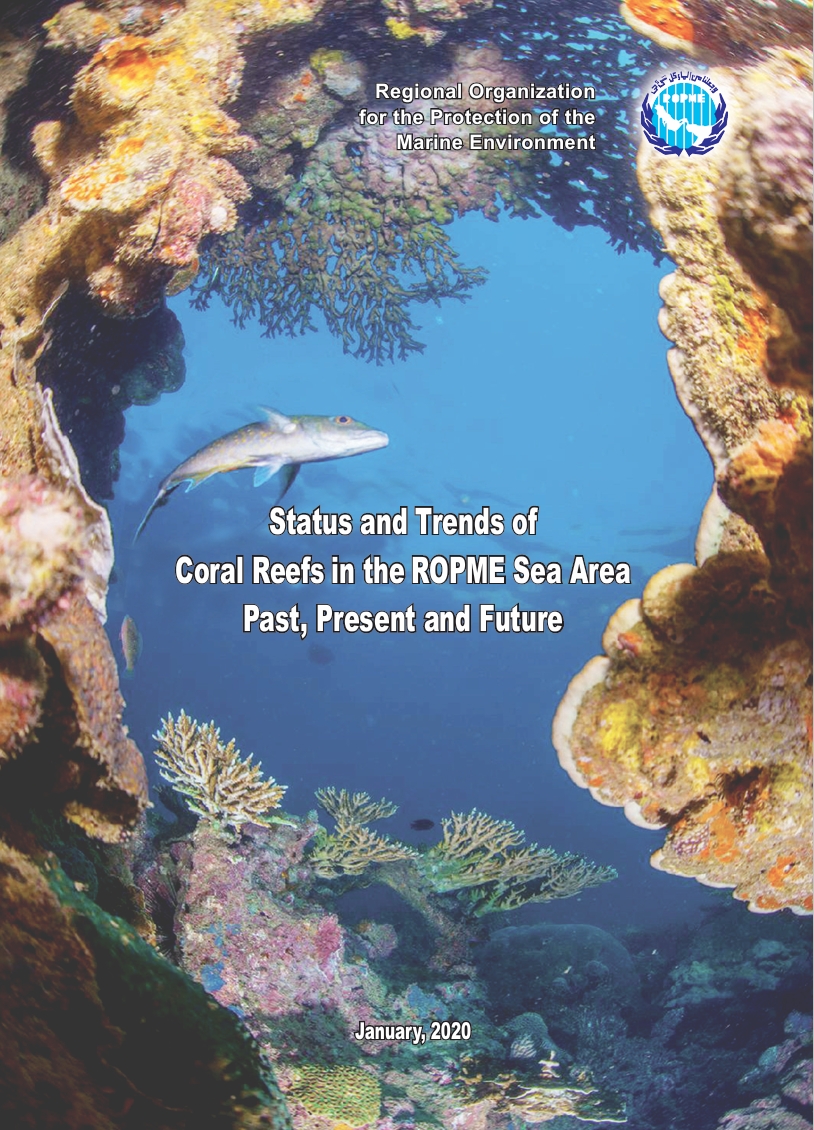
-Widespread decline in coral cover and reef health
- Increasing harmful algal blooms (HABs) causing fish kills and health risks
- Changes in phytoplankton productivity, affecting marine food webs and fisheries
- Expansion of jellyfish outbreaks, disrupting ecosystems and industrial operations
- Declines in benthic and pelagic species, including commercially important fish
- Loss of habitats supporting coral-dependent communities and marine biodiversity
These changes are already evident, with some species experiencing population shifts, reduced productivity, or habitat loss. Societal Risks Six major societal risks are classified as severe:
- Coastal flooding and erosion, threatening communities, housing, and infrastructure
- Declining marine fisheries productivity, affecting food security and livelihoods
- Increased damage to coastal industries from storms and sea-level rise
- Major disruption to desalination plants, critical for regional water security
- Impacts on maritime transport, including safety risks and operational disruptions
- Combined ecological impacts affecting industry through HABs, jellyfish blooms, and water quality changes
These risks are expected to intensify within the next 20 years, with high confidence in their occurrence. Sub-Regional Variation Risk levels differ significantly across the RSA:
The Inner RSA faces higher risks from warming, salinity changes, and sea-level rise.
The Middle and Outer RSA are more exposed to cyclones, storm surges, and oxygen depletion.
Fisheries are more economically critical and therefore more vulnerable in the Middle and Outer RSA. Adaptation and Resilience The report emphasizes that climate risks in the RSA are interconnected across sectors and borders, requiring regional cooperation and integrated adaptation strategies. Recommended actions include:
Strengthening National Adaptation Plans (NAPs)
Enhancing marine environmental management
Reducing non-climate pressures such as pollution and habitat destruction
Expanding marine protected areas and ecosystem restoration
Implementing nature-based solutions, such as mangrove and coral reef restoration, to enhance coastal protection and biodiversity resilience
The assessment provides a foundational evidence base to support climate resilience planning across the region and aligns with international commitments under the UNFCCC Paris Agreement.