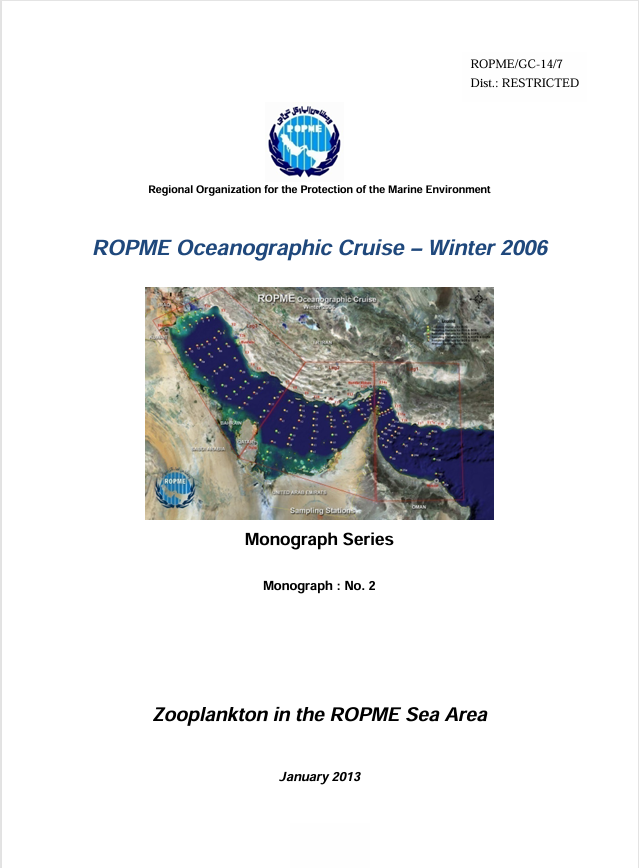


This scientific monograph is one of the specialized publications issued by the Regional Organization for the Protection of the Marine Environment (ROPME). It presents a comprehensive taxonomic overview of zooplankton in the ROPME Sea Area, based on samples collected during the Regional Oceanographic Cruise conducted in Winter 2006, one of the largest collaborative marine scientific programmes undertaken in the region.
The monograph was prepared as part of ROPME’s ongoing efforts to document marine biodiversity, support assessments of the marine environment, and establish a scientific database that assists researchers and decision-makers in understanding the structure and functioning of marine ecosystems and promoting their conservation.
The Oceanographic Cruise
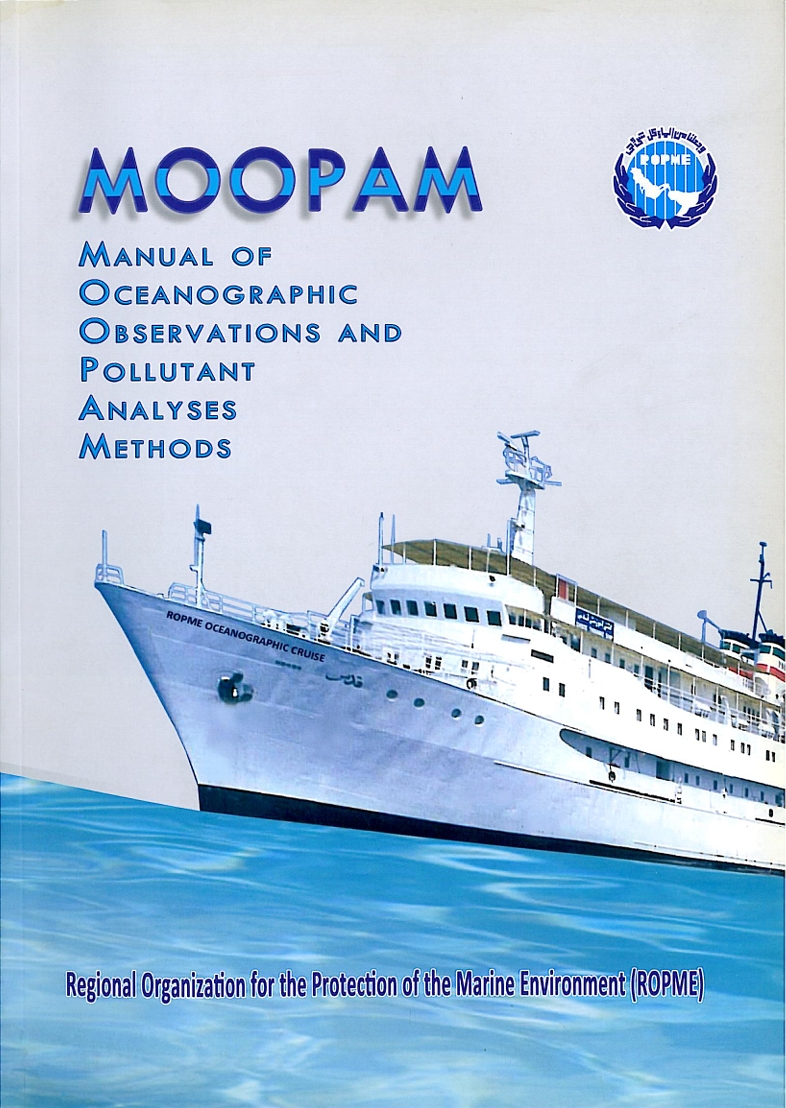
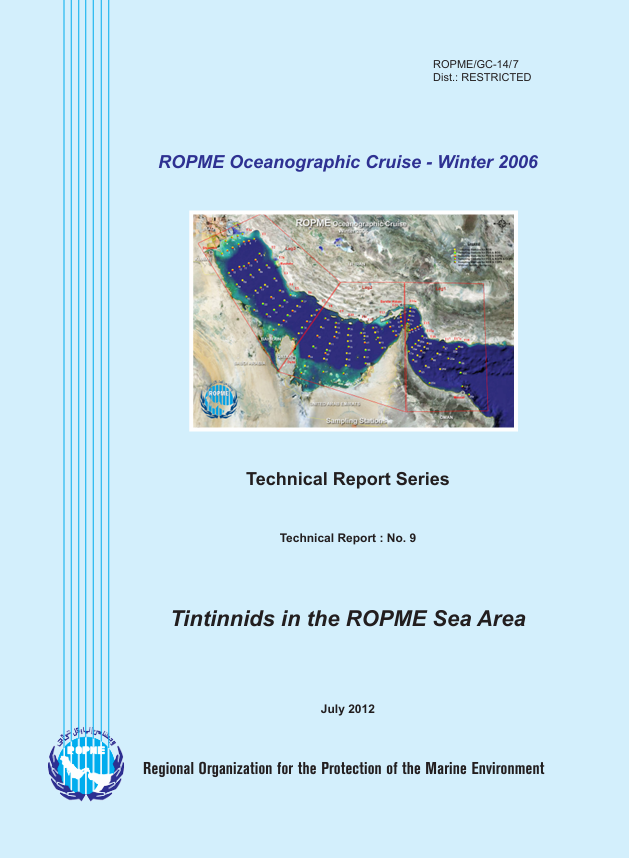
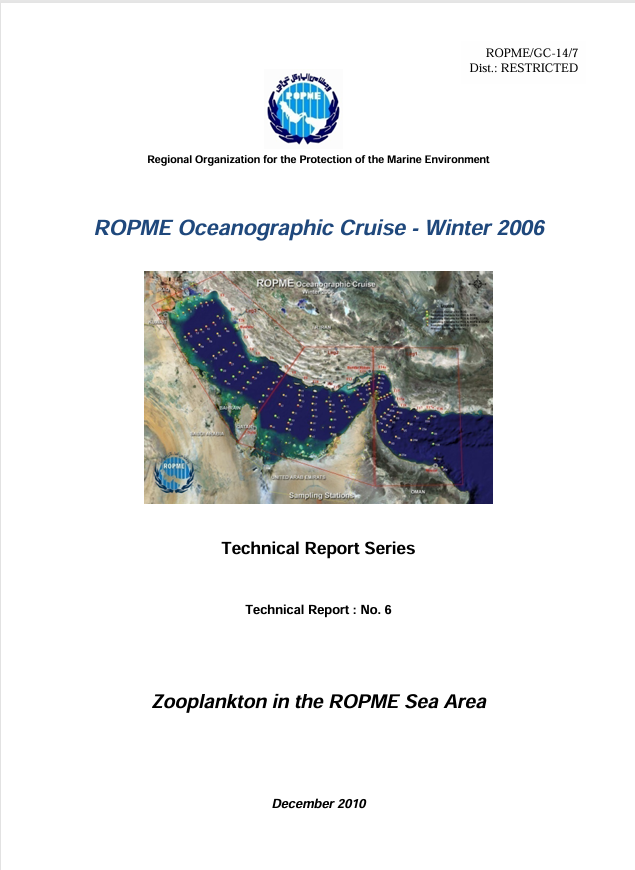
The cruise was conducted between 1 February and 11 March 2006 aboard the research vessel MV Ghods, with the participation of 97 scientists and experts from ROPME Member States. Scientific surveys were carried out at 115 sampling stations covering the entire ROPME Sea Area, including the Gulf, the Strait of Hormuz, and the northern part of the Sea of Oman.
The collected samples were distributed to specialized laboratories within and outside the region for detailed analyses, while reference specimens were preserved in the ROPME Marine Sample Bank to support future scientific studies.
View more
Importance of Zooplankton
The monograph highlights the critical role of zooplankton as one of the fundamental components of marine ecosystems. Zooplankton forms the primary link in the marine food web, transferring energy from phytoplankton to higher trophic levels, including fish, marine mammals, and seabirds. It also plays a vital role in the ocean’s biogeochemical cycles.
Zooplankton serves as an important indicator of marine environmental health and long-term ecological change. In addition to its ecological significance, it has considerable economic value as the principal food source for many commercially important fish species and their larvae, is widely used in aquaculture, and several species are commercially harvested in various parts of the world.
Key Findings
The study demonstrated that the ROPME Sea Area supports a remarkably high diversity of zooplankton, with a total of 470 species recorded throughout the region, including 235 species identified during the Winter 2006 oceanographic cruise.
The recorded species represent a broad range of animal groups, including:
* Tintinnids.
* Jellyfish and Hydrozoans.
* Comb jellies (Ctenophores).
* Planktonic polychaete worms.
* Planktonic molluscs.
* Planktonic crustaceans, particularly copepods.
* Chaetognaths (arrow worms).
* Planktonic chordates, including larvaceans and salps.
Copepods exhibited the greatest species diversity, with 94 recorded species, followed by Cnidarians with 34 species. The study also documented 35 protozoan species, the majority of which were tintinnids, in addition to numerous species of molluscs, polychaete worms, chaetognaths, and planktonic chordates.
The monograph further documents the geographical distribution of each species throughout the ROPME Sea Area, identifying their occurrence in both the Gulf and the Sea of Oman, while also reporting several species recorded in the region for the first time.
Methodology
The study was based on the analysis of 59 zooplankton samples collected using specialized plankton nets with a mesh size of 110 μm. Samples were obtained from depths ranging between 6 and 14 metres across the study area.
Species identification was carried out using internationally recognized taxonomic references. Selected specimens were documented through light microscopy and scanning electron microscopy, resulting in a comprehensive scientific reference for future marine biodiversity research.
Significance of the Monograph
This monograph serves as a specialized scientific reference on the taxonomy of zooplankton in the ROPME Sea Area. It provides a valuable baseline database for monitoring marine biodiversity, assessing environmental changes, supporting marine monitoring programmes and the sustainable management of marine resources, while strengthening scientific cooperation among ROPME Member States and specialized research institutions.