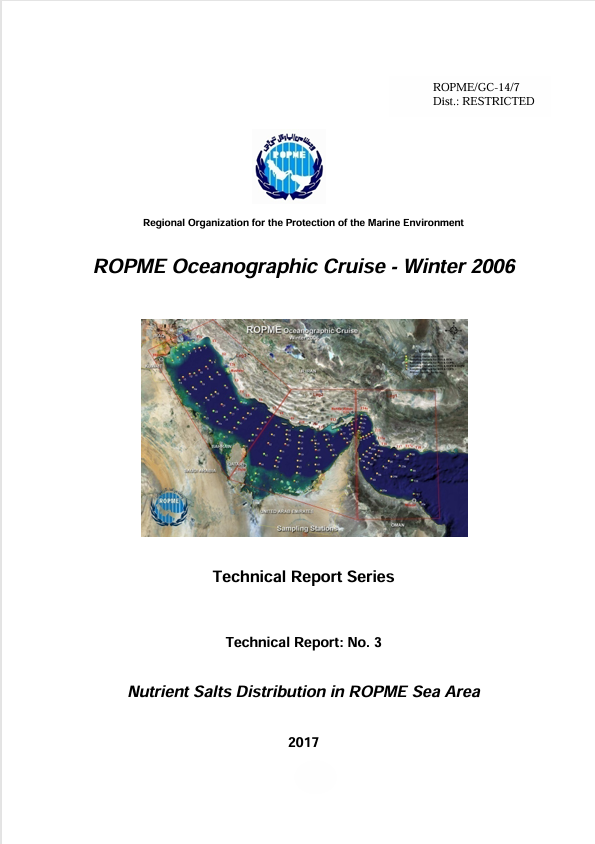


This report examines the distribution of nutrient salts in the ROPME Sea Area, based on the findings of the regional oceanographic cruises conducted during Summer 2001 and Winter 2006. The study was undertaken to assess the environmental status of the ROPME Sea Area and to enhance understanding of the natural and anthropogenic factors influencing its physical, chemical, and biological characteristics.
The study focuses on the principal nutrient elements in seawater—nitrogen compounds, phosphorus, and silicates—owing to their fundamental role in supporting primary productivity and promoting phytoplankton growth, which forms the foundation of the marine food web. It also examines the relationships between these nutrients and key environmental parameters, including temperature, salinity, dissolved oxygen, turbidity, and chlorophyll-a, to better understand the environmental processes governing nutrient distribution throughout the ROPME Sea Area.
Objectives of the Study
The study aimed to:
* Determine the spatial distribution of nutrient salts in the ROPME Sea Area during Winter 2006.
* Compare the Winter 2006 findings with those of the Summer 2001 cruise to identify temporal variations.
* Evaluate the relationships between nutrient salts and the physical, chemical, and biological characteristics of the marine environment.
* Provide a scientific foundation to support marine environmental assessments and the preparation of ROPME State of the Marine Environment Reports.
View more
Methodology
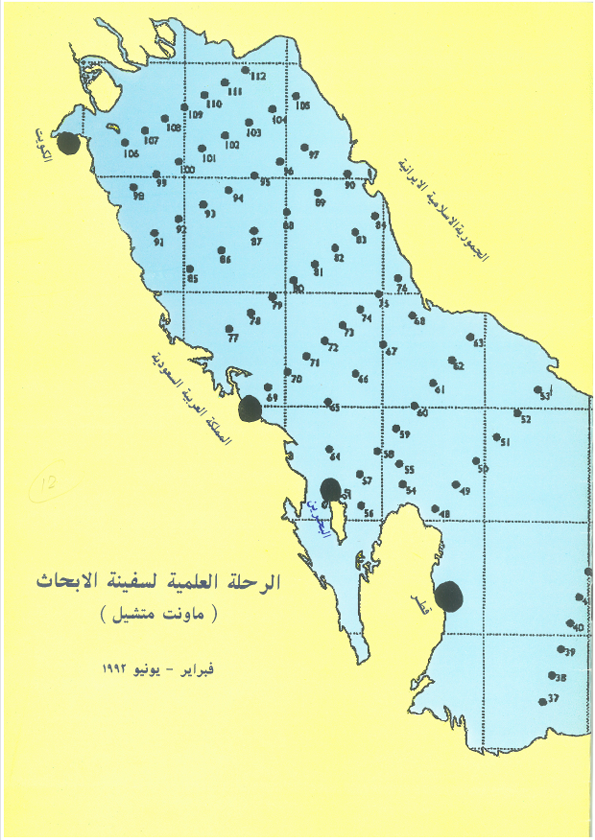
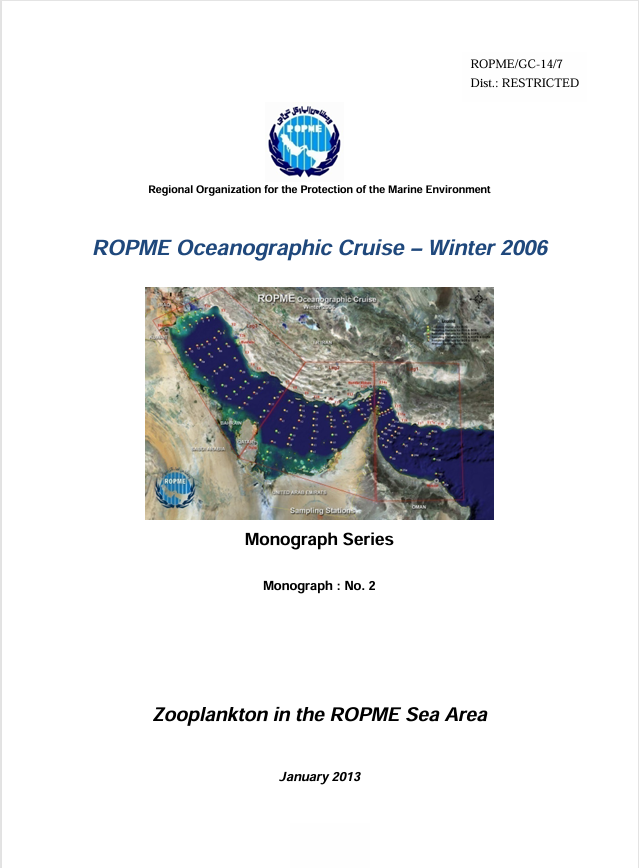
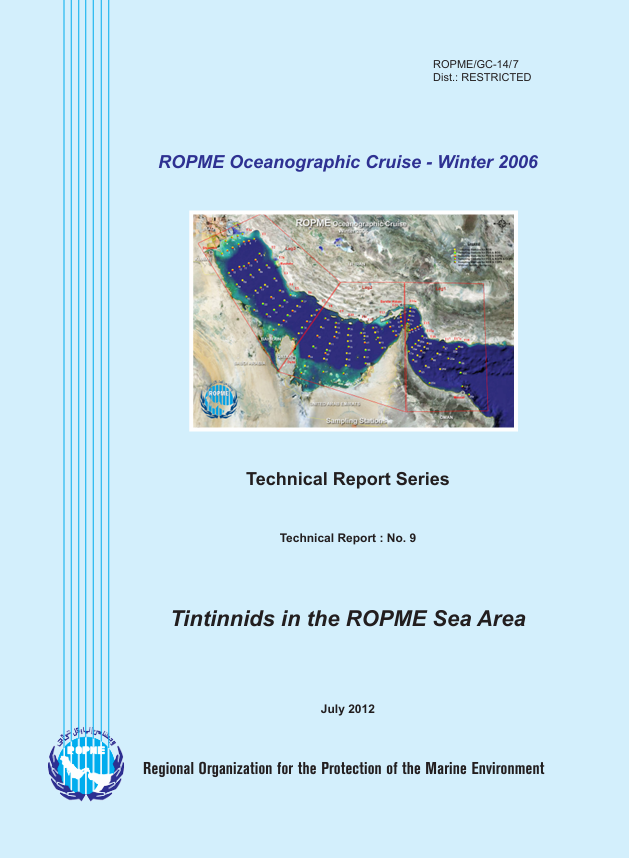
The study was based on data collected during the two regional oceanographic cruises organized by ROPME. The 2006 cruise surveyed 113 stations across the ROPME Sea Area and the Sea of Oman, while the 2001 cruise covered 76 stations.
Water samples were collected from multiple depths using specialized oceanographic equipment, and the following physical and chemical parameters were measured:
* Temperature
* Salinity
* Dissolved oxygen
* Turbidity
* pH
* Chlorophyll-a
* Nitrate
* Nitrite
* Ammonia
* Phosphate
* Silicate
Multivariate statistical analyses, including Pearson Correlation and Principal Component Analysis (PCA), were applied to investigate relationships among environmental variables and identify spatial and temporal distribution patterns.
Key Findings
The study revealed that the ROPME Sea Area exhibits pronounced horizontal and vertical variability in its environmental characteristics, together with clear seasonal differences between Summer 2001 and Winter 2006.
The findings showed that nutrient salt distribution is influenced by several natural factors, most notably:
* Marine circulation patterns.
* Coastal upwelling of nutrient-rich deep waters along the Iranian coastline.
* Freshwater inflows from the Shatt Al-Arab and Mond River.
* Monsoon-driven processes in the Sea of Oman.
Most nutrient concentrations were found to be within the expected natural range for the region, although localized elevations were recorded in areas affected by upwelling or river discharges.
The study also identified a distinct vertical gradient in phosphate, nitrate, and silicate concentrations, with levels generally increasing with depth due to the recycling of organic matter and the influence of deep-water upwelling.
Regarding dissolved oxygen, the ROPME Sea Area was generally well oxygenated during Winter 2006, whereas relatively lower concentrations were observed in certain areas during Summer 2001, particularly in deeper waters, as a result of enhanced biological activity and oxygen consumption during organic matter decomposition.
Chlorophyll-a measurements indicated that phytoplankton productivity was closely associated with nutrient availability in several areas, particularly near river mouths and upwelling zones, while overall concentrations remained within the normal range for the region.
Impact of Human Activities
The report discusses the growing influence of human activities on the marine environment, highlighting that industrial, urban, and tourism development, together with wastewater discharges, industrial effluents, and agricultural runoff, contribute to increasing nutrient inputs into the marine ecosystem. These inputs may promote eutrophication in certain coastal areas.
The report also identifies oil and gas industries, desalination plants, fertilizer manufacturing, and agricultural activities as major land-based sources that may affect water quality and nutrient concentrations within the ROPME Sea Area.
Conclusions
The study confirmed the existence of significant **spatial and temporal variations** in the distribution of nutrient salts and in the physical, chemical, and biological characteristics of the ROPME Sea Area. It also demonstrated clear differences between the findings of the **Summer 2001** and **Winter 2006** cruises, reflecting the influence of seasonal oceanographic processes, water circulation, riverine inputs, and deep-water upwelling.
The findings emphasize that nutrient salts play a fundamental role in sustaining the biological productivity of the marine ecosystem and that understanding their dynamics is essential for evaluating marine environmental health and ensuring the sustainable management of marine resources.
The report further underscores the importance of maintaining long-term environmental monitoring programmes and periodic oceanographic cruises, while developing unified regional water quality reference criteria for the ROPME Sea Area. It also highlights the need to strengthen cooperation among Member States to monitor the impacts of coastal development, human activities, and environmental change, thereby supporting integrated marine environmental management and the long-term protection of the region’s marine ecosystem.