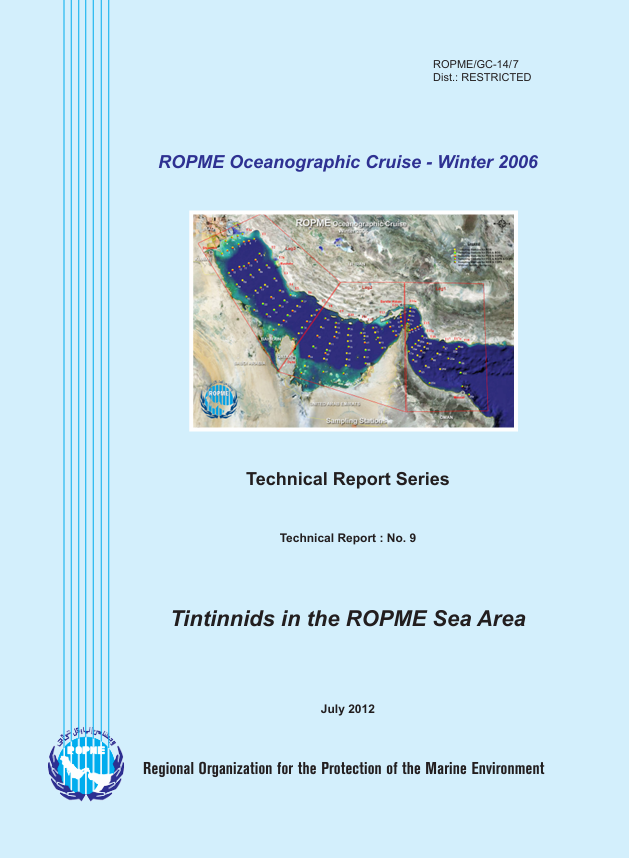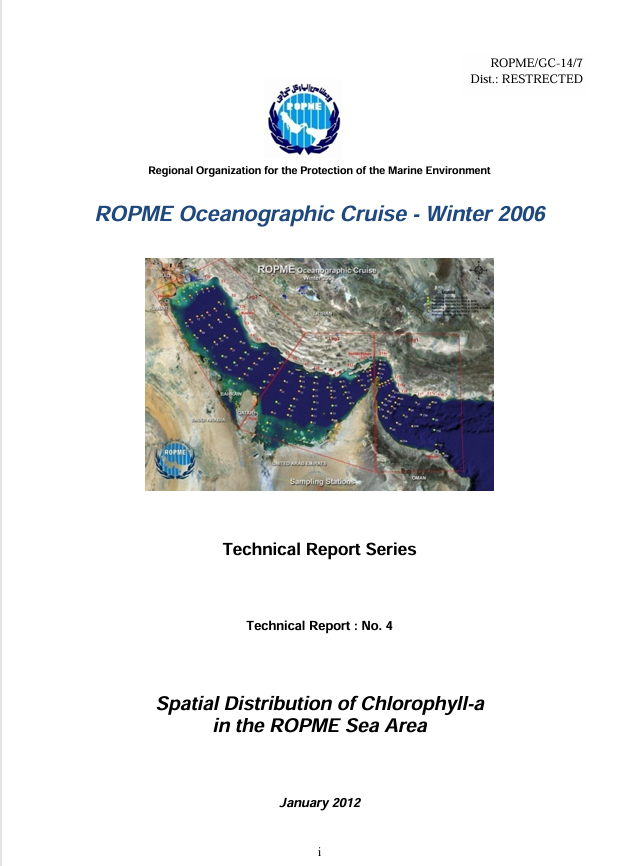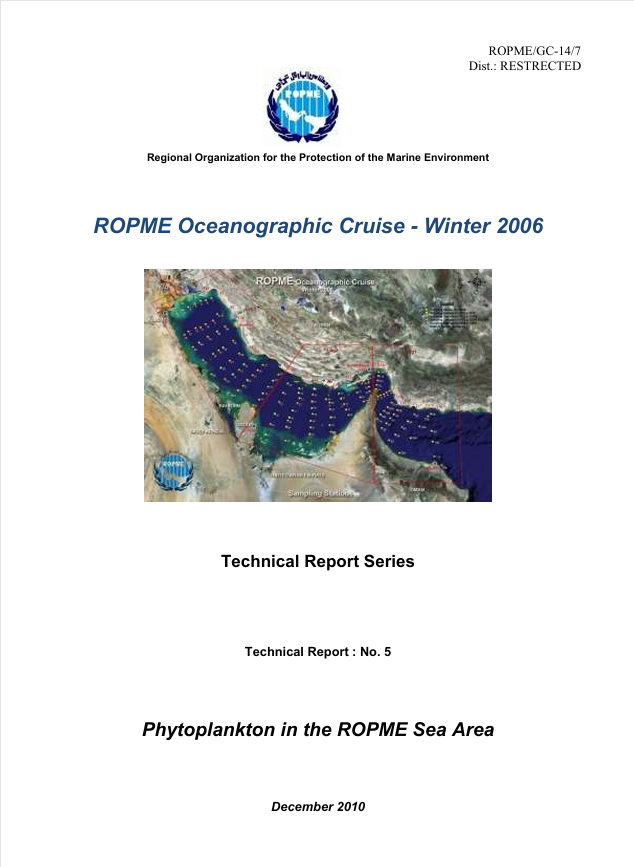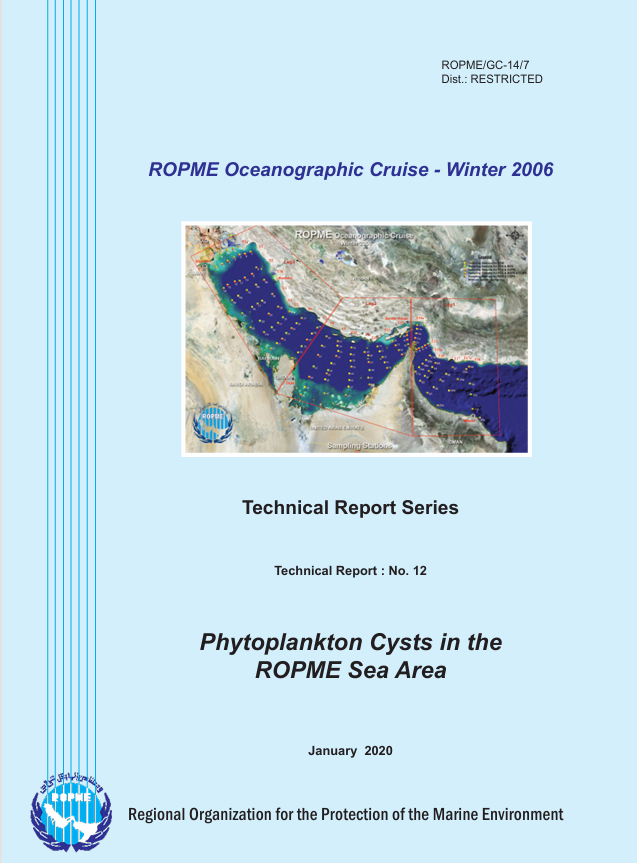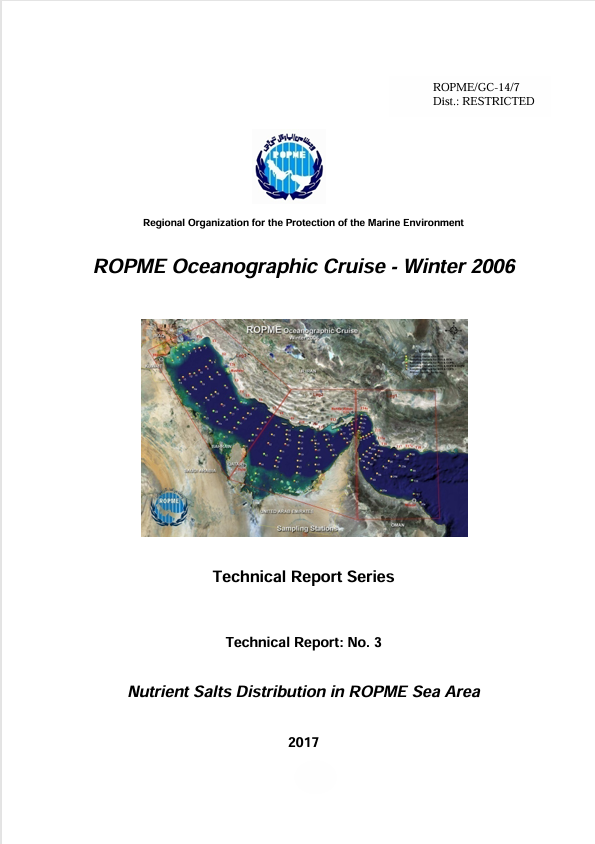


This report presents the findings of the study on Tintinnids in the Regional Organization for the Protection of the Marine Environment Sea Area (ROPME Sea Area – RSA), conducted during the Regional Oceanographic Cruise in the winter of 2006. The study aimed to document the taxonomic diversity and spatial distribution of these microscopic organisms and to investigate their role in the marine ecosystem as one of the principal components of the microzooplankton community. The report serves as a scientific reference for documenting the species recorded in the region and supports future studies on marine biodiversity.
ROPME Sea Area (RSA)
The ROPME Sea Area comprises the waters covered by the 1978 Kuwait Regional Convention and includes the following eight Member States:
• Kingdom of Bahrain.
• Islamic Republic of Iran.
• Republic of Iraq.
• State of Kuwait.
• Sultanate of Oman.
• State of Qatar.
• Kingdom of Saudi Arabia.
• United Arab Emirates.
The region is characterized by considerable diversity in its physical, chemical, and biological properties, providing a suitable environment for variations in the distribution and taxonomic composition of microplankton.
View more
Importance of Studying Tintinnids
Tintinnids constitute one of the most important components of the microzooplankton community. They play a fundamental role in transferring energy through the marine food web by feeding on bacteria and phytoplankton while simultaneously serving as an important food source for fish larvae and other marine organisms. Studies indicate that they may consume between 4% and 80% of primary production in marine environments, making them an important indicator of biological productivity and the health of marine ecosystems.
Winter Oceanographic Cruise 2006
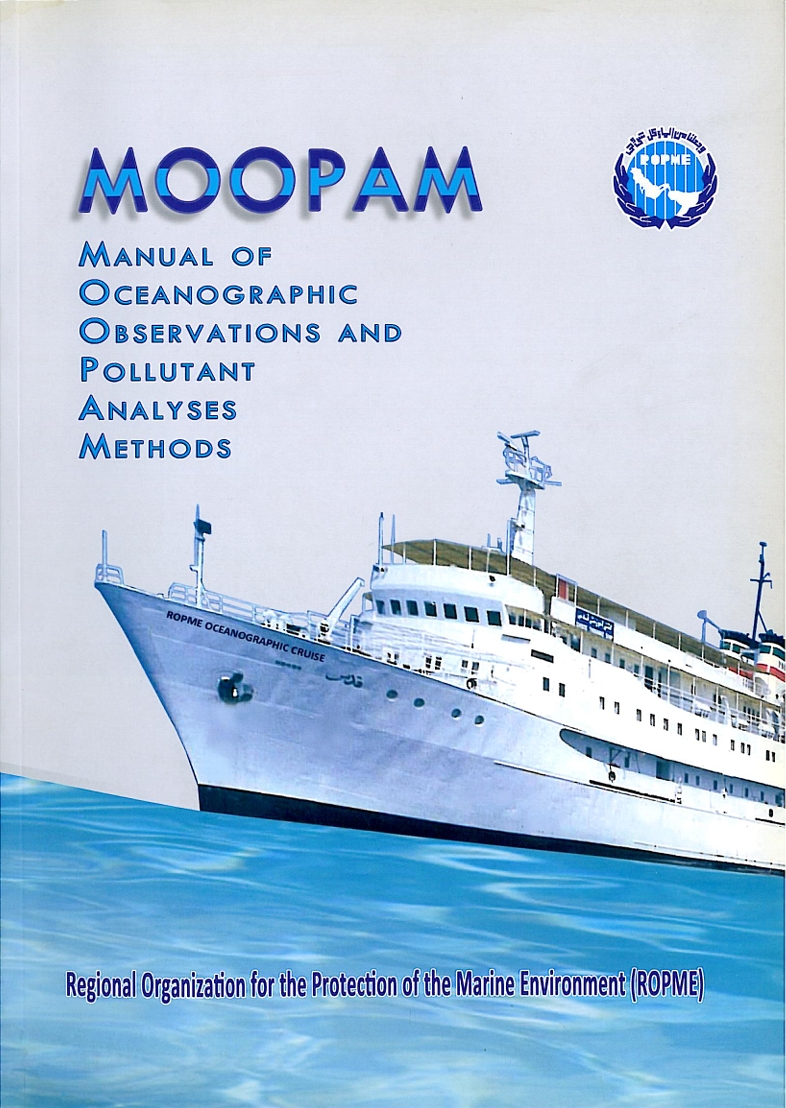
The Regional Organization for the Protection of the Marine Environment conducted the Regional Oceanographic Cruise during the period:
1 February – 11 March 2006
aboard the Iranian research vessel M/V Ghods.
The cruise surveyed 115 marine stations throughout the ROPME Sea Area, with the participation of 97 experts and researchers from the Member States. Reference samples were preserved in the ROPME Marine Sample Bank for use in future scientific studies.
Objectives of the Study
The study focused on:
- Documenting and classifying Tintinnid species in the ROPME Sea Area.
- Investigating their geographical distribution during the winter season.
- Identifying dominant species and newly recorded species.
- Providing a comprehensive taxonomic reference for Tintinnid species in the region.
- Supporting environmental monitoring programmes and marine biodiversity studies.
Methodology
The study was based on the collection and analysis of microplankton samples from monitoring stations distributed throughout the ROPME Sea Area during the Winter 2006 cruise. Taxonomic identification was carried out based on the detailed morphological characteristics of the lorica, using internationally recognized taxonomic references for species identification. Morphological measurements and the geographical distribution of each species within the study area were also documented.
Key Findings
First: Abundance of Tintinnids
The results showed that Tintinnids accounted for 36.9% of the total abundance of microzooplankton in the ROPME Sea Area during the period from February to March 2006.
Their average abundance was approximately 8.7 × 10³ organisms/m³, while recorded abundances ranged from 0.3 × 10³ to 22 × 10³ organisms/m³.
Second: Spatial Distribution
The highest Tintinnid abundance was recorded in the northwestern part of the Inner ROPME Sea Area, whereas the lowest abundance was observed in the waters north of the State of Qatar near the Iranian coast. Abundance gradually increased eastward.
The study also identified three principal areas characterized by high Tintinnid biodiversity:
- The northwestern part of the Inner ROPME Sea Area.
- The central region north of the State of Qatar.
- The eastern region near the Strait of Hormuz.
Third: Biodiversity
A total of 43 Tintinnid species were recorded, including 16 species documented for the first time in the Inner ROPME Sea Area, reflecting the region’s rich biodiversity of microscopic marine organisms.
Fourth: Dominant Taxonomic Groups
The study showed that the dominant species belonged primarily to the following families:
- Tintinnidae.
- Codonellopsidae.
- Petalotrichidae.
- Xystonellidae.
- Rhabdonellidae.
The report also provided detailed morphological descriptions and geographical distribution maps for all recorded species within the ROPME Sea Area.
Environmental Significance of the Study
The report confirmed that the study of Tintinnids represents an important tool for understanding the dynamics of microzooplankton and biological productivity in marine environments. It also contributes to:
- Assessing the status of marine ecosystems.
- Supporting regional environmental monitoring programmes.
- Documenting marine biodiversity.
- Providing baseline data for future studies.
- Improving understanding of trophic relationships within the marine environment.
- Supporting the sustainable management of marine resources.
Conclusions
The report concluded that the ROPME Sea Area is characterized by a high diversity of Tintinnids, with pronounced spatial variation in their distribution across the different study areas.
The study further confirmed that:
This report provides a fundamental taxonomic reference for Tintinnid species in the ROPME Sea Area and contributes to strengthening marine monitoring programmes while supporting future studies on marine biodiversity, marine environmental protection, and the sustainable management of natural resources.
Tintinnids constitute a major component of the microzooplankton community in the ROPME Sea Area.
The region exhibits high levels of biodiversity, with 43 recorded species, including 16 species documented for the first time in the Inner ROPME Sea Area.
The greatest diversity and abundance are concentrated in the northwestern and eastern regions near the Strait of Hormuz.