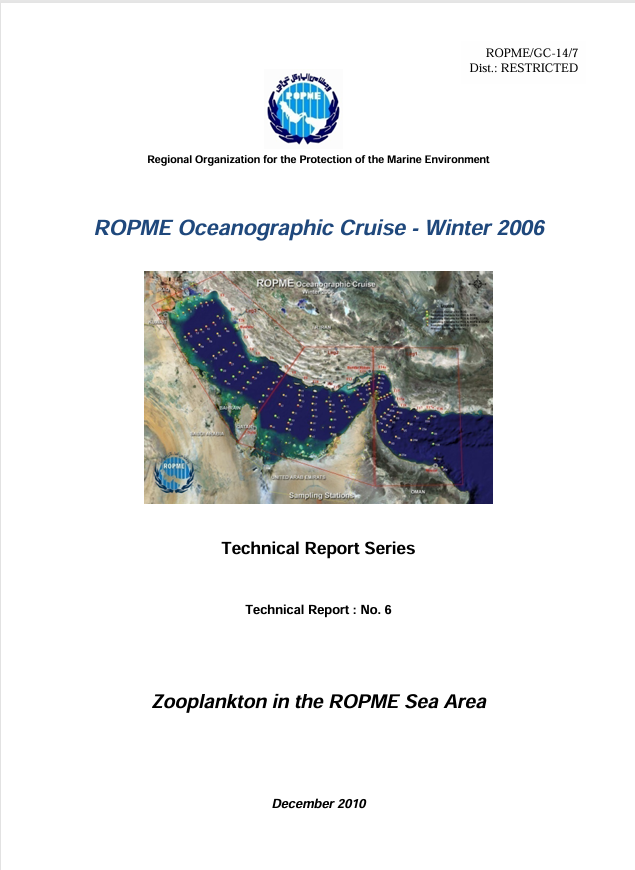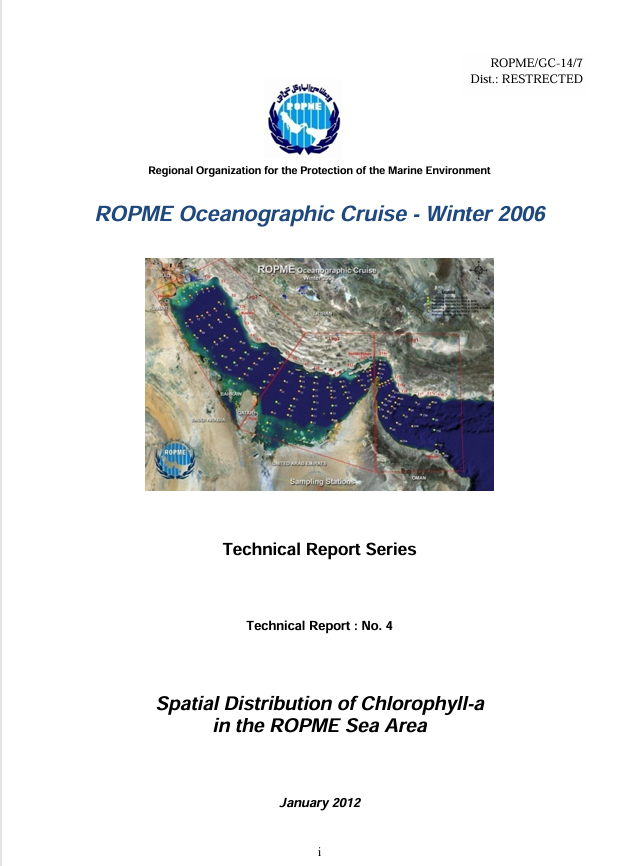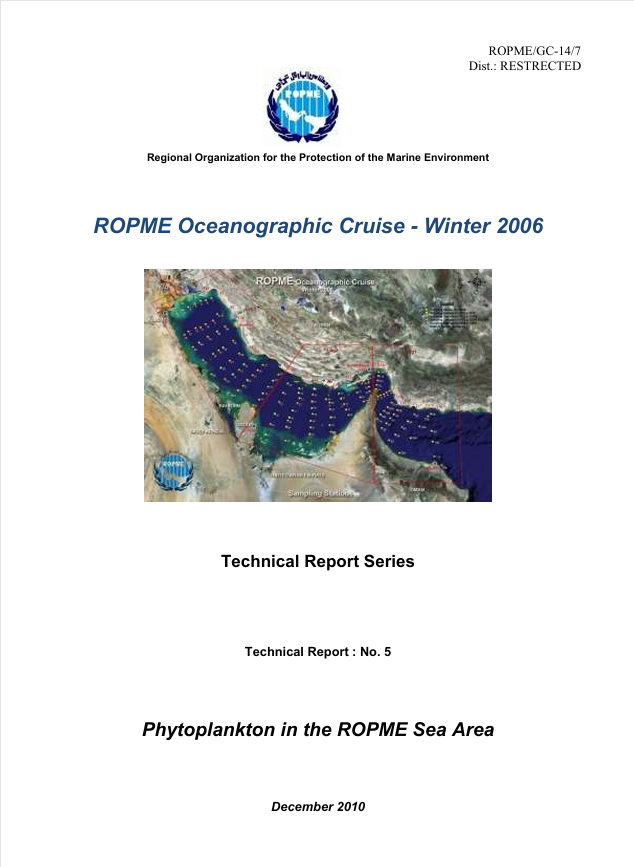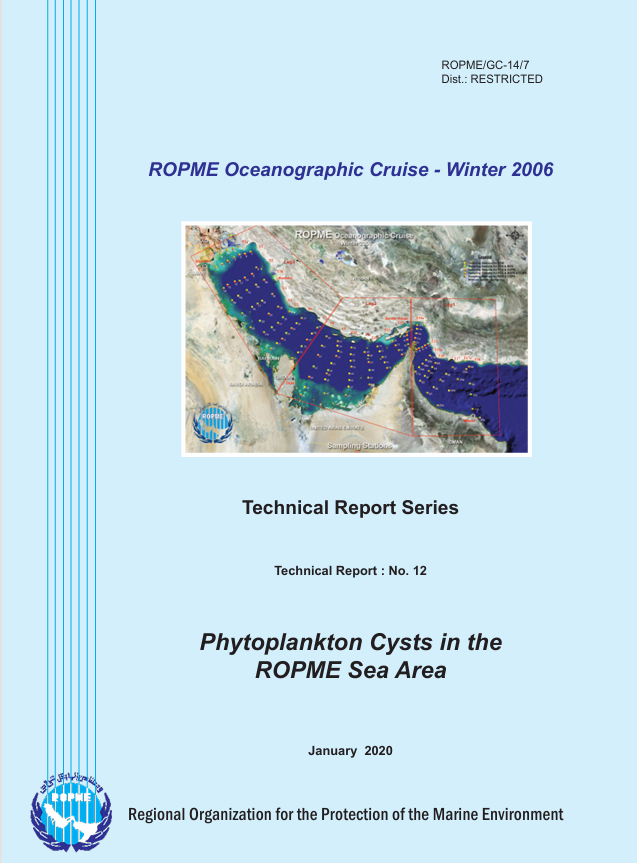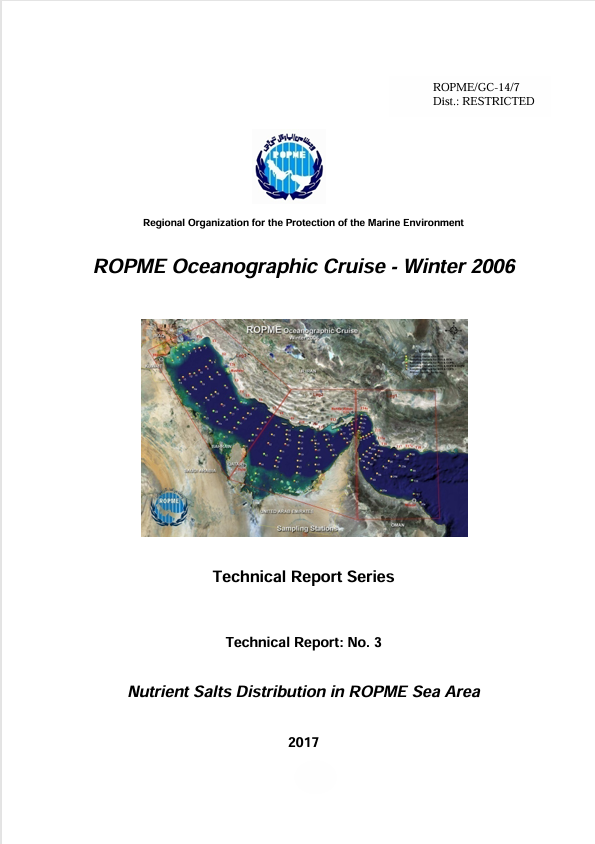


This report presents the findings of the study on zooplankton in the Regional Organization for the Protection of the Marine Environment Sea Area (ROPME Sea Area – RSA) during the winter of 2006. The study was conducted as part of the Regional Oceanographic Cruise Programme, which aimed to assess marine biodiversity and improve understanding of the structure of marine biological communities and the environmental factors influencing them.
Zooplankton constitute one of the most important components of the marine food web, serving as the primary link between phytoplankton and higher trophic-level marine organisms. They are also considered an important indicator of biological productivity and marine ecosystem health and are widely used to assess environmental and climatic changes and monitor the impacts of human activities on the marine environment.
ROPME Sea Area (RSA)
The ROPME Sea Area comprises the waters covered by the 1978 Kuwait Regional Convention and includes the following eight Member States:
• Kingdom of Bahrain.
• Islamic Republic of Iran.
• Republic of Iraq.
• State of Kuwait.
• Sultanate of Oman.
• State of Qatar.
• Kingdom of Saudi Arabia.
• United Arab Emirates.
The ROPME Sea Area consists of three principal regions:
• Inner ROPME Sea Area (Inner RSA).
• Strait of Hormuz.
• Sea of Oman, in addition to the northern part of the Arabian Sea.
This region is characterized by considerable variability in its physical and chemical properties, including temperature, salinity, ocean currents, and nutrient availability, which directly influence the distribution and diversity of zooplankton.
Importance of Studying Zooplankton
Zooplankton are a fundamental component of marine ecosystems, and their study contributes to:
• Assessing marine biodiversity.
• Estimating secondary productivity in marine environments.
• Understanding trophic relationships among marine organisms.
• Identifying areas of high biological activity.
• Monitoring the impacts of environmental and climatic factors on marine organisms.
• Supporting environmental monitoring programmes and the sustainable management of marine resources.
Zooplankton are also regarded as sensitive indicators of environmental change due to their rapid response to variations in temperature, salinity, and nutrient availability.
View more
Winter Oceanographic Cruise 2006
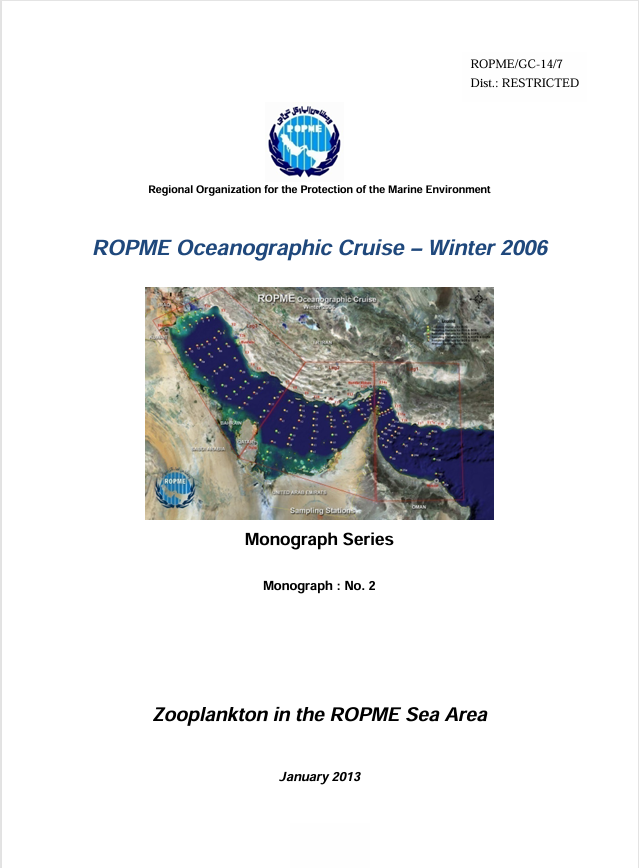
The Regional Organization for the Protection of the Marine Environment conducted a regional oceanographic cruise during the period:
1 February – 11 March 2006
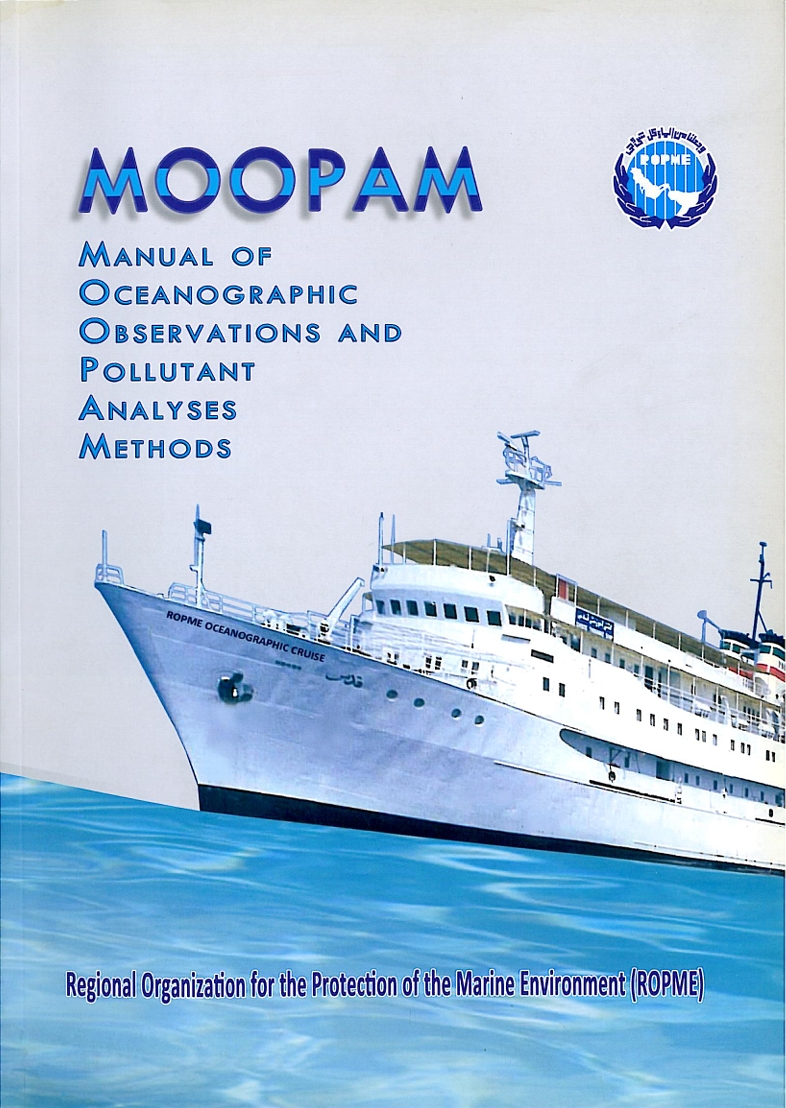
aboard the Iranian research vessel M/V Ghods.
The cruise covered most parts of the ROPME Sea Area and involved the collection of zooplankton samples from various marine environments to investigate their species composition, abundance, and relationship with prevailing environmental conditions.
Objectives of the Study
The study aimed to:
• Determine the taxonomic diversity of zooplankton in the ROPME Sea Area.
• Investigate the spatial distribution of zooplankton during the winter season.
• Estimate the abundance and secondary productivity of zooplankton.
• Compare differences between the Inner RSA and the Sea of Oman.
• Identify dominant species and newly recorded species within the region.
• Examine the relationship between zooplankton distribution and various environmental factors.
Methodology
The study was based on the analysis of 59 zooplankton samples collected from monitoring stations distributed throughout the ROPME Sea Area.
A plankton net with a mesh size of 110 µm was used for sample collection, while the volume of filtered seawater was measured using a Flow Meter.
Taxonomic identification was carried out to the species level for all collected organisms, and zooplankton abundance was calculated as the number of organisms per cubic meter of seawater.
Key Findings
First: Zooplankton Biodiversity
The study revealed a high level of zooplankton biodiversity within the ROPME Sea Area, recording 230 species belonging to various taxonomic groups, while the Executive Summary reported 231 species, reflecting a minor difference resulting from the final taxonomic classification.
Copepods ranked first in terms of diversity, with 94 species, followed by tintinnids, medusae, siphonophores, polychaete worms, molluscs, chaetognaths, planktonic larvae, and several other marine zooplankton groups.
The study also documented 116 newly recorded species that had not previously been reported from the ROPME Sea Area, particularly within the Inner RSA, reflecting the region’s high level of marine biodiversity.
Second: Spatial Variability
The results showed that the Inner RSA exhibited greater zooplankton diversity than the Sea of Oman, with:
210 species in the Inner RSA.
144 species in the Sea of Oman.
The study also identified:
• Species restricted to the Inner RSA.
• Species restricted to the Sea of Oman.
• Species widely distributed throughout the ROPME Sea Area.
Third: Abundance and Productivity
The results revealed considerable variation in zooplankton abundance among the sampling stations, ranging from:
1,000 organisms/m³ to71,700 organisms/m³.
The Sea of Oman recorded a higher average zooplankton abundance than the Inner RSA, indicating greater secondary productivity compared with the Inner ROPME Sea Area.
Fourth: Dominant Groups
The study confirmed that copepods were the most abundant zooplankton group, accounting for between:
50% and 97% of the total zooplankton population at most sampling stations.
Other groups that also contributed to the zooplankton community included:
• Planktonic larvae.
• Planktonic molluscs.
• Chaetognaths.
• Thaliaceans.
• Tintinnids.
Their relative abundance varied according to location and prevailing environmental conditions.
Fifth: Relationship with Environmental Factors
The study demonstrated that zooplankton distribution is directly associated with several environmental factors, particularly:
• Temperature.
• Salinity.
• Nutrient availability.
• Ocean currents.
• Water transparency.
These factors played a significant role in shaping the spatial variability of zooplankton biodiversity and abundance across different parts of the ROPME Sea Area.
Environmental Significance of the Study
The report confirmed that the study of zooplankton represents one of the fundamental pillars for understanding marine ecosystems, as it contributes to:
• Assessing marine biological productivity.
• Monitoring long-term environmental changes.
• Supporting marine biodiversity conservation programmes.
• Improving fisheries management.
• Strengthening regional marine environmental monitoring programmes.
• Providing baseline data for future environmental and climate change studies.
Conclusions
The report concluded that the ROPME Sea Area is characterized by a high diversity of zooplankton communities, with marked spatial variations in their distribution and abundance resulting from differences in physical, chemical, and biological conditions among the various study areas.
The study further confirmed that:
• Copepods constitute the dominant component of the zooplankton community in the ROPME Sea Area.
• The Sea of Oman exhibits higher secondary productivity than the Inner RSA.
• A large number of newly recorded species were identified, reflecting the rich marine biodiversity of the region.
• Environmental factors, including salinity, temperature, nutrient availability, and ocean currents, directly influence the distribution and abundance of zooplankton.
The report emphasized the importance of continuing regional oceanographic cruises, strengthening long-term marine monitoring programmes, developing marine biodiversity databases, and enhancing scientific cooperation among the Member States of the Regional Organization for the Protection of the Marine Environment (ROPME), thereby supporting the protection of the marine environment and the sustainable management of natural resources.