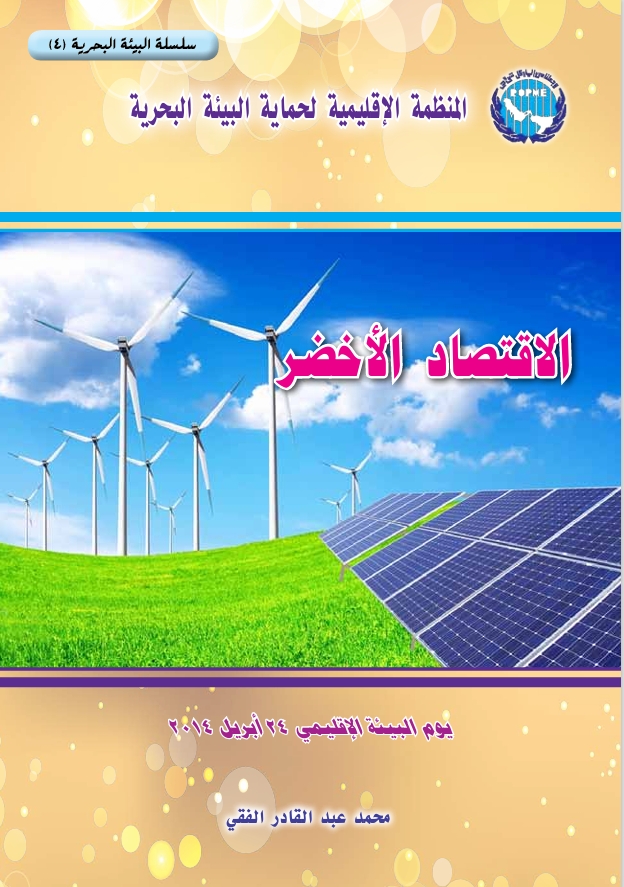


This publication addresses the concept of the green economy as a key modern approach in environmental and development thinking. The term emerged prominently through the United Nations Environment Programme (UNEP) in 2008 and was globally recognized as a central pillar of sustainable development, particularly during the Rio+20 Conference.
A green economy is defined as an economic model that seeks to enhance human well-being and social equity while significantly reducing environmental risks and minimizing ecological scarcities. It emphasizes low carbon emissions, efficient resource use, and social inclusiveness, in contrast to the traditional “brown economy,” which relies heavily on fossil fuels and contributes to environmental degradation.
The green economy is closely linked to the concept of ecosystem services, which include provisioning services (such as food and water), regulating services (such as climate regulation and water purification), cultural services, and supporting services (such as soil formation). These services form the foundation of sustainable economic development.
The emergence of the green economy has been driven by escalating global challenges, including financial crises, food insecurity, climate change, natural resource depletion, and biodiversity loss. As a result, transitioning to a green economy has become a necessity to address these interconnected crises, reduce poverty, and balance economic growth with environmental protection.
Key objectives of the green economy include:
Integrating economic development with environmental protection.
Improving resource efficiency and reducing waste.
Creating green jobs.
Promoting social equity and poverty reduction.
Reducing pollution and harmful emissions.
Investment opportunities in the green economy span multiple sectors, including renewable energy, sustainable agriculture, water management, clean transportation, waste management, and green buildings. Transitioning requires policy reforms, financial incentives, and strengthened environmental regulations.
The publication emphasizes that the green economy is not a substitute for sustainable development, but rather a critical pathway to achieving it. Sustainable development cannot be realized without restructuring current economic systems that depend on excessive resource exploitation.
It also addresses challenges to the transition, such as slow systemic change, the need for behavioral and policy shifts, and widespread misconceptions—such as the perceived trade-off between economic growth and environmental protection, or the belief that green economy initiatives are only feasible for developed countries—both of which are refuted by evidence and global experiences.
The report highlights the current global situation, where unsustainable economic growth has led to resource depletion, ecosystem degradation, and increased pollution, reinforcing the urgency of adopting a green economy approach.
Looking ahead, the success of the green economy depends on international cooperation and strong political will, offering a pathway toward a cleaner, more balanced future for both humanity and the environment.
Regarding the role of the Regional Organization for the Protection of the Marine Environment (ROPME), the organization actively supports the transition by:
Promoting environmental awareness.
Encouraging reductions in carbon emissions.
Supporting renewable energy adoption.
Urging member states to implement sustainable environmental policies.
ROPME has identified eight key sectors for action: agriculture, industry, energy, water, urban development, transportation, waste management, and tourism, and adopted the theme “Green Economy and the Marine Environment” for the 2014 Regional Environment Day.
The publication concludes that transitioning to a green economy is no longer optional, but an urgent necessity to ensure a sustainable and secure future while preserving the planet’s natural resources for generations to come.