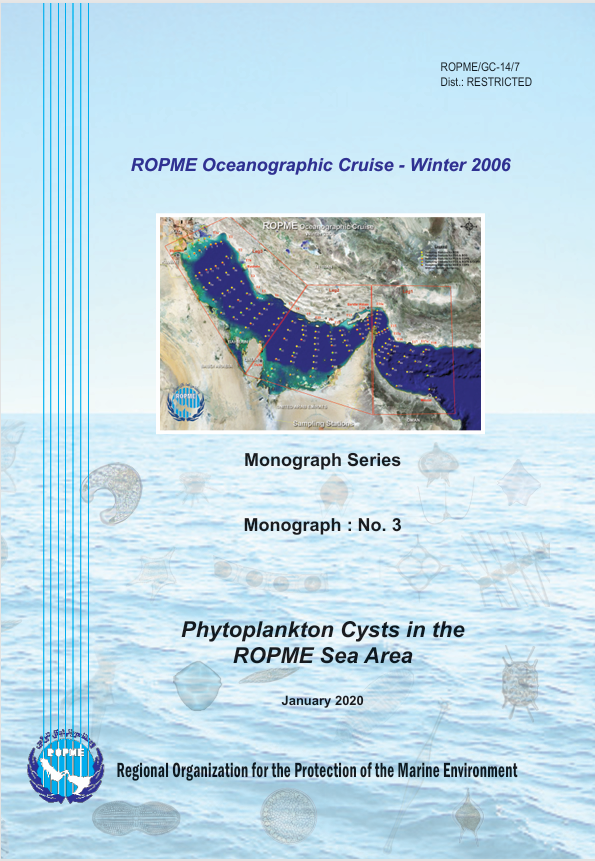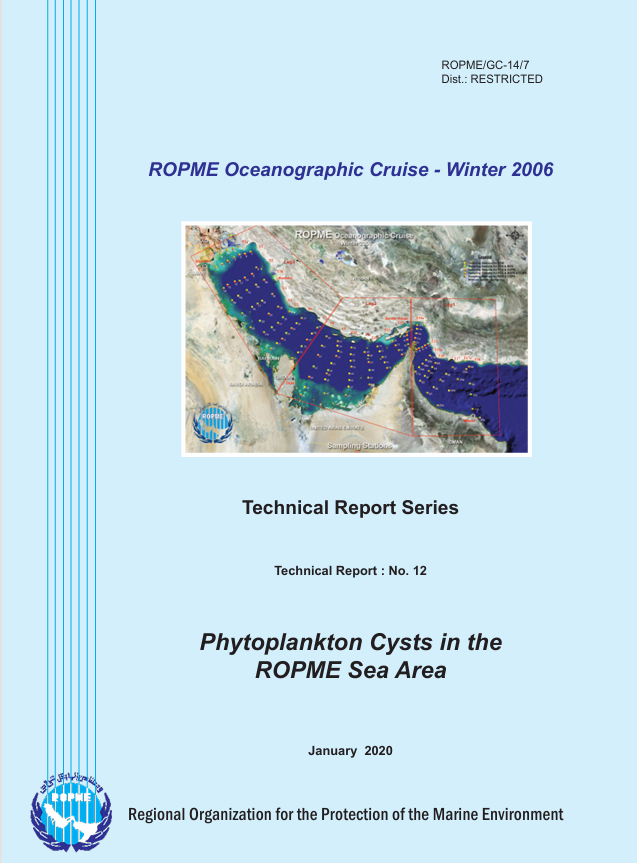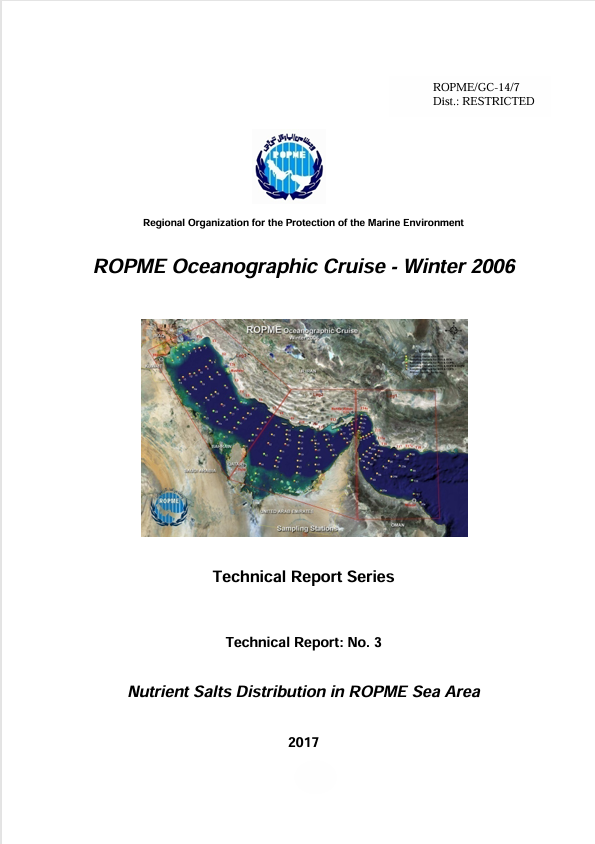


This report is part of the scientific monograph series published by the Regional Organization for the Protection of the Marine Environment (ROPME), based on the results of the comprehensive Winter 2006 Oceanographic Cruise. The cruise aimed to enhance understanding of the marine environmental status of the ROPME Sea Area (RSA) and support the preparation of regional State of the Marine Environment assessments.
The report focuses on the study of phytoplankton resting cysts, which represent an important stage in the life cycle of many phytoplankton species, particularly dinoflagellates. These resting stages play a critical role in the survival of marine species under unfavorable environmental conditions and serve as valuable early indicators of the potential occurrence of Harmful Algal Blooms (HABs).
The report was prepared by Dr. Gilan Attaran-Fariman from the Department of Marine Science, Chabahar Maritime University (CMU), Iran, based on samples collected during the ROPME Winter 2006 Oceanographic Cruise.
View more
Background and Importance of the Study
Phytoplankton are the primary producers in marine ecosystems and form the foundation of marine food webs. Many phytoplankton species produce dormant stages or resistant cysts when exposed to unfavorable environmental conditions, including:
* Sudden changes in temperature and salinity.
* Nutrient depletion.
* Reduced light availability.
* Other adverse environmental conditions.
Dinoflagellates are distinguished by their ability to produce highly resistant resting cysts that can remain preserved in marine sediments for extended periods, reaching decades or even centuries. This makes them valuable tools for studying the history of marine ecosystems and predicting the reappearance of species capable of forming harmful algal blooms.
Studies indicate that a significant proportion of harmful algal bloom species worldwide are associated with dinoflagellates, with this group accounting for approximately **75% of the species responsible for red tides and harmful algal bloom events**.
Despite the importance of this life-cycle stage, previous studies in the ROPME Sea Area have mainly focused on the motile stages of phytoplankton, while information regarding resting cysts remained limited. This study was therefore undertaken to investigate their diversity and geographical distribution within the region.
—
ROPME Winter 2006 Oceanographic Cruise
Recognizing the scientific importance of comprehensive marine surveys for assessing the status of the marine environment, the ROPME Council assigned high priority to conducting an integrated oceanographic cruise within the ROPME Sea Area.
The cruise was conducted during:
1 February – 11 March 2006
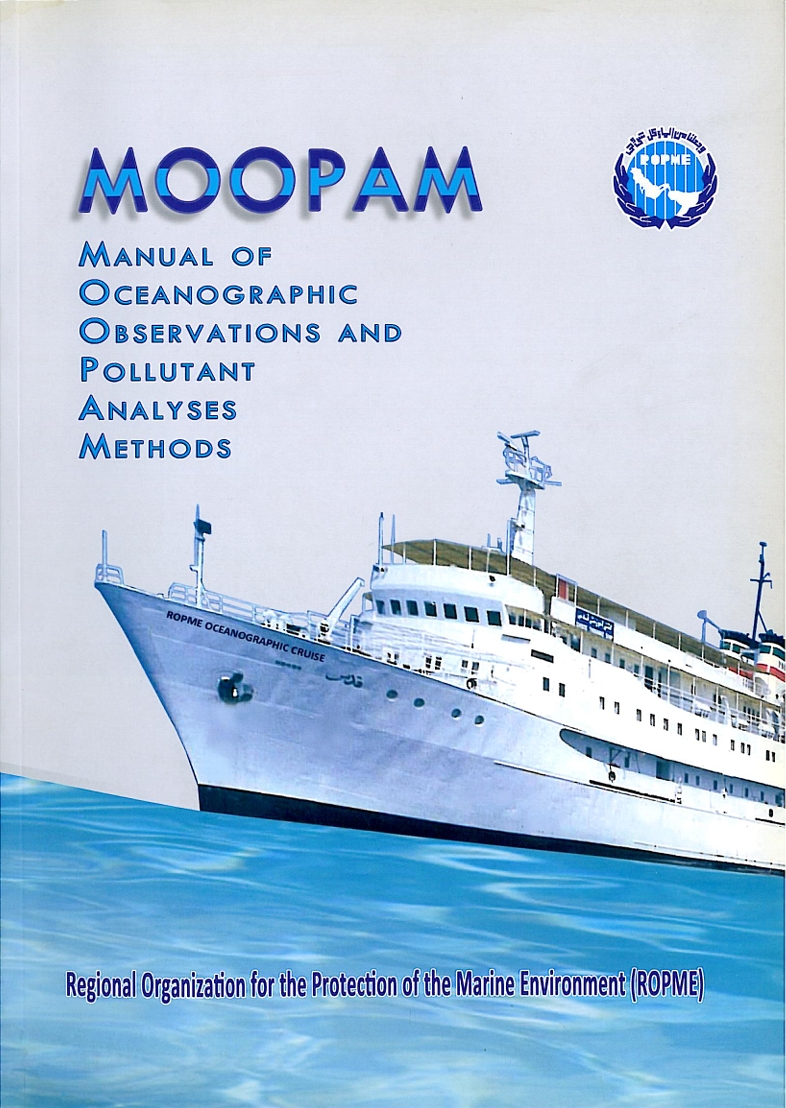
on board the M/V Ghods vessel of the Islamic Republic of Iran.
The survey included:
115 marine stations covering the entire ROPME Sea Area.
Participation of 97 experts and researchers** from ROPME Member States.
Investigation of various oceanographic and environmental disciplines.
The collected samples were distributed among specialized laboratories within and outside the region for detailed analyses. Additional samples were preserved in the ROPME Marine Sample Bank to support future research activities.
—
Objectives of the Study
The study focused on:
* Identification and classification of phytoplankton resting cysts present in sediments of the ROPME Sea Area.
* Investigation of the taxonomic diversity of dinoflagellates and other cyst-producing phytoplankton groups.
* Determination of the spatial distribution of different species throughout the region.
* Establishment of a scientific database to improve understanding of phytoplankton dynamics and potentially harmful algal bloom-forming species.
* Supporting marine environmental monitoring programs in the region.
—
Methodology
Marine sediment samples were collected using a Van Veen Grab sampler from:
* **27 marine stations**.
* Distributed across three cruise legs and 16 transects.
* Covering areas including:
* The inner and northern parts of the ROPME Sea Area.
* The Strait of Hormuz.
* Northern and southern parts of the Sea of Oman.
The total number of collected samples included:
-25 samples collected during February 2006.
– Two samples collected during March 2006.
Sampling depths ranged from:
26 meters to 104 meters.
Sediment samples were processed using standard sieving techniques and analyzed using light microscopy and inverted microscopy equipped with a digital camera. Species identification was based on morphological characteristics and specialized scientific references.
—
Main Results
Taxonomic Diversity of Resting Cysts
The study revealed a high diversity of phytoplankton resting cyst communities in the ROPME Sea Area.
A total of:
93 species and taxonomic forms of resting cysts
were identified, belonging to three major groups:
—
1. Dinoflagellates
Dinoflagellates represented the most diverse and widely distributed group, comprising the majority of recorded species.
Major recorded orders and families included:
*Peridiniales
*Gonyaulacales
*Gymnodiniales
Important genera included:
*Protoperidinium
*Alexandrium
*Scrippsiella
*Gonyaulax
*Spiniferites
*Gymnodinium
*Cochlodinium
*Polykrikos
and others.
—
2. Diatoms
Several resting stages of diatoms were recorded, including:
Paralia sp.
Other unidentified taxonomic forms.
—
3. Raphidophytes
Species belonging to this group were also recorded, including:
Chattonella sp.
Heterosigma cf. akashiwo
This group is known for its ability to form algal blooms that may affect marine ecosystems and fisheries resources.
—
Ecological Importance of Resting Cysts
The report confirmed that the study of phytoplankton resting cysts represents an important tool for understanding:
* Marine species life cycles.
* Species survival mechanisms under stressful environmental conditions.
* The reappearance of certain species after long periods of dormancy.
* The potential occurrence of future harmful algal blooms.
The presence of toxin-producing species also represents an important environmental indicator that should be incorporated into continuous regional monitoring programs.
—
Taxonomic Characteristics Used for Species Identification
Identification of resting cysts was based on several morphological characteristics, including:
* Cyst shape and size.
* Outer wall coloration.
* Wall structure.
* Presence of processes or spines.
* Shape of the opening formed during cell release (**Archeopyle**).
* Internal cyst content.
The structure of the **Archeopyle** is considered one of the most important characteristics used for distinguishing between different species.
—
Geographical Distribution of Species
The report provided detailed distribution maps for each recorded species in the ROPME Sea Area, showing their occurrence locations at the sampling stations of the Winter 2006 Cruise.
These data contributed to developing an initial understanding of:
* Biodiversity of phytoplankton resting cyst communities.
* Distribution patterns of different species.
* The relationship between environmental conditions and the distribution of marine microbial communities.
—
Main Conclusions
The study concluded that the ROPME Sea Area contains a rich diversity of phytoplankton resting cysts, particularly dinoflagellates, reflecting the ecological diversity and changing marine conditions of the region.
The study also confirmed that:
* Resting cysts represent an essential component for understanding phytoplankton dynamics.
* Some recorded species may have ecological significance due to their association with harmful algal blooms.
* Further seasonal and long-term studies are required to better understand the behavior and distribution patterns of these communities.
* Incorporating resting cyst studies into regional marine monitoring programs will enhance early prediction capabilities for harmful algal bloom events.
Conclusion
This report represents an important scientific reference on the diversity and geographical distribution of phytoplankton resting cysts in the ROPME Sea Area. It provides a fundamental database supporting marine environmental assessment programs, monitoring of ecological changes, and strengthening the capacity to predict harmful algal bloom events in the waters of the region.