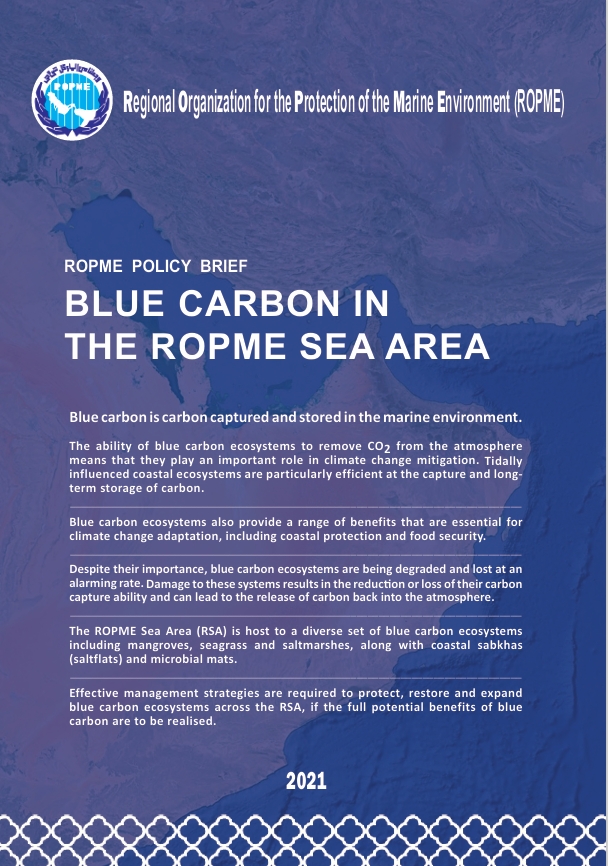


The ROPME Policy Brief on Blue Carbon in the ROPME Sea Area (RSA) highlights the critical role of marine ecosystems in capturing and storing carbon, thereby contributing to climate change mitigation and adaptation. Blue carbon refers to carbon sequestered in coastal and marine ecosystems such as mangroves, seagrasses, and saltmarshes, which are particularly efficient at long-term carbon storage.
In addition to mitigating climate change, these ecosystems provide essential environmental and socio-economic benefits, including coastal protection from storms, support for fisheries, and enhancement of food security. However, blue carbon ecosystems in the RSA are under increasing threat due to coastal development, pollution, and climate change, leading to degradation and potential release of stored carbon back into the atmosphere.
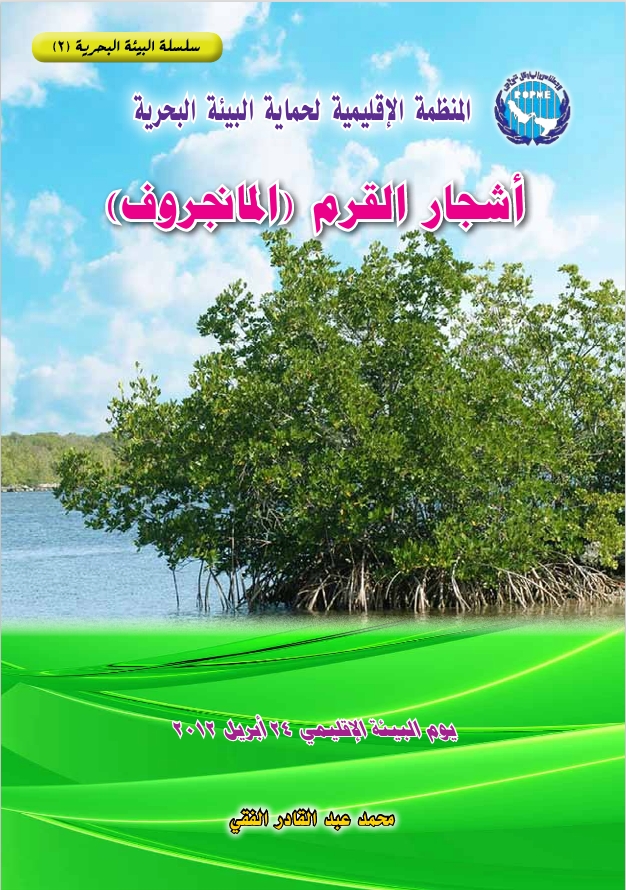
The RSA hosts a diverse range of blue carbon ecosystems, including seagrass (the most widespread and highest in annual carbon accumulation), saltmarshes (with uncertain extent but vulnerable to sea-level rise), mangroves (well-studied but limited and fragmented), coastal sabkhas (extensive and high carbon storage per unit area), and microbial mats (less studied but with high carbon density).
To support conservation efforts, ROPME conducted the first regional assessment and mapping of these ecosystems, estimating their extent, carbon storage, and accumulation rates. Despite uncertainties in data, this initiative provides a foundational evidence base for policymaking.
The Policy Brief emphasizes the need for effective management strategies to protect, restore, and expand these ecosystems to maximize their benefits. It is part of the broader ROPME Marine Climate Change Regional Action Plan, which aims to enhance regional cooperation, build scientific knowledge, and support Member States in meeting international climate commitments such as the UNFCCC.