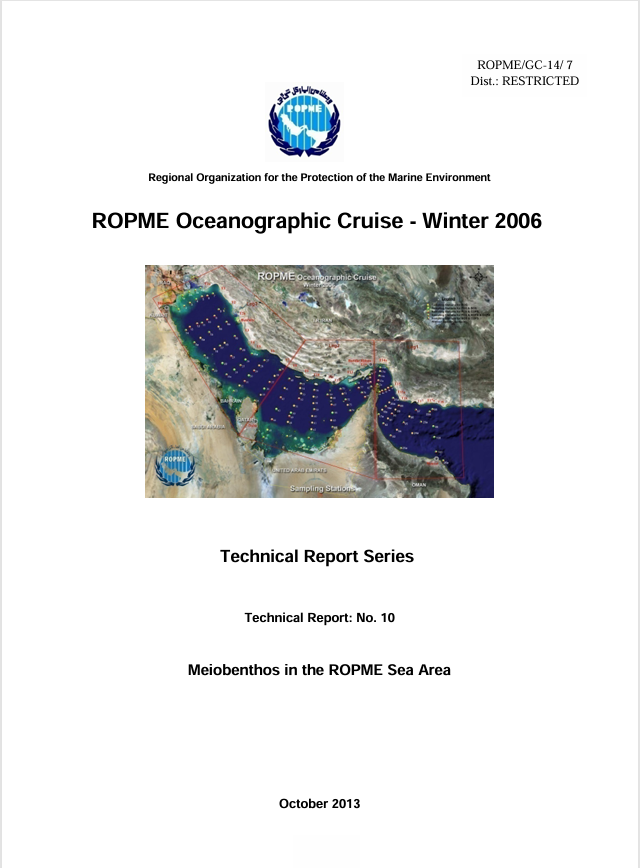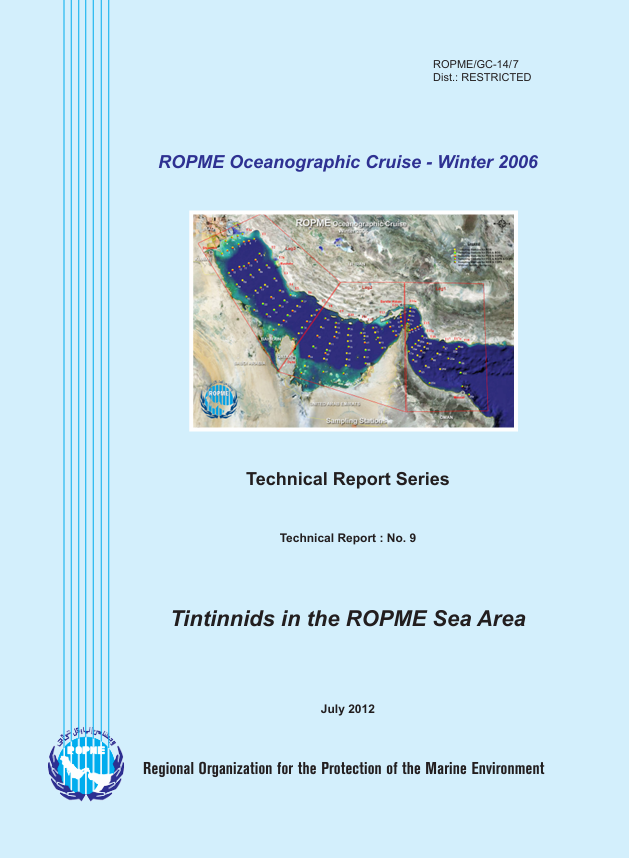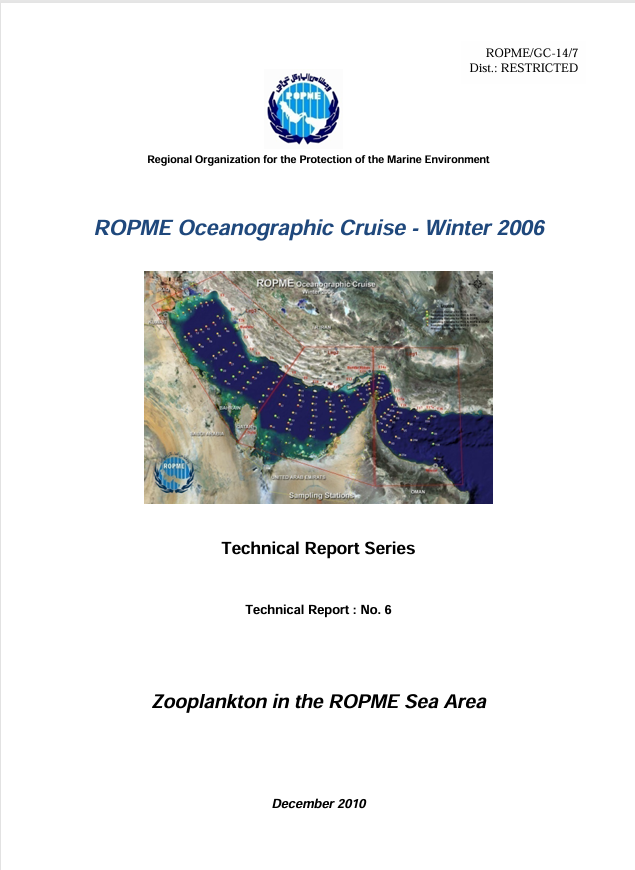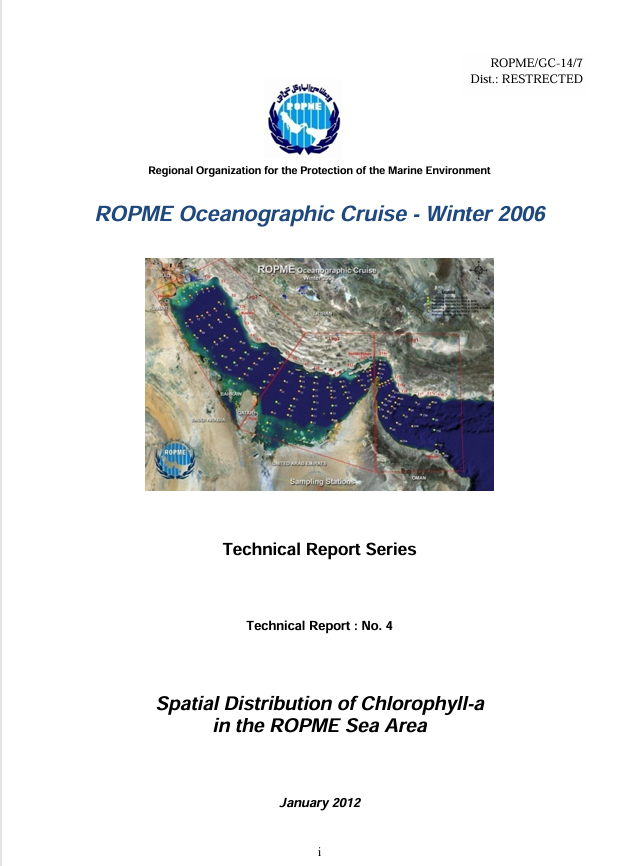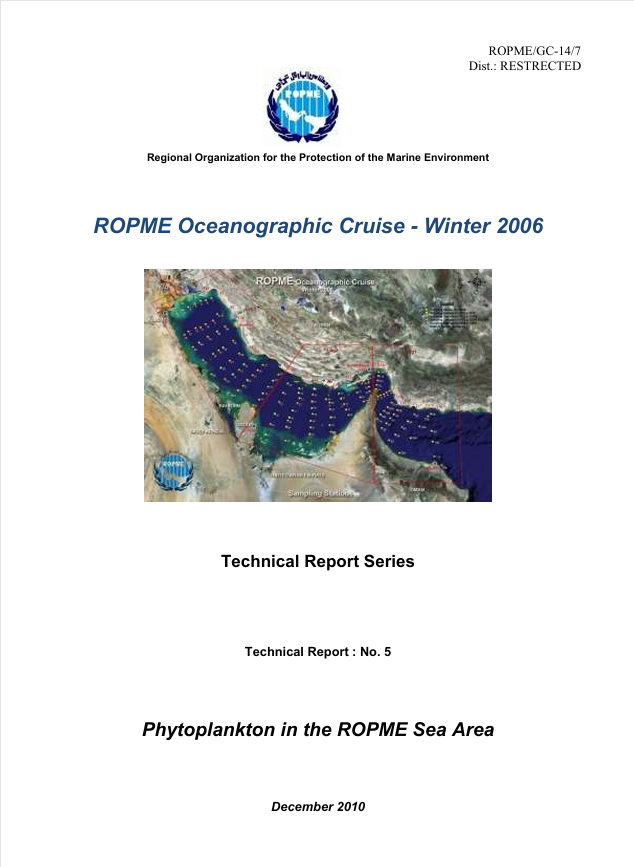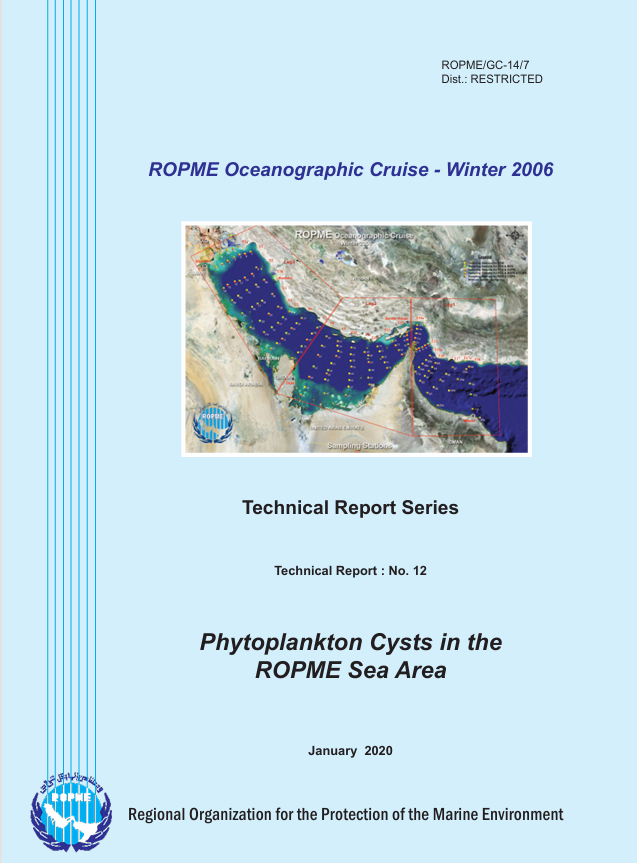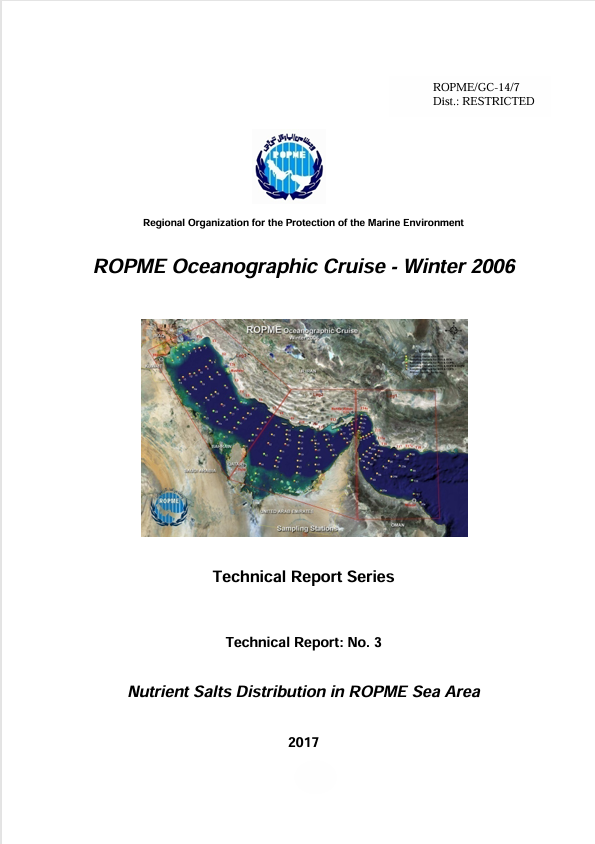


This report is part of the Technical Report Series issued by the **Regional Organization for the Protection of the Marine Environment (ROPME)** under the framework of its scientific oceanographic cruise programmes, which aim to enhance knowledge and understanding of the status of the marine environment within the ROPME Sea Area (RSA).
The report presents a study of meiobenthic communities (Meiofauna/Meiobenthos), which are microscopic multicellular organisms inhabiting marine sediments. These organisms represent fundamental components of benthic ecosystems due to their essential roles in organic matter recycling, supporting marine food webs, and assessing the impacts of environmental stressors and pollution.
The report was prepared by the Khorramshahr Marine Science and Technology University (KUMST), Islamic Republic of Iran, under the scientific supervision of a research team led by Dr. M.S. Nabavi, through a research contract with ROPME. The study aimed to analyze the composition and distribution patterns of meiobenthic communities and examine their relationships with various environmental parameters.
—
Objectives and Methodology
The study aimed to:
* Assess the composition, structure, and diversity of meiobenthic communities within the ROPME Sea Area.
* Investigate the distribution and abundance of meiobenthic organisms during three oceanographic cruises:
* Summer 2000 Cruise.
* Summer 2001 Cruise.
* Winter 2006 Cruise.
* Analyze the relationship between meiobenthic communities and environmental factors, including:
* Temperature.
* Salinity.
* Dissolved oxygen.
* pH.
* Water depth.
* Sediment characteristics.
* Organic matter content.
The Winter 2006 Cruise focused on **51 marine stations** within the ROPME Sea Area, extending the survey coverage to include the **middle part of the RSA, including the Sea of Oman**, in addition to the inner areas investigated during previous cruises.
—
View more
Importance of Meiobenthos in Marine Environmental Assessment
Meiobenthic organisms are considered important biological indicators in marine monitoring programmes due to their:
* High sensitivity to environmental changes.
* Rapid response to natural and human-induced disturbances.
* Close association of their life cycles with marine sediments.
* Ability to reflect the ecological condition of benthic environments.
These organisms also represent an important food source for higher trophic-level marine organisms, including fish and small crustaceans. In addition, they contribute significantly to organic matter decomposition and nutrient recycling processes within marine ecosystems.
—
Major Findings
Taxonomic Diversity of Meiobenthic Communities
Results from the three oceanographic cruises demonstrated a significant increase in the number of recorded species as the study coverage expanded. The recorded diversity included:
70 species during the Summer 2000 Cruise.
205 species during the Summer 2001 Cruise.
281 species during the Winter 2006 Cruise.
The recorded meiobenthic communities included several major groups, most notably:
Foraminifera.
Ostracoda.
Micro Molluscs.
Nematoda.
Copepoda.
Polychaeta larvae.
—
Abundance and Distribution of Meiobenthic Communities
The study revealed considerable variations in meiobenthic abundance among different stations and regions.
The highest recorded abundances were:
Summer 2000 Cruise:
16,104 individuals per 25.6 cm³ at Station No. (80).
Summer 2001 Cruise:
30,622 individuals per 25.6 cm³ at Station No. (61).
Winter 2006 Cruise:
11,348 individuals per 25.6 cm³ at Station No. (93), located near the Omani coast in the Sea of Oman.
Analyses indicated that Foraminifera, Ostracoda, and micro molluscs were the dominant groups contributing most significantly to spatial variations among different sampling locations.
—
Community Structure of Meiobenthic Groups
The results showed that Foraminifera were the most dominant group throughout the three cruises, accounting for:
90% to 97.05% of the total recorded meiobenthic abundance.
Ostracoda and micro molluscs also demonstrated considerable ecological importance in determining the characteristics and structure of benthic communities.
The highest species diversity during the Winter 2006 Cruise was recorded at Station No. (98) on the Iranian coast of the Sea of Oman, where:
65 meiobenthic species were identified.
This station was characterized by sediments rich in silt and clay fractions, together with relatively high organic matter content, providing favourable conditions for the establishment and diversity of meiobenthic communities.
—
Sediment Characteristics and Their Influence on Meiobenthic Communities
Sediment analyses during the three cruises revealed the widespread presence of sediments containing high proportions of silt and clay, accompanied by relatively elevated organic matter content at many stations.
Such environments provide suitable habitats for meiobenthic organisms due to their ability to offer:
* Rich sources of organic nutrients.
* Suitable conditions for shelter and reproduction.
* Appropriate habitats for the establishment and stability of benthic communities.
The findings also demonstrated a clear relationship between sediment composition and meiobenthic diversity, with some areas characterized by muddy sediments showing higher levels of biological diversity.
—
Relationship Between Meiobenthos and Environmental Factors
Statistical analyses revealed significant relationships between meiobenthic distribution and several environmental parameters, including:
* An inverse relationship between meiobenthic abundance and water depth during the Summer 2000 and Summer 2001 Cruises.
* An inverse relationship between abundance and salinity during the Winter 2006 Cruise.
* A relationship between dissolved oxygen concentrations and water depth throughout the three cruises.
* The influence of sediment characteristics and organic matter content on meiobenthic community structure.
—
Importance of the Study
This report represents an important scientific database for understanding the dynamics of meiobenthic communities within the **ROPME Sea Area** and contributes to:
* Establishing a scientific baseline for monitoring future environmental changes.
* Supporting biological assessment programmes for the marine environment.
* Utilizing meiobenthic organisms as biological indicators for early detection of environmental stress.
* Strengthening regional scientific cooperation in marine ecosystem protection.
The study confirms that meiobenthic communities within the ROPME Sea Area exhibit diverse and structured assemblages that are closely linked to marine environmental conditions and sediment characteristics. The findings highlight the importance of maintaining long-term monitoring programmes to better understand natural and human-induced changes and their impacts on marine ecosystem health.
—
Regional Organization for the Protection of the Marine Environment (ROPME)
Towards enhancing scientific knowledge and protecting the shared marine environment of the region.