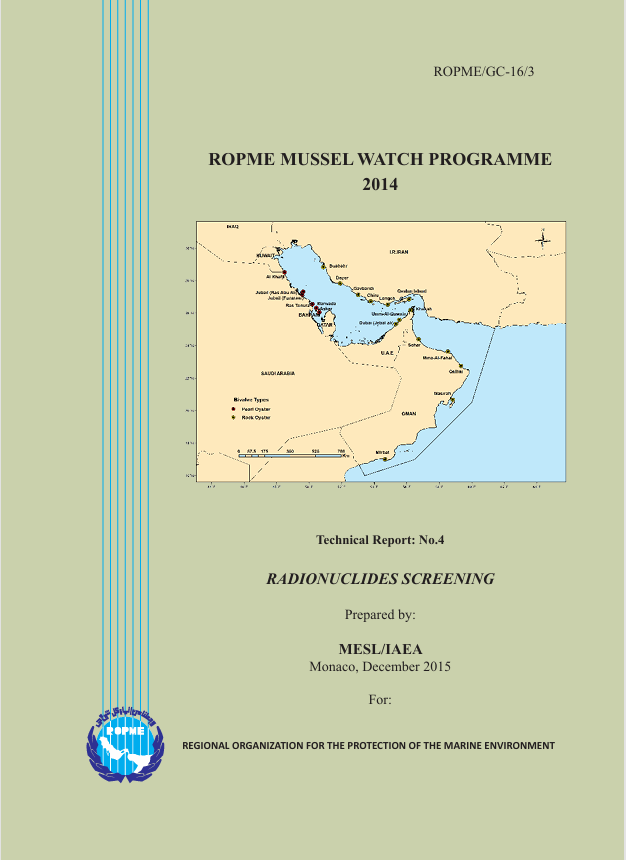


As part of the ROPME Mussel Watch Programme 2014, a regional study was conducted between February and July 2014 to carry out a preliminary assessment of radioactivity levels in the marine environment within the ROPME Sea Area (RSA). The study aimed to establish a scientific baseline describing the current status of radionuclides in the region and their distribution in marine sediments and marine organisms. The assessment was based on the analysis of sediment and oyster samples collected from coastal areas across the Member States, serving as a continuation of previous monitoring programmes implemented by ROPME in cooperation with the International Atomic Energy Agency (IAEA).
Objectives of the Study
The study aimed to:
- Assess radioactivity levels in the marine environment of the ROPME Sea Area.
- Determine the regional distribution of natural and anthropogenic radionuclides in marine sediments and oysters.
- Provide baseline data to support future studies in monitoring potential changes in radioactive contamination levels.
- Support regional environmental monitoring programmes and enhance understanding of the radiological status of the region.
Study Scope and Sampling Locations
The study involved the collection and analysis of:
Marine sediment samples.
Oyster (bivalve) samples.
Samples were collected from coastal areas in the following countries:
Kingdom of Bahrain.
Islamic Republic of Iran.
Republic of Iraq.
Sultanate of Oman.
Kingdom of Saudi Arabia.
United Arab Emirates.
View more
A total of the following samples was analysed:
17 marine sediment samples and 22 oyster samples. The samples were collected from selected coastal sites representing different parts of the ROPME Sea Area. Importance of Monitoring Marine Radionuclides Monitoring radioactivity in the marine environment is a fundamental component of marine environmental protection programmes, as it contributes to assessing the condition of the marine environment, early detection of potential sources of radioactive contamination, monitoring the impacts of human activities on coastal environments, providing scientific data to support the protection of marine resources and public health, and establishing a reference database for future comparisons.
Analytical Methodology The study employed advanced radiological techniques, including processing and preparation of sediment and oyster samples to ensure sample homogeneity, analysis using High Resolution Gamma Spectrometry, use of high-efficiency germanium detectors operated in low-background laboratories at the International Atomic Energy Agency, and implementation of rigorous quality assurance procedures using internationally certified reference materials. The analyses included measurements of the following radionuclides: Potassium-40 (⁴⁰K), Caesium-137 (¹³⁷Cs), Lead-210 (²¹⁰Pb), Uranium-238 (²³⁸U), Uranium-235 (²³⁵U).
Key Findings
First: Marine Sediments The analytical results indicated that concentrations of Caesium-137 (¹³⁷Cs), an anthropogenic radionuclide, were very low in all sediment samples, no other anthropogenic gamma-emitting radionuclides were detected apart from Caesium-137, natural radionuclide levels were within the normal ranges reported for comparable marine environments worldwide, and no spatial pattern indicating a local or regional source of radioactive contamination was observed, with recorded values consistent with global background radiation levels. Second: Oyster Samples The analytical results showed that Caesium-137 was not detected in any of the oyster samples even using ultra-sensitive analytical techniques, no other anthropogenic radionuclides were detected in the samples, Potassium-40 concentrations were within the normal range expected for marine organisms, and Lead-210 data indicated natural variations among sampling sites which may be associated with environmental factors or naturally occurring industrial activities such as oil and gas, chemical, or fertilizer industries.
However, the study recommended further analyses of Polonium-210 to provide a more comprehensive radiological assessment. Environmental and Radiological Risk Assessment. The report concluded that the findings do not indicate any increase in radioactivity levels within the marine environment of the ROPME Sea Area, nor did they reveal any evidence of significant local or regional sources of radioactive contamination. The study further demonstrated that natural radionuclide levels were comparable to those reported from marine environments worldwide, while anthropogenic radionuclide levels remained extremely low and posed no radiological concern. Main Conclusions The report concluded that radioactivity levels in marine sediments and oysters within the ROPME Sea Area were generally low, no increase in radioactive contamination was observed compared with previous monitoring studies, the anthropogenic radionuclides detected were extremely limited and remained within internationally recognized background levels, the findings highlight the importance of continuing radiological monitoring programmes to obtain more representative data for the various regions of the ROPME Sea Area, and the report also noted that the current number of samples was insufficient for a comprehensive regional assessment, emphasizing the need to expand future monitoring activities.
Recommendations:
The report recommended implementing a more comprehensive radiological monitoring programme covering a larger number of coastal and offshore locations, collecting additional surface sediment and sediment core samples to investigate the historical deposition of contaminants, adhering to standardized sampling, preparation, transportation, and storage protocols carried out by trained personnel, increasing sample quantities to improve the accuracy of radiological measurements, expanding the analytical programme to include additional radionuclides such as Polonium-210 (²¹⁰Po), Radium-226 (²²⁶Ra), Plutonium isotopes (Pu), Americium-241 (²⁴¹Am), Strontium-90 (⁹⁰Sr), Tritium (³H), and strengthening data quality assurance programmes and enhancing regional capacity in the analysis of marine radionuclides. Significance of the Report for the Regional Organization for the Protection of the Marine Environment (ROPME) This report represents an important reference study within the regional environmental monitoring programmes implemented by ROPME in cooperation with the International Atomic Energy Agency (IAEA). It contributes to establishing a scientific baseline for radioactivity levels within the ROPME Sea Area, supporting regional environmental assessment programmes, enhancing the capacity for early detection of future changes in radioactivity levels, providing scientific data to support environmental management and informed decision-making, and strengthening regional scientific cooperation in radiological monitoring and marine environmental protection. Conclusion The ROPME Mussel Watch Programme 2014 – Radionuclides Screening confirms that radioactivity levels in marine sediments and oysters throughout the ROPME Sea Area were generally low during the study period. The findings revealed no evidence of abnormal radioactive contamination or significant local sources of anthropogenic radionuclides, while natural radionuclide levels remained within internationally recognized background ranges. The report further emphasizes the importance of maintaining and expanding regional radiological monitoring programmes through increased sampling coverage and the inclusion of additional radionuclides. Such efforts will strengthen marine environmental protection, support evidence-based environmental management, and contribute to the sustainable management of marine resources across the ROPME Member States.