

Introduction
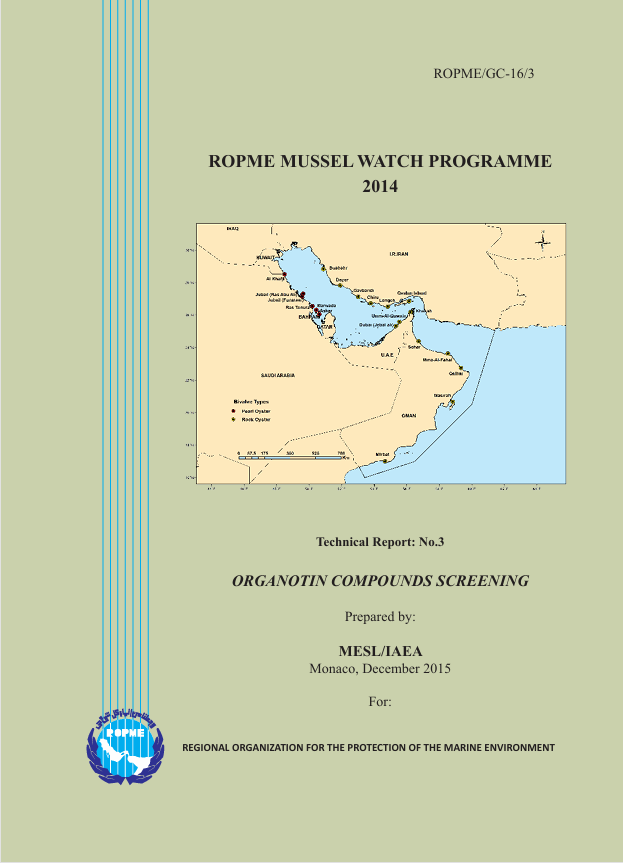
Within the framework of scientific and technical cooperation between the Regional Organization for the Protection of the Marine Environment (ROPME) and the International Atomic Energy Agency (IAEA), and as part of regional environmental monitoring programmes, a specialized study was implemented under the ROPME Mussel Watch Programme 2014 to assess the levels of organotin compounds (Organotin Compounds) in the marine environment of the ROPME Sea Area (ROPME Sea Area – RSA).
This study forms part of a series of previous monitoring programmes implemented by the Organization in cooperation with the International Atomic Energy Agency, including the ROPME-IAEA Pollution Monitoring Project (1994–2005) and the 2011 Mussel Watch Programme, where these programmes aim to monitor the status of the marine environment and assess the accumulation of chemical pollutants in coastal areas.
This report represents an extension of the previous reports issued by the Organization during 2001 and 2013, focusing on assessing the presence of organotin compounds in marine sediments and marine organisms, and comparing the current results with previous data to determine temporal changes in pollution levels.
Study Objectives
The study focused on achieving several main objectives, including:
Assessing the levels of organotin compounds in the main coastal areas within the ROPME Sea Area.
Determining the concentrations of organotin compounds in marine sediments and marine organisms.
Evaluating the impact of various human activities, particularly those related to maritime transport and ports, on the distribution of these compounds.
Comparing the 2014 results with the results of previous studies to determine temporal pollution trends.
Providing reliable scientific data to support environmental management and the protection of marine ecosystems in Member States.
View more
Study Scope and Sampling Locations
Sampling activities were carried out during the period from February to July 2014, covering coastal areas in the following countries:
Kingdom of Bahrain.
Islamic Republic of Iran.
Republic of Iraq.
Sultanate of Oman.
Kingdom of Saudi Arabia.
United Arab Emirates.
The study included two main types of samples:
First: Marine Sediment Samples (Sediments)
Sediment samples were collected from coastal areas to assess the accumulation of organotin compounds in the seabed marine environment, as sediments are considered one of the most important reservoirs for the long-term accumulation of chemical pollutants.
Second: Marine Organism Samples (Biota)
Marine oysters and molluscs were used as bioindicators (Bioindicators) due to their ability to accumulate pollutants from the surrounding environment. The samples included:
Pearl Oyster (Pearl Oyster).
Rock Oyster (Rock Oyster).
The use of marine organisms as pollutant indicators is considered an effective global tool for assessing marine environmental quality and monitoring long-term changes.
Importance of Organotin Compounds
Organotin compounds are considered important chemical pollutants in the marine environment, most notably tributyltin (Tributyltin – TBT). TBT is considered one of the most environmentally significant organotin compounds, as it was historically used in antifouling paints on ship hulls and marine coatings to prevent the growth of marine organisms on ships and marine structures.
However, its use resulted in serious environmental impacts due to its high toxicity and its ability to accumulate in marine organisms, which led to the imposition of international restrictions on its use, including the International Maritime Organization (IMO) Convention on Anti-fouling Systems.
Other Organotin Compounds
The study also included:
Monobutyltin (Monobutyltin – MBT).
Dibutyltin (Dibutyltin – DBT).
These compounds are considered degradation products of TBT in the marine environment.
Analytical and Screening Methodology
The study relied on advanced analytical methodologies developed by the laboratories of the International Atomic Energy Agency, and included:
Processing, drying, and preparation of sediment and marine organism samples.
Extraction of organotin compounds using advanced chemical techniques.
Purification of samples using chemical adsorption columns.
Analysis of compounds using:
Gas Chromatography – Mass Spectrometry
(Gas Chromatography/Mass Spectrometry – GC-MS)
Strict quality control procedures were also applied, including:
Analysis of blank samples (Blanks) to verify the absence of contamination during analysis.
Use of internationally certified reference materials for marine sediments, including:
NRC SOPH-1.
BCR-462.
To ensure the accuracy and reliability of the results.
Main General Results
First: Organotin Compounds in Marine Sediments
The analytical results showed the presence of varying concentrations of organotin compounds among the different monitoring sites.
The differences in pollution levels were associated with the nature of human activities in coastal areas, particularly ports,
ship traffic areas, and areas with high marine and industrial activities.
The results showed the presence of TBT compounds and their degradation products (DBT and MBT), indicating historical impacts resulting from the use of antifouling marine paints.
Second: Organotin Compounds in Marine Organisms
Samples of oysters and marine molluscs showed a clear ability to accumulate organotin compounds, confirming the importance of their use as bioindicators for monitoring marine pollution.
The results showed variations in compound levels among different locations, reflecting differences in environmental pressure sources and local marine activities.
Third: Assessment of Temporal Pollution Trends
When comparing the 2014 results with previous studies, the data contributed to assessing temporal changes in organotin compound levels.
The comparisons demonstrated the importance of continuing regular monitoring programmes, particularly to track the impact of international measures aimed at reducing the use of TBT compounds in marine activities.
The results also confirmed the importance of monitoring areas with intensive maritime activity for the early detection of any potential increase in the levels of these pollutants.
Main Conclusions
The report concluded the following:
Organotin compounds represent one of the important pollutants that should continue to be monitored within marine environmental monitoring programmes in the ROPME Sea Area.
The levels of these compounds are mainly associated with marine activities, particularly ship traffic, ports, and the use of antifouling marine coatings.
The Mussel Watch Programme has proven its effectiveness as a scientific tool for assessing the accumulation of chemical pollutants in the marine environment.
The study results provide an important database for monitoring temporal changes in pollution levels and supporting environmental decisions.
The report confirms the importance of continuing cooperation between ROPME and IAEA to implement advanced scientific monitoring programmes.
Importance of the Report for the Regional Organization for the Protection of the Marine Environment (ROPME)
This report represents one of the important reference studies within the regional environmental monitoring system implemented by the Organization in cooperation with the International Atomic Energy Agency, as it contributes to:
- Enhancing scientific knowledge regarding the status of the marine environment in the ROPME Sea Area.
- Evaluating the impact of marine activities on the quality of coastal ecosystems.
- Supporting policies and measures related to reducing marine pollution.
- Providing scientific data used in environmental planning and management.
- Strengthening regional and international cooperation in the field of marine environmental protection.
Conclusion:
The 2014 Mussel Watch Programme Report – Organotin Compounds Screening confirms that the marine environment in the ROPME Sea Area is affected, to varying degrees, by organic pollutant compounds associated with marine activities, particularly organotin compounds resulting from the historical use of antifouling paints.
The report also highlights the importance of continuing regular scientific monitoring programmes to ensure early detection of environmental changes, and to support Member States’ efforts in protecting marine ecosystems and maintaining their sustainability for future generations.