

Introduction
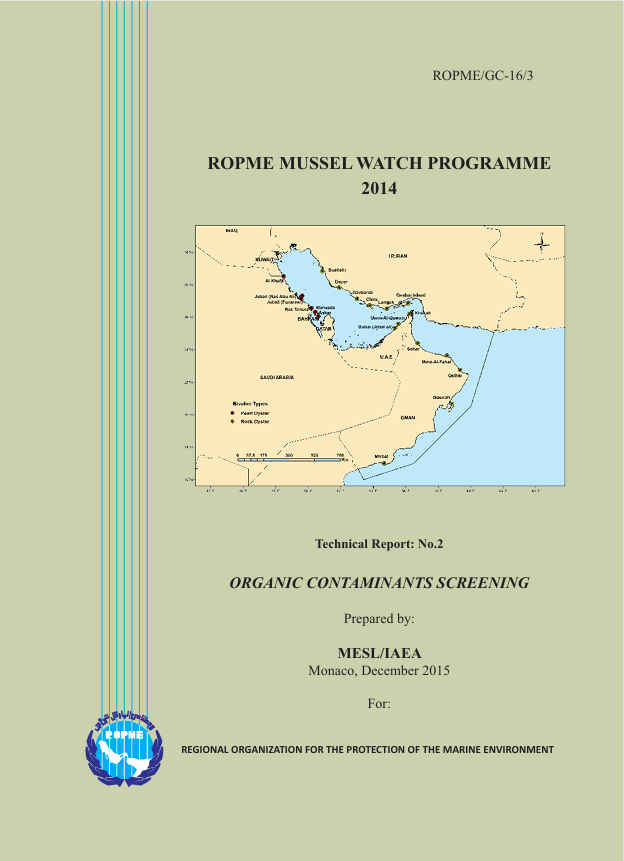
Within the framework of scientific and technical cooperation between the Regional Organization for the Protection of the Marine Environment (ROPME) and the International Atomic Energy Agency (IAEA), and under the ROPME Mussel Watch Programme, a regional study was conducted to monitor the levels of organic contaminants in the marine environment of the ROPME Sea Area (RSA).
This report forms part of a series of previous technical reports issued by ROPME in cooperation with the International Atomic Energy Agency during the years 1996, 1998, 1999, 2001, 2005, and 2013, with the aim of monitoring temporal changes in marine contaminant levels and assessing the status of coastal ecosystems in the region.
The study conducted in 2014 aimed to carry out a comprehensive survey of organic chemical contaminants in marine sediments and marine organisms, and to compare the results with previous monitoring data in order to identify temporal pollution trends and assess the impacts of various human activities on the marine environment.
Objectives of the Study
The monitoring programme focused on achieving several key objectives, including:
Assessing the levels of organic contaminants in the main coastal areas within the ROPME Sea Area.
Determining the concentrations of petroleum hydrocarbons and organochlorine compounds in sediments and marine organisms.
Monitoring compounds resulting from petroleum, industrial, and agricultural activities.
Comparing the current results with previous studies to identify trends in changes in pollution levels.
Providing a scientific database to support environmental management efforts and the protection of marine resources in the Member States.
Scope of the Study and Sampling Locations
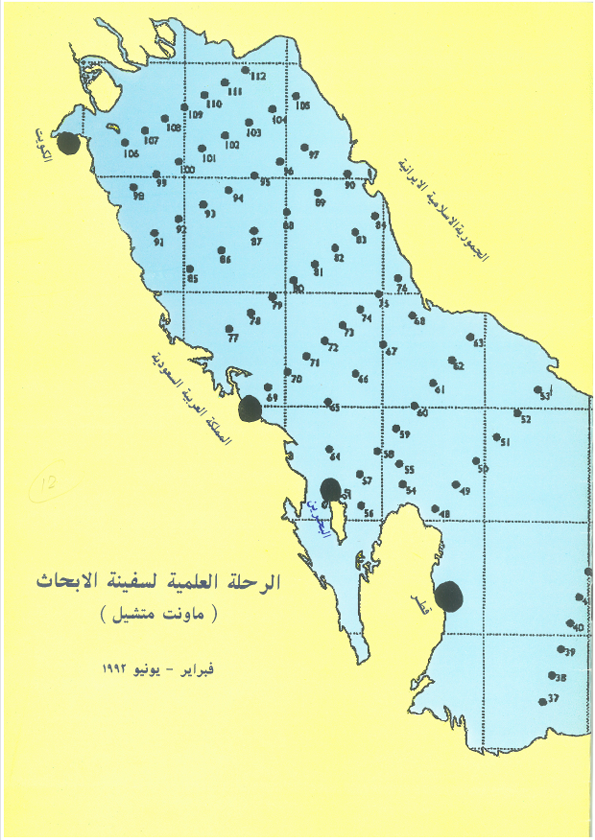
Sampling activities were conducted during the period from February to July 2014 and covered coastal areas in the following countries:
Kingdom of Bahrain.
Islamic Republic of Iran.
Republic of Iraq.
Sultanate of Oman.
Kingdom of Saudi Arabia.
United Arab Emirates.
View more
The samples included two main types. First: Marine Sediment Samples (Sediments). Sediment samples were collected from the seabed of coastal areas to measure the accumulation of organic contaminants associated with the marine environment. Second: Marine Biota Samples (Biota). Marine oysters and molluscs were used as bioindicators due to their ability to accumulate contaminants from the surrounding environment, including Pearl Oyster and Rock Oyster. The use of oysters within global environmental monitoring programmes is considered an effective approach for assessing long-term marine pollution levels.
Analytical and Screening Methodology. The study relied on advanced analytical protocols developed by the laboratories of the International Atomic Energy Agency and included Petroleum Hydrocarbon Analysis. Aliphatic Hydrocarbons and Polycyclic Aromatic Hydrocarbons (PAHs) were measured. These compounds represent important indicators of petroleum pollution sources, such as oil spills, maritime transportation and shipping activities, in addition to industrial activities and ports. Analysis of Organochlorine Compounds. A group of Persistent Organic Pollutants (POPs) was examined, including Polychlorinated Biphenyls (PCBs), which are industrial compounds previously used in electrical equipment and industrial oils. They are characterized by their ability to persist for long periods in the environment and accumulate in marine organisms. DDT compounds and their derivatives. These are pesticides whose use has been banned in many countries due to their environmental and health impacts; however, their residues can persist in the environment for decades. HCH and HCB compounds.
These are among the organic pollutants that can be transported over long distances and accumulate in marine food chains. Quality Control and Verification of Results. The study ensured the implementation of strict procedures to guarantee the accuracy of the results, including the use of internationally certified reference materials from the International Atomic Energy Agency and the National Institute of Standards and Technology (NIST), analysis of blank samples (Blanks) to verify the absence of contamination during laboratory procedures, the use of internal standards to measure extraction and analytical efficiency, and application of advanced analytical techniques using Gas Chromatography with Flame Ionization Detector (GC-FID), Gas Chromatography–Mass Spectrometry (GC-MS), and Electron Capture Detector (GC-ECD).