

Introduction
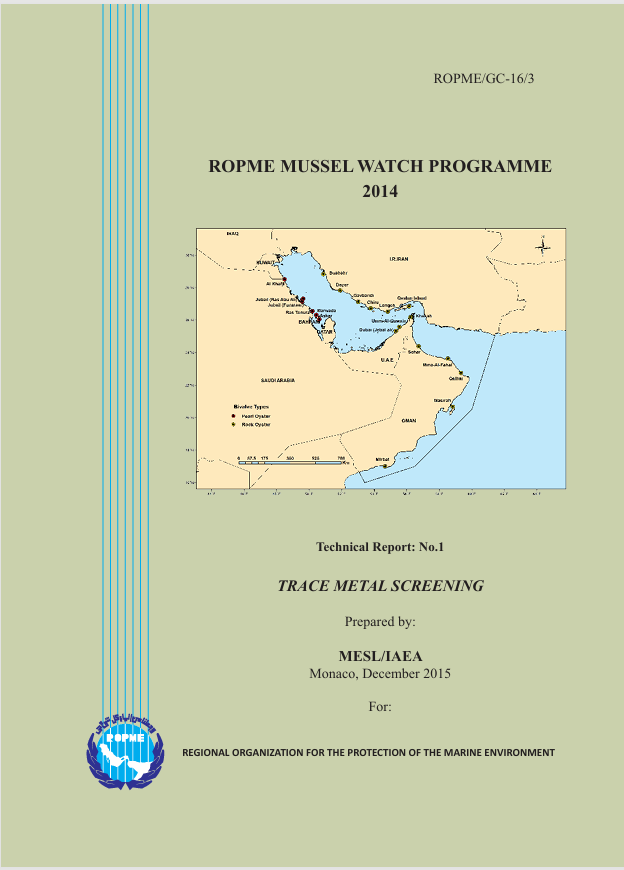
Within the framework of cooperation between the Regional Organization for the Protection of the Marine Environment (ROPME) and the International Atomic Energy Agency (IAEA), and as part of the Contaminant Screening Project and the ROPME Mussel Watch Programme, a comprehensive survey was conducted to assess trace elements and heavy metal concentrations in the coastal areas of the ROPME Sea Area (RSA).
This report represents a continuation of a series of previous studies conducted by ROPME in cooperation with the IAEA during 1996, 1998, 1999, 2001, 2005, and 2013, with the aim of evaluating the status of marine pollution and monitoring temporal variations in contaminant levels.
The field survey was carried out between February and July 2014 and covered the coastal areas of:
Kingdom of Bahrain.
Islamic Republic of Iran.
Republic of Iraq.
Sultanate of Oman.
Kingdom of Saudi Arabia.
United Arab Emirates.
View more
The study aimed to determine trace element concentrations in marine sediments and bivalve organisms (mussels/oysters), and to compare the results with previous surveys in order to identify potential changes or emerging pollution trends.
2. Sampling and Analytical Methodology
Marine sediment and oyster samples were collected from selected locations along the coasts of participating countries within the ROPME Sea Area.
The samples included two main oyster species:
- Pearl Oyster.
- Rock Oyster.
The samples were analyzed using advanced laboratory techniques, including:
• Flame Atomic Absorption Spectrometry (AAS) for measuring elements such as iron, manganese, and zinc.
• Inductively Coupled Plasma–Mass Spectrometry (ICP-MS) for determining concentrations of several trace elements, including:
Arsenic.
Cadmium.
Chromium.
Copper.
Lead.
Nickel.
Silver.
Uranium.
And other elements.
• Advanced Mercury Analyzer (AMA 254) for measuring total mercury concentrations.
• Gas Chromatography coupled with Atomic Fluorescence Spectrometry (GC-AFS) for determining organic mercury (methyl mercury).
In addition, sediment grain-size analysis was conducted to determine seabed characteristics and evaluate the influence of sediment composition on trace element concentrations.
3. Main Results – Marine Sediments
The sediment analysis results indicated that most trace element concentrations were within the ranges previously reported in regional studies and did not indicate exceptional pollution levels.
Most samples contained high proportions of sand, with sand exceeding 90% in many locations. This coarse sediment composition contributes to dilution of trace element concentrations compared with finer sediment fractions.
The main observations by country were as follows:
- Islamic Republic of Iran
Sediment samples collected from Bushehr and Dayer showed relatively elevated levels of nickel, chromium, and arsenic.
Nickel concentrations exceeded the Environmental Risk Management (ERM) reference values, which were mainly attributed to the natural geological background of the region and the presence of mineral-rich formations such as ophiolite rocks.
Arsenic concentrations in Bushehr exceeded environmental screening levels but remained below levels associated with significant ecological risk.
- Kingdom of Saudi Arabia
Most trace elements remained below environmental guideline values.
However, relatively elevated nickel concentrations were observed, particularly at Ras Tanura, compared with previous studies.
The report recommended further investigations to determine whether these elevated levels represent an actual increase in pollution or are related to sampling-related factors.
- Kingdom of Bahrain
Results showed that most elements were within acceptable levels, with nickel being the only element exceeding screening limits.
Previously reported elevated lead concentrations near the BAPCO site were not observed during this survey, confirming improved results compared with some previous monitoring campaigns.
- United Arab Emirates
Samples showed variations in concentrations of different elements, with some locations recording elevated levels of lead, chromium, and nickel.
Nickel exceeded environmental guideline values in several samples, particularly at some locations in Umm Al Quwain and Dubai.
- Sultanate of Oman
Some samples could not be analyzed due to their coarse composition, consisting mainly of gravel and rocks unsuitable for trace element analysis.
Nickel concentrations exceeded reference values at all analyzed locations, while chromium levels were elevated in most samples.
Elevated arsenic concentrations were detected at some locations, including Mina Al Fahal and Sohar.
The report attributed some of these elevated levels to the geological characteristics of the region and the presence of nickel-rich rock formations.
4. Main Results – Marine Organisms (Oysters)
A total of 26 oyster samples, including rock oysters and pearl oysters, were analyzed.
The results showed that most trace element concentrations were consistent with previous studies, with some elevated levels of specific elements at certain locations.
Key observations included:
Arsenic concentrations in oysters remained relatively high throughout the ROPME region, consistent with previous studies.
Limited increases were observed in cadmium, lead, and mercury levels.
- Iran
Rock oyster samples showed concentrations comparable with other RSA locations.
Qeshm Island recorded relatively elevated cadmium levels.
Chromium concentrations were slightly higher than those observed in some other areas.
- Saudi Arabia
Trace element levels in pearl oysters were within the ranges previously recorded regionally.
The Fanateer site recorded the highest arsenic concentration among pearl oyster samples collected during the 2014 survey.
- Iraq
Only one pearl oyster sample was collected from the Shatt Al Arab area.
The sample showed the highest levels among pearl oysters for some elements, including silver, cadmium, and mercury.
The report emphasized the need for additional sampling to determine whether these results are associated with a local pollution source.
- Bahrain
Oyster samples generally showed agreement with regional results.
The Askar site recorded relatively elevated lead and chromium concentrations compared with regional median values.
- United Arab Emirates
Results were generally consistent with previous studies.
Relatively elevated nickel concentrations were observed in pearl oysters collected from Umm Al Quwain.
Sultanate of Oman
Most elements showed concentrations comparable with previous studies.
Qalhat recorded the highest cadmium concentration among rock oyster samples.
Mina Al Fahal recorded the highest mercury concentration.
The proportion of methyl mercury exceeded 90% in one sample, which is considered unusual and requires further investigation.
5. Conclusion
The results of the ROPME Mussel Watch Programme 2014 confirmed that concentrations of most trace elements in sediments and oysters remained within previously reported ranges in the ROPME Sea Area.
However, some locally elevated concentrations were detected for certain elements, particularly nickel in sediments and arsenic in oysters, in addition to cadmium and lead at some locations.
The report emphasized that the continuation of regular monitoring programmes is essential to identify long-term pollution trends and distinguish between natural geological sources and human-induced sources of contamination.
The report also highlighted the importance of increasing monitoring locations, standardizing sampling and preparation procedures, collecting duplicate samples for quality verification, and focusing on areas containing fine sediments suitable for trace element analysis.
6. Recommendations
The report recommended the following:
• Conducting additional monitoring campaigns at locations where elevated trace element concentrations were detected.
• Expanding sampling programmes to include the same historical monitoring sites to enable accurate comparison of temporal trends.
• Applying standardized operating procedures for the collection and analysis of marine samples.
• Providing training for technical teams responsible for monitoring activities.
• Regularly collecting duplicate samples to ensure reliability and accuracy of results.
• Avoiding the use of very coarse sandy sediments for trace element analysis.