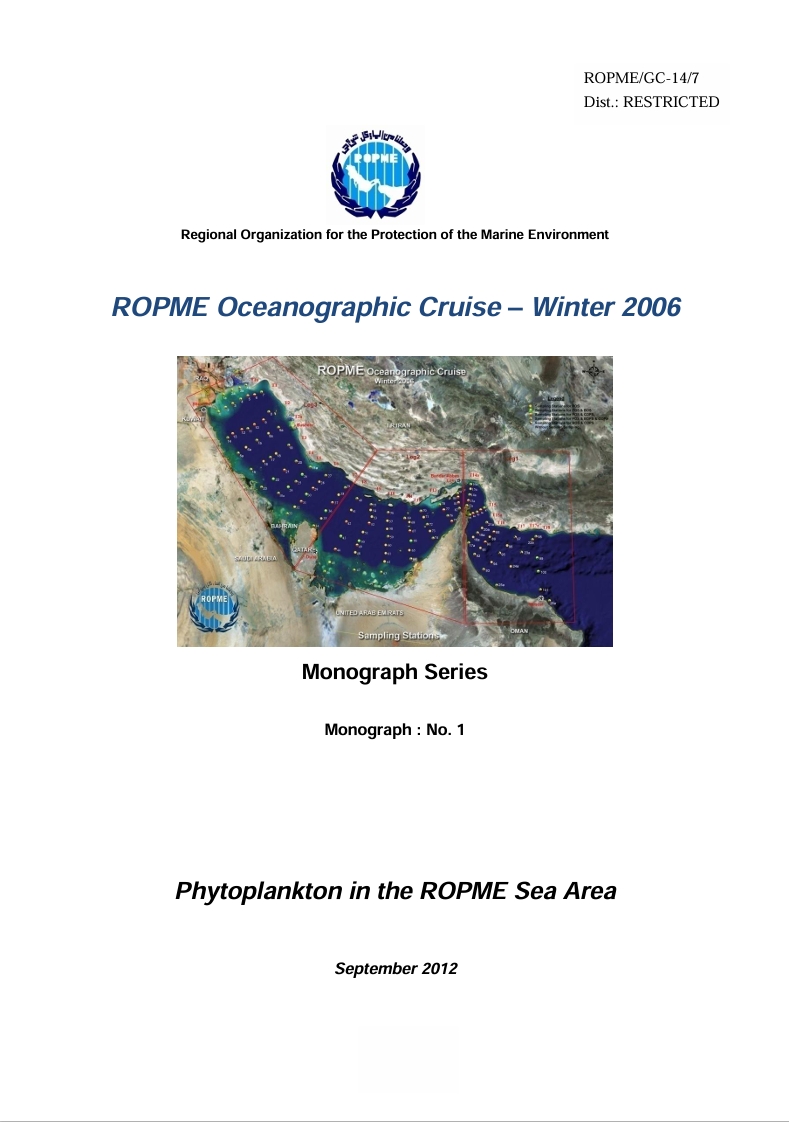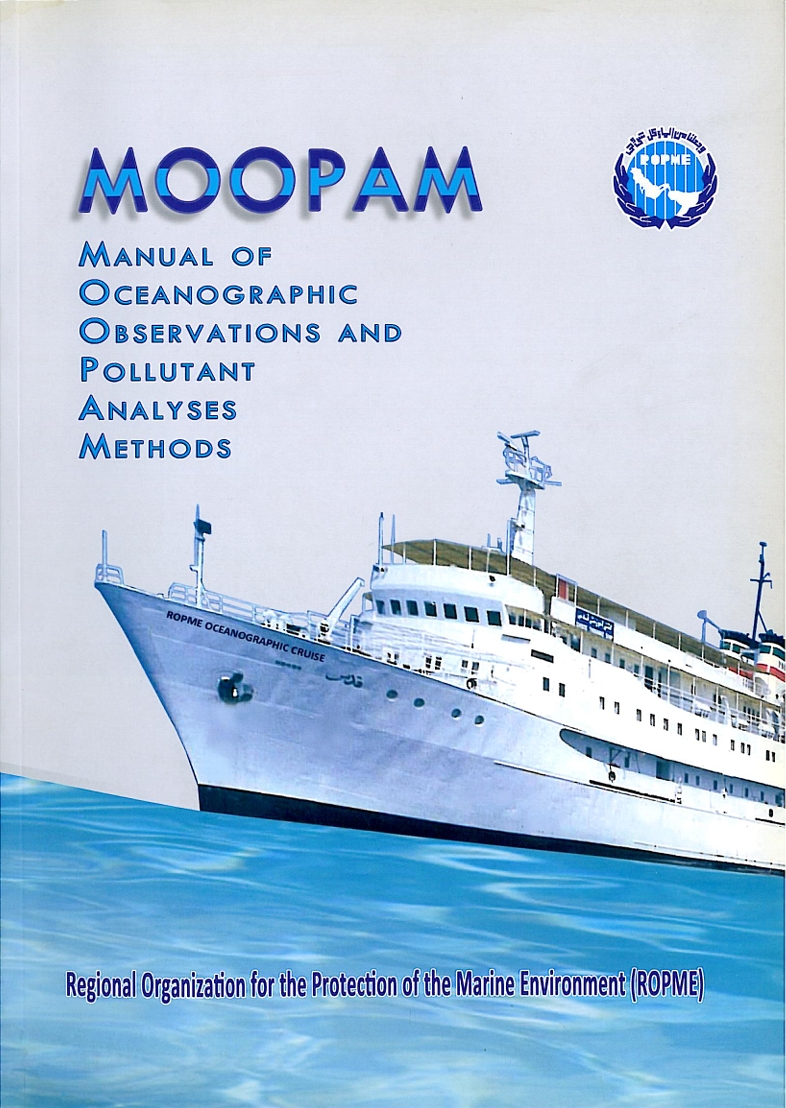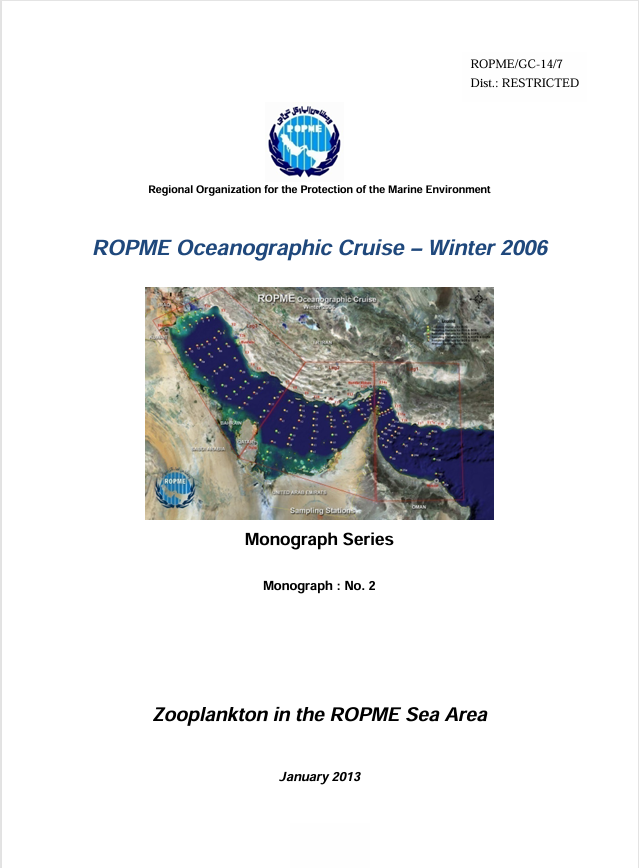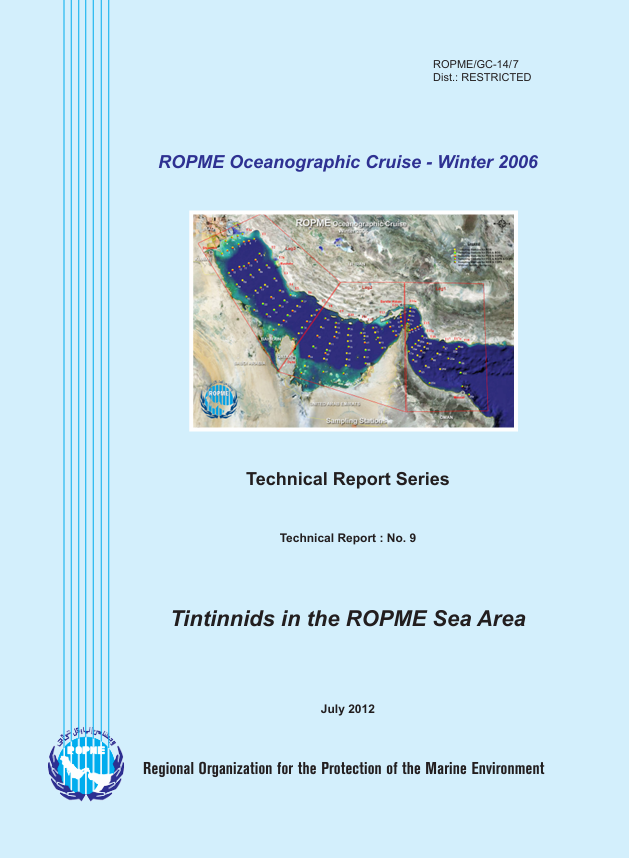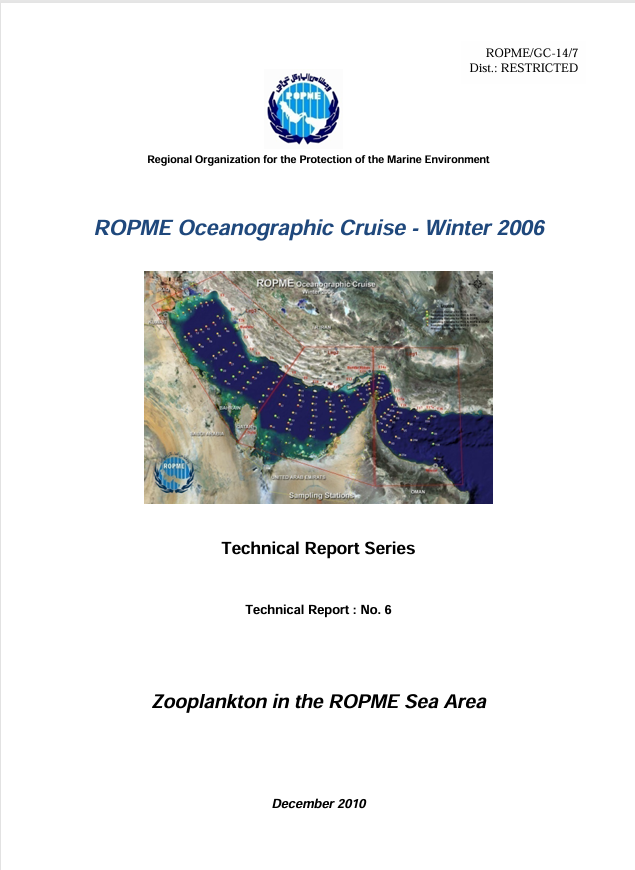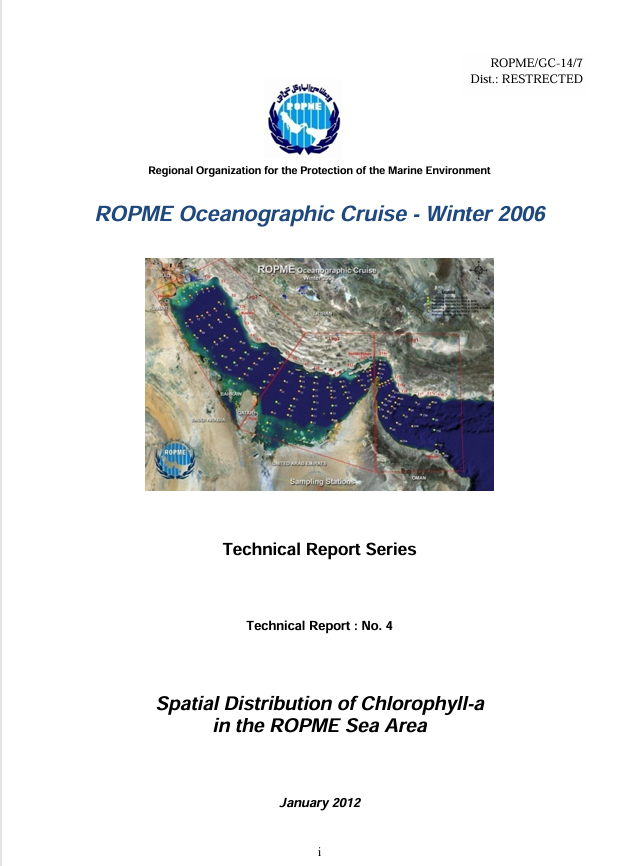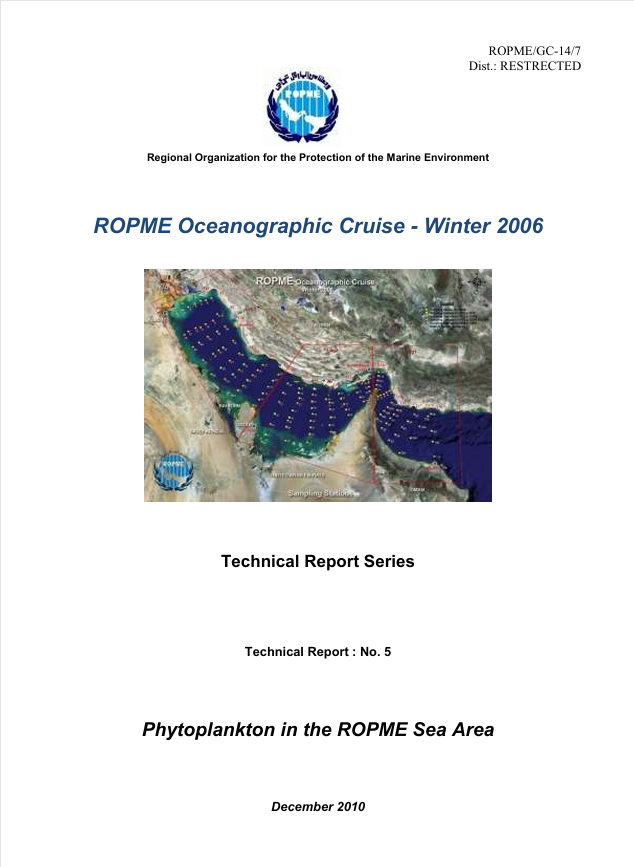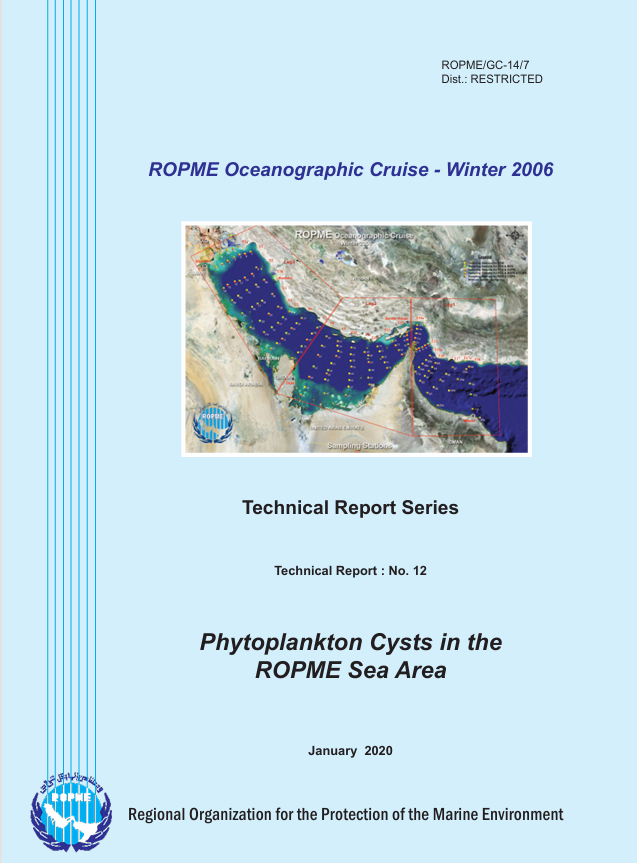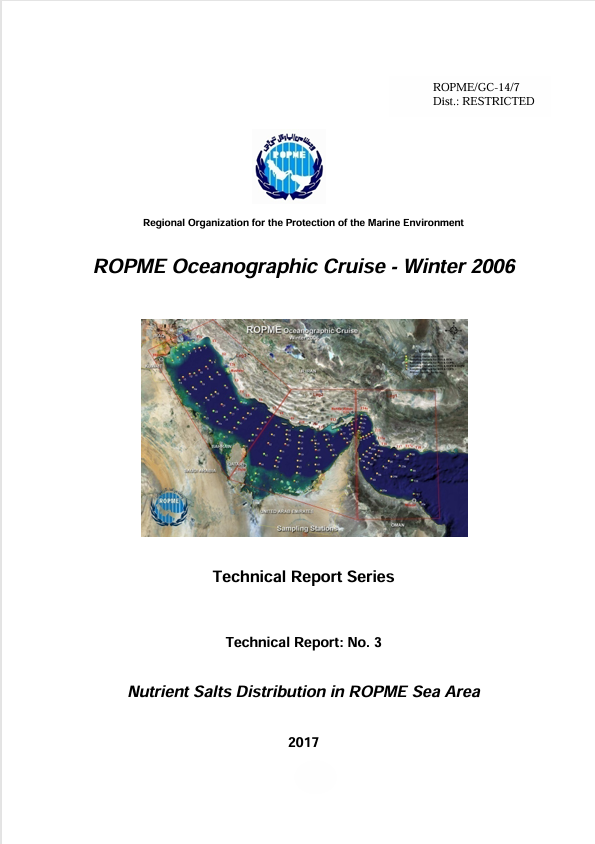


The monograph “ROPME Oceanographic Cruise – Winter 2006: Phytoplankton in the ROPME Sea Area” (September 2012), prepared by the Kuwait Institute for Scientific Research under ROPME supervision, presents a detailed taxonomic and ecological assessment of phytoplankton diversity in the ROPME Sea Area (RSA). It is part of a broader scientific series based on samples collected during a major coordinated regional oceanographic expedition conducted from February to March 2006 aboard the Iranian research vessel M/V Ghods.
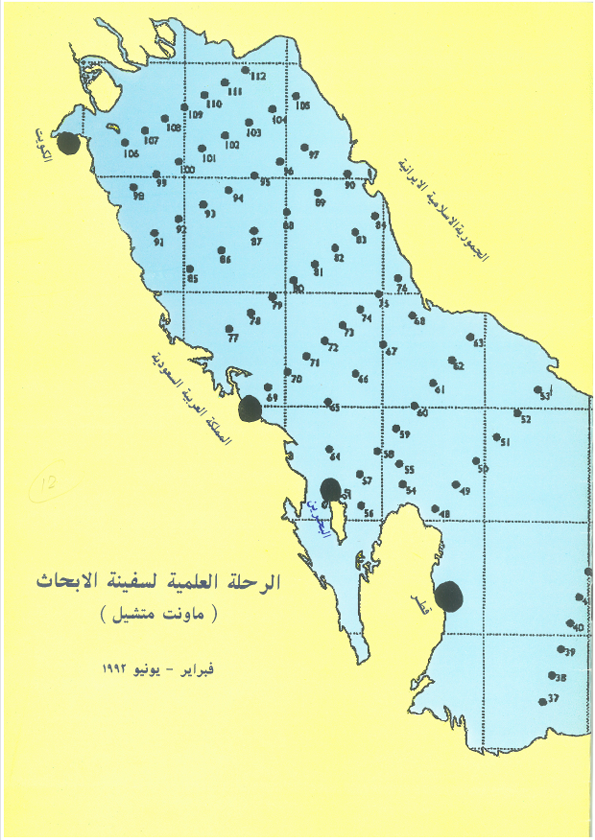
The cruise represented a landmark scientific effort involving 97 experts from ROPME member states and covered 115 sampling stations across the RSA and parts of the Sea of Oman. Sampling included surface, mid-water, and bottom layers using Niskin bottles, along with plankton net tows for qualitative analysis. Collected samples were distributed to regional laboratories, with reference material preserved in a marine sample bank for future research validation.
This monograph focuses specifically on phytoplankton taxonomy, one of five planned volumes covering major planktonic and benthic groups. The phytoplankton community is described as highly diverse, with 340 taxa identified across nine major classes, dominated by Dinophyceae (dinoflagellates) and Bacillariophyceae (diatoms), followed by smaller contributions from other algal and flagellate groups.
Methodologically, the study employed advanced taxonomic techniques including light microscopy, epifluorescence microscopy using Calcofluor staining for thecal plate visualization, scanning electron microscopy for ultrastructural analysis, and permanent slide preparation for diatom identification. Despite these robust methods, limitations remained due to sample preservation, which affected fragile naked flagellates and some delicate species, restricting identification in certain groups to genus level only.
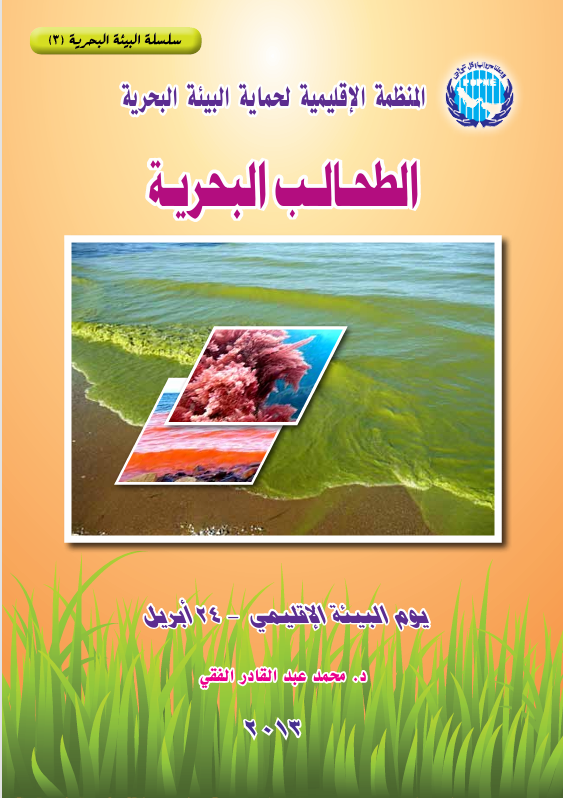
Ecologically, phytoplankton in the RSA are confirmed as key primary producers forming the foundation of marine food webs and serving as sensitive indicators of environmental change due to their short life cycles. The study highlights the ecological importance of phytoplankton in relation to harmful algal blooms (HABs), which have been documented in the region since the late 1990s, including toxic red tide events in Kuwait waters.
A major component of the monograph is the documentation of potentially harmful algal species. A total of 58 taxa were identified as harmful or potentially harmful, including 20 species toxic to humans. These include genera such as Pseudo-nitzschia, Alexandrium, Dinophysis, Karenia, Gymnodinium, and Prorocentrum, known to cause syndromes such as paralytic, diarrhetic, amnesic, and neurotoxic shellfish poisoning. The study emphasizes that some species were widely distributed and occasionally reached bloom levels, particularly Pseudo-nitzschia delicatissima complex, which showed high frequency and significant abundance in certain coastal areas.
The report also underscores the variability in phytoplankton distribution across the RSA, influenced by hydrographic conditions and seasonal dynamics. It stresses the need for continuous, multi-seasonal monitoring to improve understanding of bloom dynamics, enhance forecasting capabilities, and mitigate ecological and economic impacts on fisheries, aquaculture, and public health.
In conclusion, this monograph provides one of the most comprehensive taxonomic baselines of phytoplankton diversity in the ROPME Sea Area to date. It reinforces the ecological sensitivity of the region, highlights the recurring risk of harmful algal blooms, and establishes a critical scientific foundation for long-term marine environmental monitoring and management in the Gulf region.