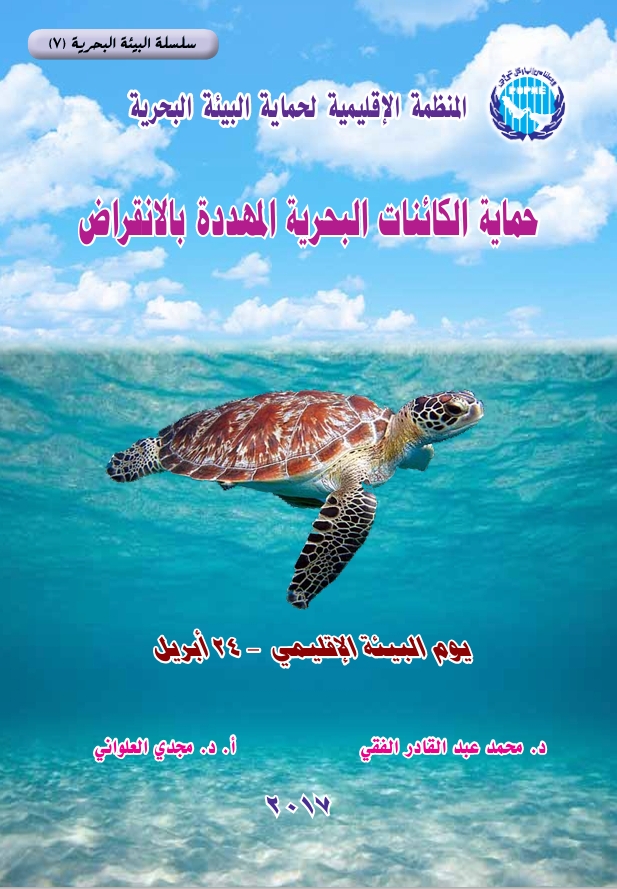


This booklet, part of the Marine Environment Series (7), addresses the issue of protecting endangered marine species in the marine region of the Regional Organization for the Protection of the Marine Environment, published on the occasion of Regional Environment Day on April 24, 2017.
The booklet highlights the unique ecological and geographical characteristics of the region’s marine environment, which, despite its rich biodiversity—including mangroves, coral reefs, and seagrass ecosystems—is under increasing environmental pressure due to climate change, pollution, and rapid human development following the discovery of oil.
It defines extinction as the complete disappearance of a species and its inability to reproduce or survive. Historically, extinction occurred naturally and slowly due to geological and climatic changes. However, in modern times, extinction rates have accelerated dramatically due to human activities, reaching levels far above natural background rates.
The booklet categorizes the causes of extinction into:
Natural causes, including epidemics, predation, climate change, oxygen depletion, salinity changes, ocean acidification, and natural disasters such as volcanic eruptions, earthquakes, and meteor impacts.
Human-induced causes, including overfishing, egg collection, pollution, urban expansion, habitat destruction, introduction of invasive species, and global warming.
It emphasizes that many modern extinction events result from a combination of both natural and human factors, accelerating the decline of marine species.
The booklet also presents key endangered marine species, such as:
- Sea turtles
- Dugongs (sea cows)
- Whale sharks
- Humpback whales
- Flamingos (in coastal ecosystems)
Each species is described in terms of ecological importance and threats, including overexploitation, habitat loss, pollution, and climate-driven impacts such as coral bleaching caused by rising sea temperatures.
The booklet further explains the IUCN Red List of Threatened Species, which classifies species according to their extinction risk, ranging from extinct to least concern.
Finally, it proposes measures to reduce extinction risks, including:
Establishing and expanding marine protected areas
Strengthening environmental laws and international conventions
Reducing pollution and unsustainable fishing practices
Monitoring invasive species
Restoring damaged ecosystems
Enhancing environmental awareness
Supporting scientific research and continuous monitoring
It highlights the critical role of the Regional Organization in safeguarding biodiversity through agreements, protocols, monitoring programs, and environmental awareness initiatives.