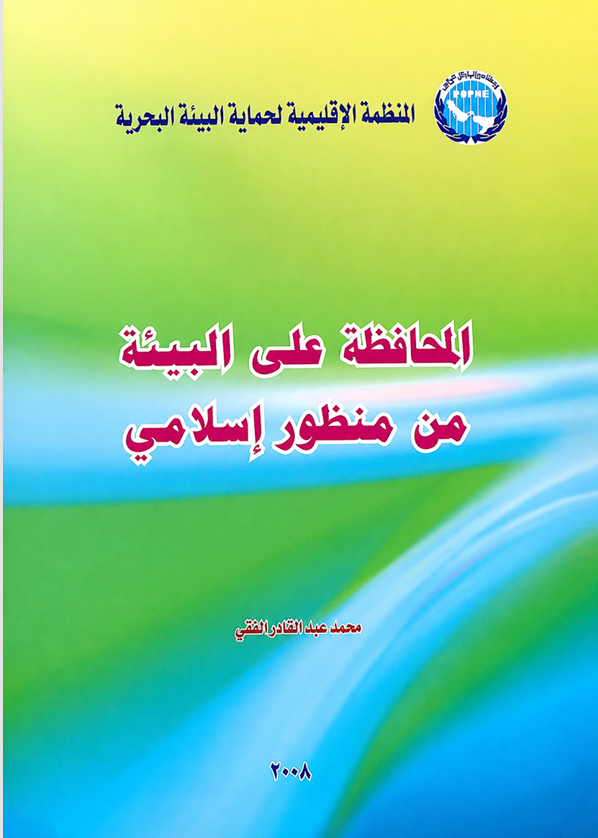


The book “Environmental Conservation from an Islamic Perspective” presents an integrated scientific and religious vision, emphasizing that environmental protection is not merely a scientific or developmental issue, but rather an inherent religious and ethical responsibility in Islam. The author highlights that contemporary environmental crises, including pollution, desertification, climate change, and biodiversity loss, are not natural phenomena alone, but are largely the direct result of human misuse of natural resources and deviation from the values established by Islam regarding humanity’s relationship with the universe.
The book combines modern environmental knowledge with Qur’anic teachings, Prophetic traditions (Hadith), and the contributions of Muslim jurists and scholars, demonstrating that Islam established a comprehensive framework for environmental protection and sustainable development long before the emergence of modern environmental systems.
View more
The Environment from an Islamic Perspective
The book explains that human beings are entrusted as stewards of the Earth, and that this stewardship places upon them the responsibility of preserving all elements of the environment and avoiding corruption or destruction. The universe operates according to a precise balance established by God, and any disruption of this balance leads to environmental degradation and consequences that affect humans and other living organisms.
The author emphasizes that environmental conservation is one of the objectives of Islamic law (Maqasid al-Sharia), and that protecting natural resources and preserving them for future generations is part of safeguarding life, wealth, and human continuity. It is also a manifestation of the duty to develop and sustain the Earth as commanded by God.
—
Causes of the Contemporary Environmental Crisis
The book identifies several human factors as the root causes of the current environmental crisis, including:
* The absence of religious and ethical responsibility in dealing with the environment.
* Excessive exploitation and depletion of natural resources.
* The dominance of economic and profit-driven considerations over environmental concerns.
* The misuse of scientific and technological advancements.
* Weak adherence to human values in the utilization of natural resources.
* The inability of many environmental laws to achieve effective protection in the absence of personal accountability.
The author points out that scientific progress itself is not the problem; rather, the problem lies in using scientific achievements without ethical and religious guidance.
—
The Concept of the Environment
The book discusses the concept of the environment from both linguistic and scientific perspectives, explaining that the Arabic origin of the word “environment” (Al-Bi’ah) is associated with meanings of settlement, residence, and preparing a suitable place for living.
Scientifically, the environment encompasses all natural, biological, and social elements surrounding humans and influencing their lives, including air, water, soil, living organisms, natural resources, and social and cultural relationships.
The book also explains that the Islamic concept of the environment is comprehensive, combining the natural environment with the spiritual and ethical environment, and that the well-being of the physical environment is closely connected to the moral and spiritual condition of human beings.
—
Environmental Balance
The book emphasizes that environmental balance is one of the universal laws established by God, and that all living creatures perform interconnected roles that maintain the stability of ecosystems.
It explains that humans are the only beings capable of disturbing this balance through pollution, excessive resource exploitation, overconsumption, and harmful interference with living organisms.
The author refers to numerous Qur’anic verses that prohibit corruption on Earth and encourage moderation and avoidance of wastefulness.
—
Contemporary Environmental Issues
The book addresses the major environmental challenges facing the world, discussing their causes, impacts, and solutions from both scientific and Islamic perspectives. These issues include:
* Air pollution.
* Water pollution.
* Soil contamination.
* Noise pollution.
* Hazardous waste.
* Waste recycling.
* Desertification.
* Ozone layer depletion.
* Global warming and climate change.
* Biodiversity loss.
* Species extinction.
* Poverty and its relationship with environmental degradation.
The book explains that Islam established preventive principles to reduce the causes of these problems before they occur, through prohibiting wastefulness, preventing harm to others, promoting cleanliness, and encouraging the responsible use and conservation of resources.
—
Means of Environmental Protection in Islam
The book highlights several Islamic systems that historically contributed to environmental protection, including:
The Hima system: A traditional Islamic practice for protecting pastures and natural resources.
Waqf (Endowment): Its role in supporting sustainable development and public welfare.
Hisbah system: A mechanism for supervising activities that may harm society and the environment.
Fitrah practices: Natural principles that promote cleanliness and public health.
Islamic legislation related to preventing harm.
Jurisprudential principles that emphasize removing harm and achieving public interest.
The book also demonstrates that Islam preceded modern legislation in addressing and prohibiting many practices that cause environmental damage.
—
Environmental Values in Islam
The book emphasizes that Islam established a comprehensive system of environmental values, including:
* Responsibility and trust in the use of natural resources.
* Moderation and avoidance of waste.
* Cleanliness.
* Compassion toward all living creatures.
* Conservation of water resources.
* Planting trees and developing the land.
* Kind treatment of animals.
* Removing harm from public spaces.
* Taking responsibility toward future generations.
The author cites numerous Prophetic traditions demonstrating that environmental actions are considered righteous deeds for which Muslims are rewarded.
—
The Role of Islamic Legislation
The book explains that Islamic law established a legal and ethical framework for environmental protection based on prevention before punishment. It relies on self-accountability derived from faith in God, in addition to social responsibility and community oversight.
It also highlights that many Islamic legal principles, such as the principle of **“No harm and no reciprocating harm”**, represent an advanced legal foundation for addressing modern environmental challenges.
—
The Main Message of the Book
The author believes that addressing environmental problems cannot depend solely on technology or legislation; rather, it requires rebuilding the relationship between humans and the environment on religious and ethical foundations, making environmental protection an integral part of daily social behavior.
The book confirms that Islam possesses a comprehensive system of principles, values, and regulations capable of contributing to solving contemporary environmental crises and achieving sustainable development.
—
Conclusion
The book concludes that Islam introduced, more than fourteen centuries ago, a comprehensive vision for environmental protection based on balance between humans and nature, integrating faith with science, legislation with ethics, and rights with responsibilities.
It emphasizes that environmental conservation is both a religious and civilizational responsibility shared by individuals, communities, and governments. Adhering to Islamic principles in managing natural resources and respecting all components of the environment represents a fundamental pathway toward achieving sustainable development and ensuring future generations’ right to a healthy and balanced environment.