The ROPME Sea Area is bordered by the eight countries of the ROPME S.A. (Bahrain, I.R.Iran, Iraq, Kuwait, Oman, Qatar, Saudi Arabia, and U.A.E). A variety of natural and human–induced impacts threaten the region’s unique and highly diverse coastal and marine environment. Following the discovery of oil, population and economic growth have contributed to increasing pressure from activities such as dredging and filling operations, disposal of domestic and industrial waste, and disproportionate use of limited freshwater resources. Recreational and tourism industries are experiencing rapid expansion, contributing to the over-exploitation of living marine resources

.

The term “ROPME Sea Area” was coined by Plenipotentiaries of the Member States to achieve unanimity in denoting the area covered by the Kuwait Regional Convention of 1978.
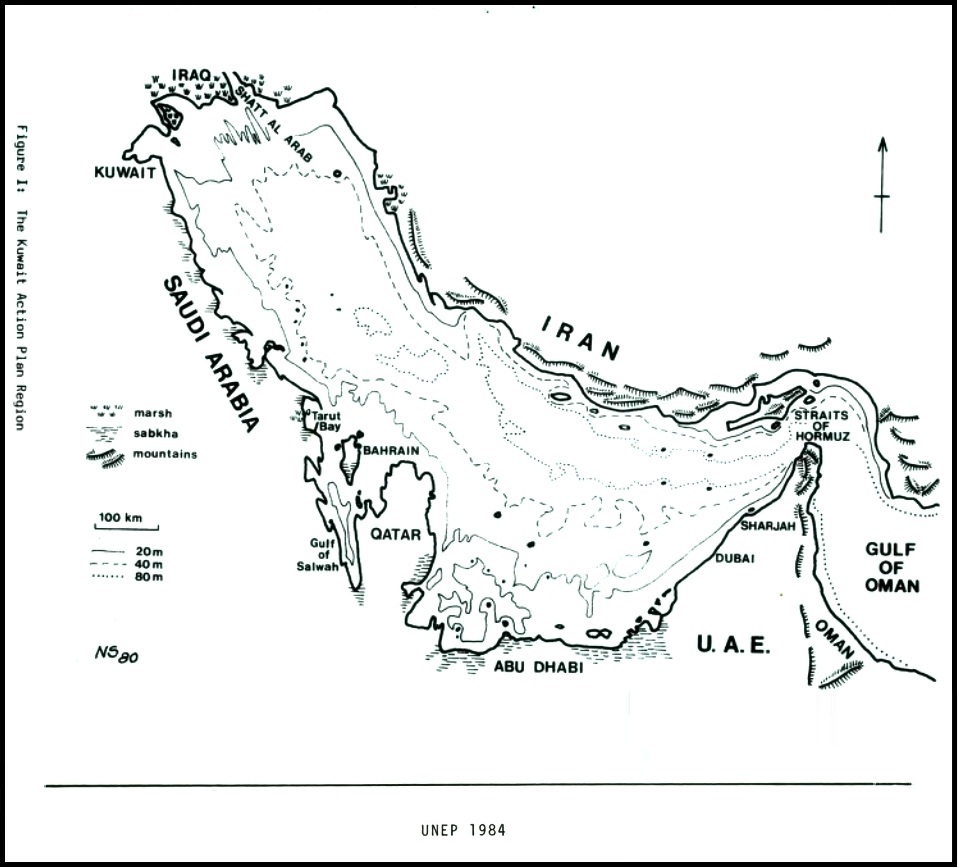

Black-and-white map of the Kuwait Action Plan region (UNEP, 1984), showing the ROPME SEA AREA and surrounding countries with geographic features such as marshes, salt flats, mountains, and depth contours.

ROPME is among the 18 organizations of the International Regional Seas Program that were established by UNEP.These regional seas and oceans are managed through various conventions and action plans tailored to address their specific environmental issues, promoting regional and national cooperation and sustainable management of marine and coastal resources.

ROPME Sea Area Distribution

ROMPE Sea Area (RSA) covers approximately 461,000 km² and is divided into three main marine areas

  • The inner RSA, about 236,000 km²
  • The middle RSA, about 113,000 km²
  • The outer RSA, about 112,000 km²

The ROPME Sea Area (RSA) was declared as a Special Area by the International Maritime Organization (IMO). The Marine Environment Protection Committee (MEPC), (Resolution # 168(56) adopted on 13 July 2007). The MEPC Resolution #168 (56) prohibited the discharge of many types of wastes into ROPME Special Sea Areas according to regulations 15 and 34 of MARPOL Annex I and regulation 5 of MARPOL Annex V for the Gulfs area (RSA) Special Area.

ROPME Objectives

The organization aims to:

  • ROPME aims to coordinate efforts among member states
  • Maintain the safety and quality of marine waters in the RSA
  • Preserve ecosystems and aquatic life,
  • Reduce pollution resulting from various development activities in the countries surrounding the region.
  • ROPME also plays a fundamental role in unifying the efforts made by the M/S to protect the marine environment
  •  Monitoring the actions taken by each country in this field.

Learn more about ROPME initiatives

Explore More
  • ROPME Projects
    ROPME Projects

    Driving Innovation for a Sustainable Marine Environment ROPME leads and supports a diverse portfolio of regional projects that address the most pressing environmental challenges in the ROPME Sea Area. Working closely with Member States, international organizations, research institutions, and strategic partners, these projects promote innovation, strengthen regional cooperation, and provide practical solutions for protecting the

  • Marine Desertification
    Marine Desertification

    “A growing threat to marine ecosystems, biodiversity, and the communities that depend on them.“ What is Marine Desertification? Marine desertification is the rapid degradation of productive marine ecosystems, transforming them into nutrient-poor areas with low biodiversity. Similar to desertification on land, it results in the severe loss of marine vegetation and biological resources, reducing the

  • Protected and Conserved Areas
    Protected and Conserved Areas

    Advancing Marine Conservation through Protected and Conserved Areas (PCAs) “A regional initiative to strengthen marine conservation, improve protected area management, and support biodiversity targets across the ROPME Sea Area.” Project Overview The ROPME-PCAs Project is a regional collaboration between ROPME and UNEP-WCMC to advance marine conservation by improving the management, reporting, and effectiveness of Protected

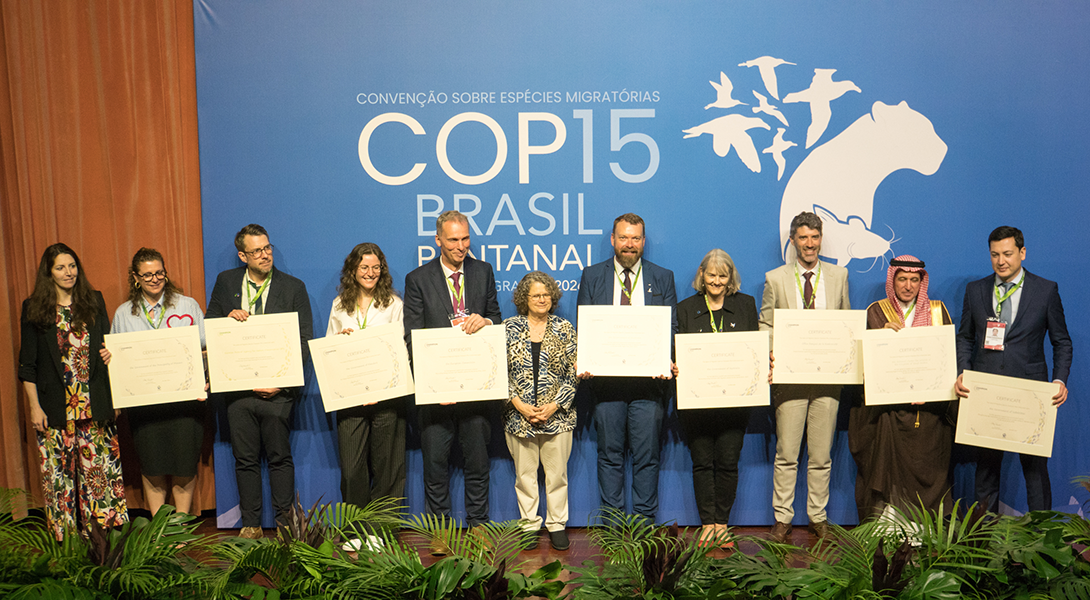
  • CMS Migratory Species “Champion”
    CMS Migratory Species “Champion”

    Strengthening Conservation of Marine Migratory Species Protecting migratory marine species and their critical habitats through regional cooperation across the ROPME Sea Area. Overview ROPME has been recognized as a CMS Champion Plus for its initiative “Strengthening Conservation of Marine Species and their Habitats in the ROPME Sea Area (2026–2028).” The initiative strengthens science-based regional cooperation

  • ROPME Environmental Calendar
    ROPME Environmental Calendar

    Celebrating Environmental Awareness Across the ROPME Sea Area The ROPME Environmental Calendar brings together major international, regional, and national environmental observances throughout the year. It serves as a reference for important occasions dedicated to the protection of marine and coastal ecosystems, biodiversity conservation, climate action, sustainable development, environmental education, and the celebration of the environmental

  • Environmental Celebrations | World Oceans Day
    Environmental Celebrations | World Oceans Day

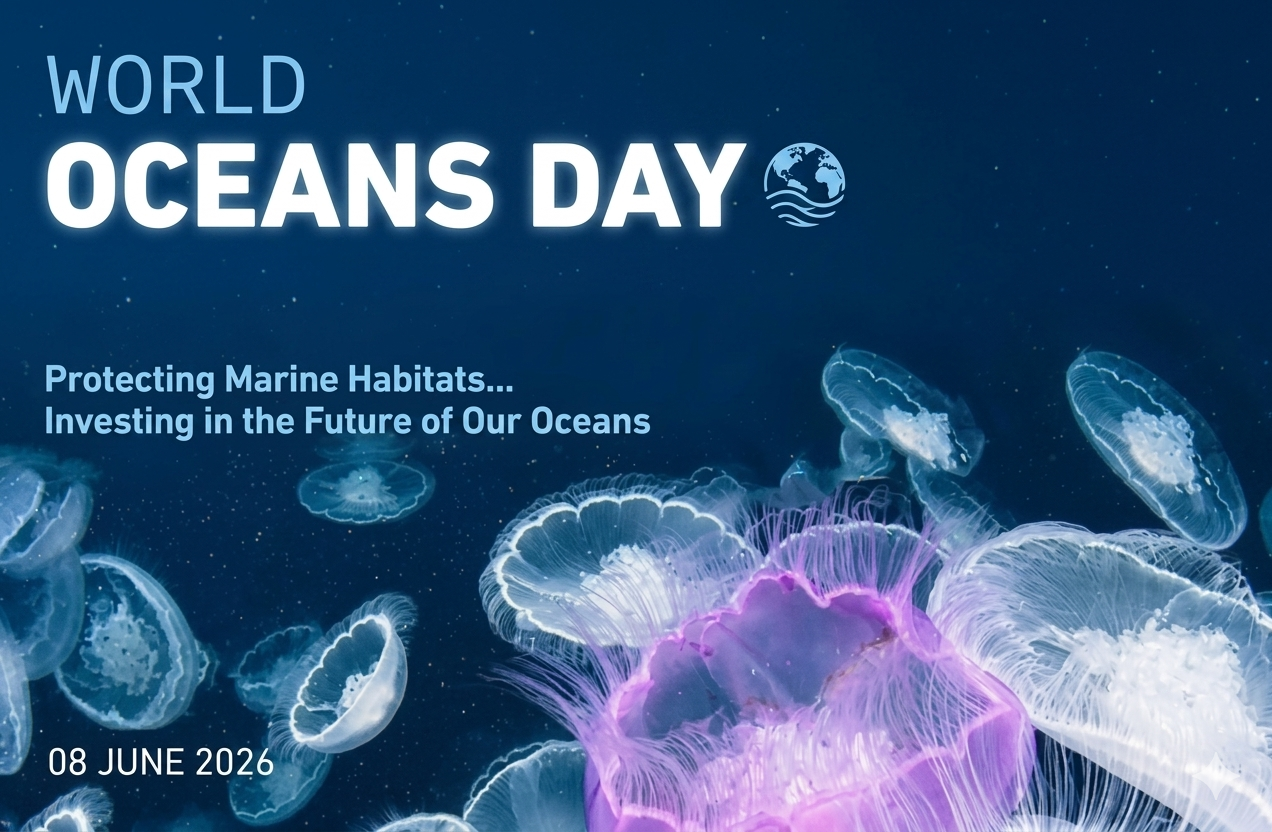
    Celebrating World Oceans Day 2026 Protecting Marine Habitats: An Investment in the Future of Our Oceans On 8 June 2026, the Regional Organization for the Protection of the Marine Environment (ROPME) joins the global community in celebrating World Oceans Day. Together, we reaffirm a vital truth: our oceans are a living asset that sustains all

  • ROPME Invasive Species
    ROPME Invasive Species

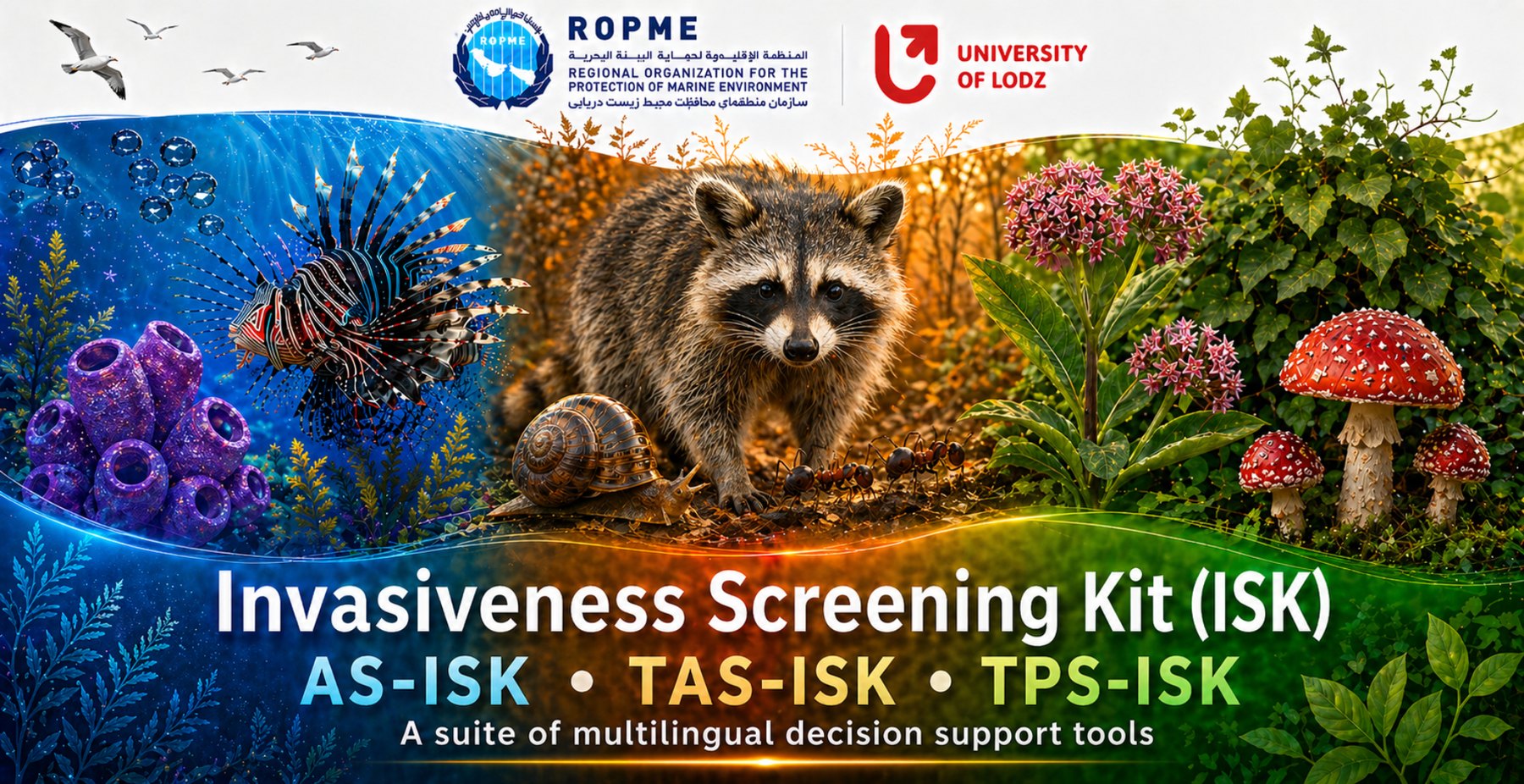
    Invasiveness Screening Kit (ISK) v3 A free Microsoft Excel-based decision-support platform integrating AS-ISK, TAS-ISK and TPS-ISK for screening non-native species and calibrating risk outcomes across aquatic organisms, terrestrial animals and terrestrial plants. The ISK v3 toolkits ISK v3 preserves the three toolkit-specific screening protocols while integrating them within the v3 software environment. Aquatic Species Invasiveness

  • Environmental Impacts of the Regional Conflict
    Environmental Impacts of the Regional Conflict

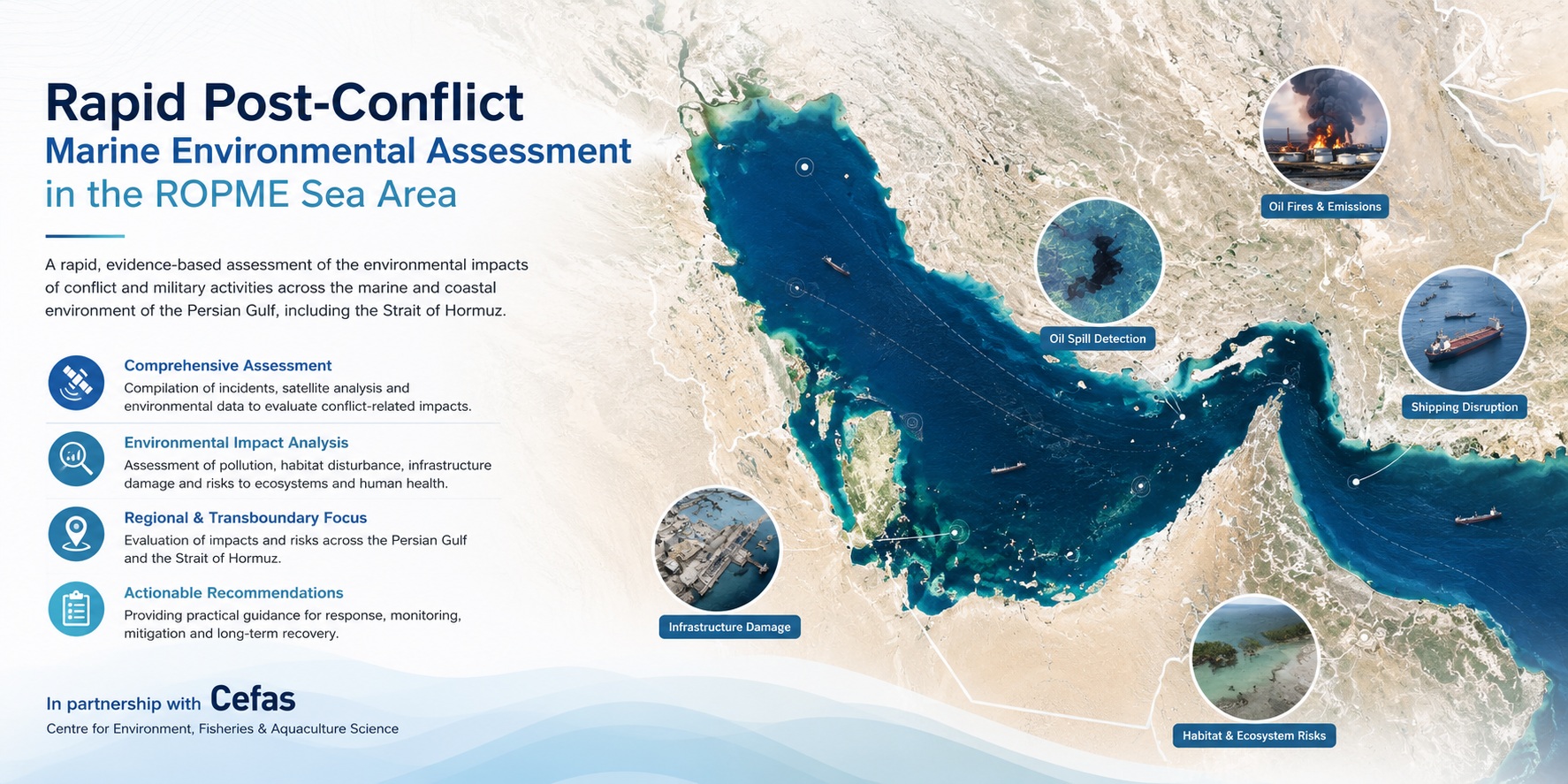
    Rapid Post-Conflict Marine Environmental Assessment in the ROPME Sea Area Overview The Rapid Post-Conflict Marine Environmental Assessment in the ROPME Sea Area was implemented by ROPME to assess the environmental consequences of regional conflict and military activity across the marine and coastal environment of the region. The project provided an early evidence-based understanding of conflict-related