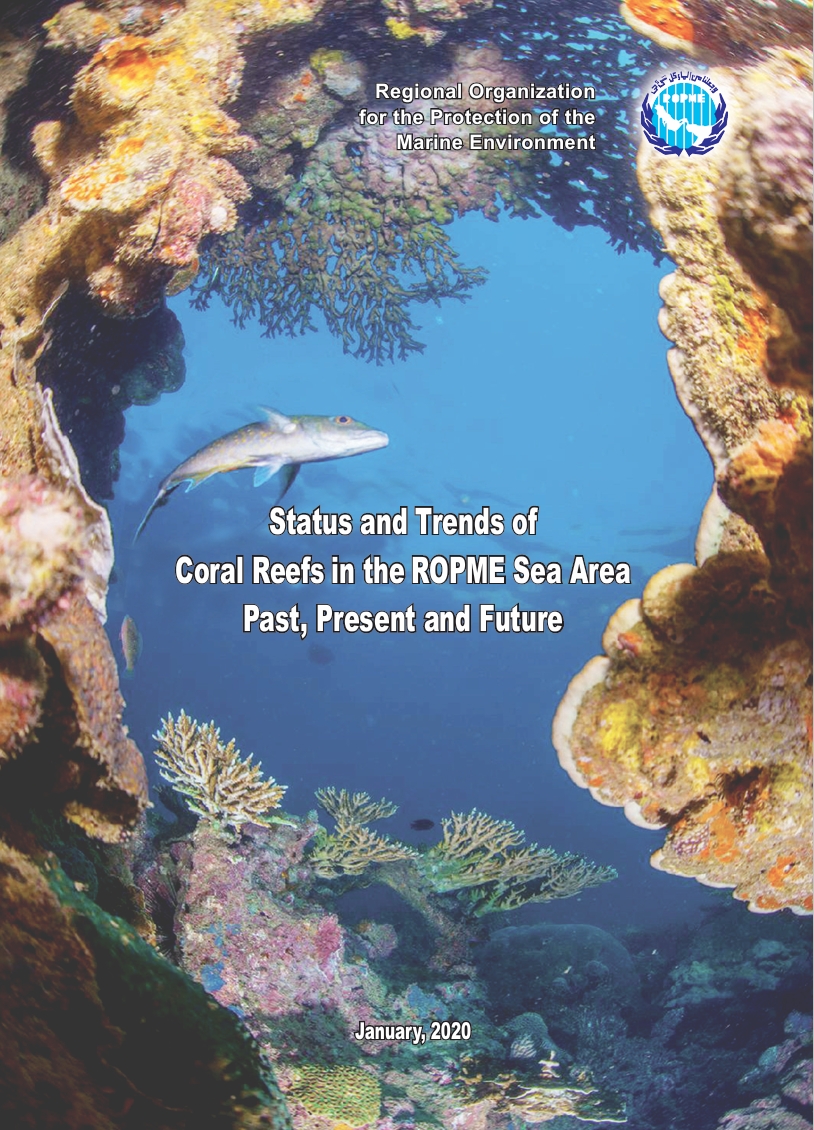
Status and Trends of Coral Reefs in the ROPME Sea Area Past, Present, and Future

Filters
Filters
Publication Date

2020

Issue

2020

A technical review of the status of coral reefs in the ROPME Sea Area (RSA). Results show that Coral reefs in the RSA face a severe decline from
extreme temperatures, mass bleaching events (1998, 2017), overfishing, and coastal development. Results also show some improvement in coral cover in certain areas, but a region-wide understanding and effective Management remains a challenge. Management strategies include reducing local pressures and developing restoration methods to improve resilience.

1. Introduction: Coral Reefs in the ROPME Sea Area

Coral reefs in the ROPME Sea Area (RSA) represent some of the most ecologically significant yet environmentally stressed reef systems in the world. Located in a region characterized by high temperatures, salinity extremes, and intense coastal development, these reefs have historically demonstrated a degree of natural resilience. However, increasing human pressures and accelerating climate change have pushed many reef systems beyond their adaptive limits. This technical review examines the current status of coral reefs across the RSA, identifying key stressors, observed trends, and management challenges.


2. Thermal Stress and Extreme Temperature Events

One of the most severe threats facing coral reefs in the RSA is extreme sea surface temperature. Periodic heatwaves have caused widespread coral bleaching, most notably during the mass bleaching events of 1998 and 2017. During these events, prolonged temperature anomalies disrupted the symbiotic relationship between corals and their zooxanthellae, leading to extensive bleaching and mortality. Repeated exposure to thermal stress has reduced recovery potential and weakened reef structure across large areas of the region.


3. Mass Bleaching and Long-Term Ecological Impacts

The mass bleaching events documented in the RSA have had long-lasting ecological consequences. In many locations, coral mortality resulted in reduced live coral cover, loss of structural complexity, and shifts toward algal-dominated systems. These changes negatively affect associated reef organisms, including fish and invertebrates that depend on corals for habitat and food. Although some reefs have shown partial recovery, repeated bleaching has shortened recovery windows and increased vulnerability to subsequent disturbances.


4. Overfishing and Ecosystem Imbalance

Overfishing is another significant factor contributing to coral reef degradation in the RSA. The removal of key herbivorous fish species reduces grazing pressure on algae, allowing algal growth to outcompete recovering corals. Destructive fishing practices and unsustainable harvest levels further disrupt reef ecosystems and reduce their capacity to recover after bleaching events. Overfishing therefore acts as a compounding stressor, amplifying the impacts of climate-related disturbances.


5. Coastal Development and Habitat Degradation

Rapid coastal development throughout the RSA has intensified pressures on coral reefs. Land reclamation, dredging, construction, and increased sedimentation reduce water clarity and smother coral colonies. In addition, coastal pollution from wastewater discharge and industrial activity introduces nutrients and contaminants that further stress reef systems. These local stressors undermine coral health and resilience, particularly in nearshore reef environments.


6. Signs of Recovery and Spatial Variability

Despite widespread decline, the technical review notes signs of improvement in coral cover in certain areas of the RSA. These localized recoveries suggest that some reef systems retain adaptive capacity, particularly where local pressures are lower or management measures are in place. However, recovery remains uneven across the region, and isolated improvements do not offset broader regional trends of decline. Understanding the drivers behind these positive outcomes is essential for informing future management strategies.


7. Management Challenges and Knowledge Gaps

A major challenge identified in the review is the lack of a comprehensive, region-wide understanding of coral reef status and dynamics in the RSA. Differences in monitoring methods, data availability, and management capacity among countries limit effective regional coordination. Without standardized assessments and shared data, it remains difficult to evaluate trends accurately or implement consistent management responses across national boundaries.


8. Management Strategies and Future Directions

To improve coral reef resilience in the RSA, management strategies must focus on reducing local stressors while adapting to unavoidable climate impacts. Recommended actions include controlling overfishing, improving coastal water quality, regulating development activities, and protecting critical reef habitats. In addition, developing and scaling up coral restoration techniquesโ€”such as coral gardening and assisted recoveryโ€”can enhance reef resilience. Strengthening regional cooperation, monitoring, and science-based management will be essential to safeguarding coral reefs in the ROPME Sea Area for future generations.

Explore More
  • Overview on Land-based Sources and Activities Affecting the Marine Environment in the ROPME Sea Area
    Overview on Land-based Sources and Activities Affecting the Marine Environment in the ROPME Sea Area

    A comprehensive overview of land-based sources and activities affecting the marine, coastal and associated freshwater environments in the ROPME Sea Area, including the status of activities dealing with the protection of those environments from land-based sources. This work is based on a review of the relevant information and activities of the individual countries making up

  • MOOPAM (2010)
    MOOPAM (2010)

    A revised edition for the guide to the fieldsurveys, sampling and analytical methods to beused by the participating institutions forimplementation of the Monitoring and ResearchProgramme for analyses of oceanographicparameters and oil and non-oil pollutants in theROPME Sea Area. In this revised edition of MOOPAM severalconsiderations were taken into account, i.e. thedevelopment of analytical capabilities in

  • Regional Report of The State of The Marine Environment 2000
    Regional Report of The State of The Marine Environment 2000

    The Regional Report on the State of the Marine Environment (2000) provides a comprehensive assessment of the health and challenges facing the marine ecosystems within its scope. It highlights critical issues such as pollution, habitat degradation, overfishing, and the emerging impacts of climate change on ocean systems. Based on scientific data and regional cooperation, the…