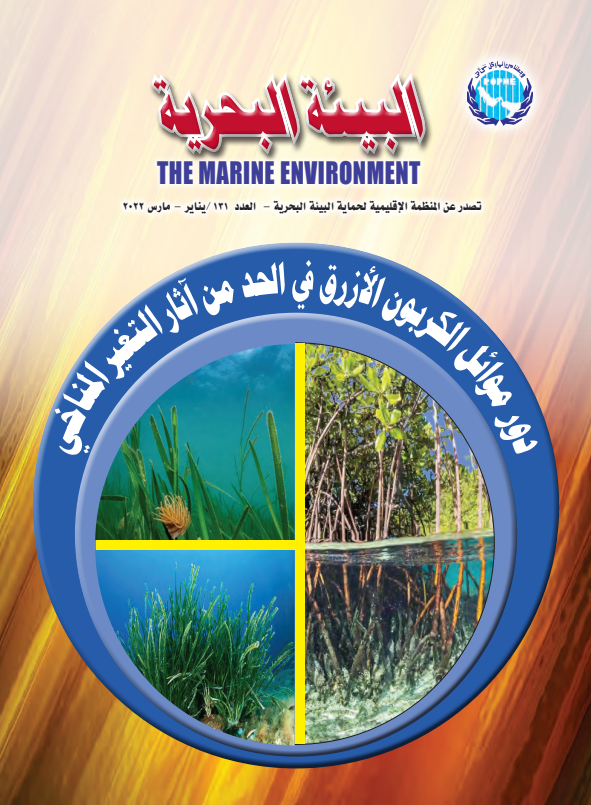


Issue 131 of ROPME Magazine highlights the critical role of blue carbon habitats—such as mangroves, seagrass beds, and other coastal ecosystems—in addressing climate change and supporting the health of the marine environment. These habitats act as natural carbon sinks, meaning they absorb and store carbon dioxide from the atmosphere far more efficiently than many terrestrial forests. By doing so, they help reduce greenhouse gases, mitigate rising sea levels, and enhance the resilience of coastal regions against climatic impacts.
The issue emphasizes that protecting and restoring these blue carbon ecosystems is not only an environmental priority but also a socio-economic necessity. Healthy coastal habitats support rich biodiversity, provide nursery grounds for fish species, and sustain local fisheries that are vital for food security and livelihoods in the ROPME Sea Area. Their degradation through pollution and coastal development undermines both climate goals and the well-being of coastal communities.
Issue 131 further underlines the importance of regional cooperation and science-based management. Through coordinated conservation efforts among ROPME member states and the integration of traditional ecological knowledge with modern research, these ecosystems can be better protected and restored. Such collaboration aligns with ROPME’s broader mission of harmonizing environmental policies and actions across the Gulf region to strengthen resilience against climate threats.
1. Introduction: The Importance of Blue Carbon Habitats
Blue carbon habitats—such as mangroves, seagrass beds, salt marshes, and other coastal ecosystems—are among the most valuable natural assets in the marine environment. They play a dual role: supporting biodiversity and acting as carbon sinks that help regulate the global climate. While often overlooked compared to forests or deserts, these ecosystems are uniquely adapted to coastal conditions, and their capacity to sequester carbon is far greater per unit area than many terrestrial ecosystems. Their health is therefore critical not only for the environment but also for human communities that rely on the coastal and marine resources they sustain.
2. Carbon Sequestration and Climate Regulation
One of the most vital functions of blue carbon habitats is their ability to absorb and store carbon dioxide. Mangroves, for example, store large amounts of carbon in their roots and soil, while seagrass beds lock away carbon in their sediments for decades or even centuries. By removing carbon from the atmosphere, these ecosystems reduce greenhouse gas concentrations, helping to mitigate climate change. In addition, they help regulate sea levels and stabilize coastlines, providing natural protection against flooding and storm surges that are increasingly common due to global warming.
3. Biodiversity and Ecological Productivity
Blue carbon habitats are rich in biodiversity and provide essential ecosystem services. Mangrove roots, seagrass beds, and salt marshes serve as nurseries for fish, crustaceans, and other marine life, supporting both commercial and artisanal fisheries. Birds and other wildlife also depend on these habitats for shelter and food. The ecological productivity of these ecosystems is immense, and the loss of such habitats would disrupt food chains, reduce fish stocks, and threaten the overall health of marine environments in the ROPME Sea Area.
4. Socio-Economic Benefits and Food Security
Beyond environmental value, blue carbon ecosystems are central to the livelihoods and food security of coastal communities. Fisheries supported by mangroves and seagrass beds provide affordable protein and income for millions of people. When these habitats are degraded through pollution, coastal development, or unsustainable resource use, fish populations decline, local economies shrink, and food insecurity increases. Protecting blue carbon habitats is therefore a socio-economic imperative as much as an environmental one.
5. Threats to Blue Carbon Habitats
Despite their importance, blue carbon ecosystems face serious threats. Coastal urbanization, industrial development, pollution, dredging, and climate change all contribute to habitat loss and degradation. Rising sea levels, ocean warming, and salinity changes further stress these ecosystems, weakening their ability to sequester carbon and support biodiversity. The cumulative effect of these pressures is a reduction in ecological function, economic opportunity, and coastal resilience, leaving communities vulnerable to climate impacts.
6. Restoration and Conservation Strategies
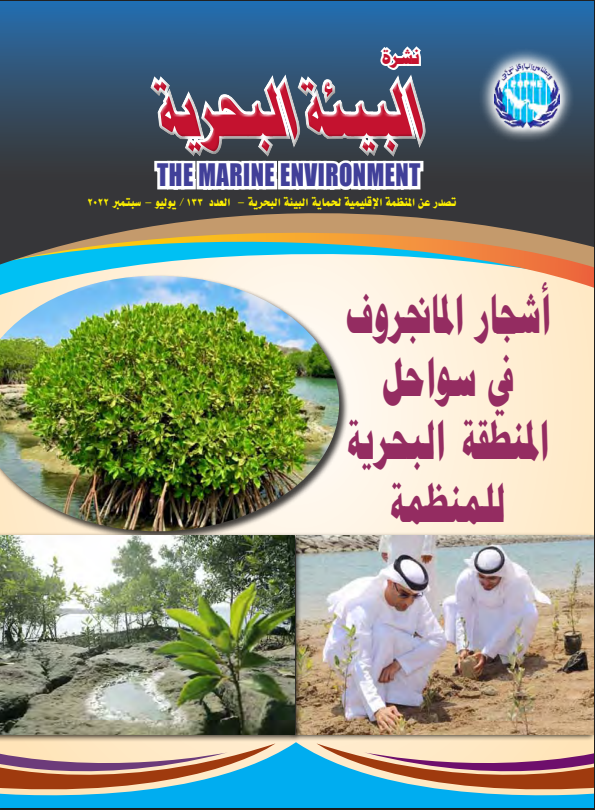
Effective management and restoration of blue carbon habitats can reverse some of these losses. Initiatives such as replanting mangroves, restoring seagrass beds, and implementing protected areas have demonstrated success in improving biodiversity, stabilizing coastlines, and enhancing carbon sequestration. Community-based conservation, coupled with government regulation, ensures that these efforts are sustainable and that local populations benefit directly from protection measures.
7. Regional Cooperation and Policy Integration
ROPME emphasizes the need for coordinated regional strategies. Member states sharing the ROPME Sea Area can strengthen the resilience of blue carbon ecosystems through harmonized policies, joint monitoring programs, and shared scientific research. Integrating traditional ecological knowledge with modern environmental science allows for more effective decision-making. Regional collaboration is crucial, as the health of these habitats transcends national borders and directly affects the collective environmental, social, and economic well-being of the Gulf region.
8. Conclusion: Blue Carbon as a Shared Responsibility
Blue carbon habitats are a critical intersection of ecology, economy, and climate action. Protecting and restoring them safeguards biodiversity, sustains fisheries, mitigates climate change, and strengthens the resilience of coastal communities. For ROPME member states, these ecosystems represent a shared responsibility: one that requires ongoing conservation, informed policy, and collaboration to ensure that both nature and human communities can thrive in the face of increasing environmental challenges.