

The ROPME Sea Area (RSA) is one of the most environmentally distinct and strategically important semi-enclosed seas in the world. It combines harsh natural conditions, rich biodiversity, and dense maritime activity. These unique characteristics demand tailored environmental approaches and regional cooperation.
Geographic Characteristics
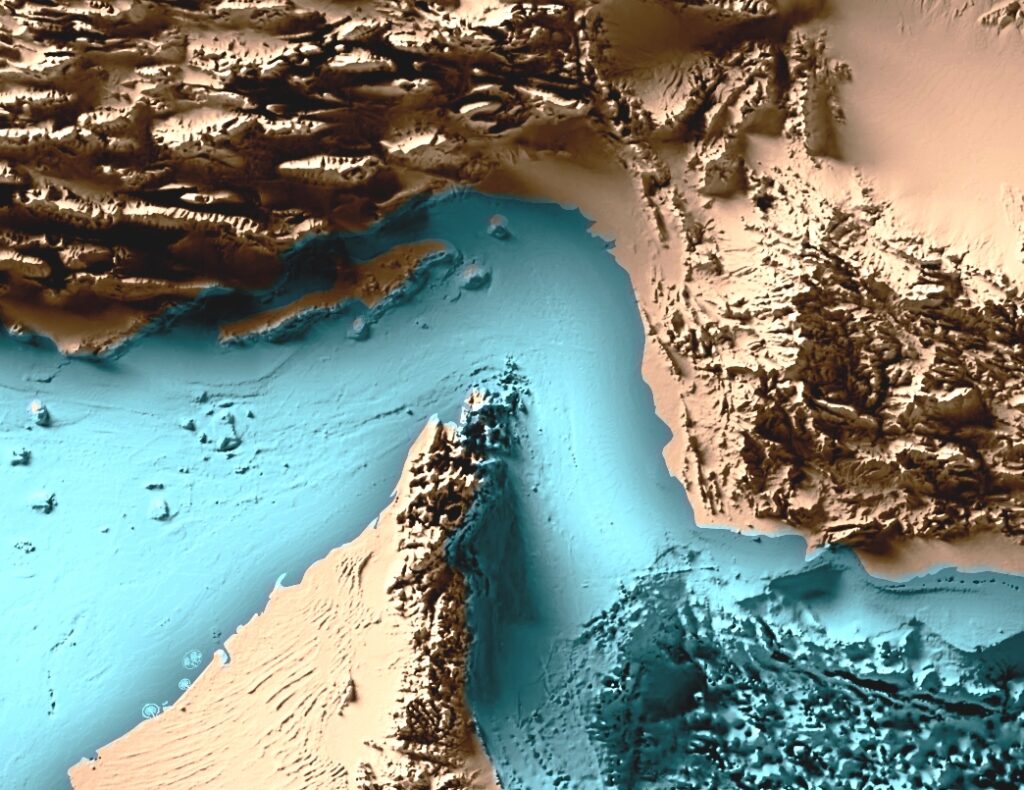
The strait connects the Gulf with the Gulf of Oman and the Indian Ocean, forming the only maritime outlet for the Gulf states to open waters. This has made it a vital hub for international navigation, trade, and energy, as well as a permanent focus of political, economic, and environmental attention.
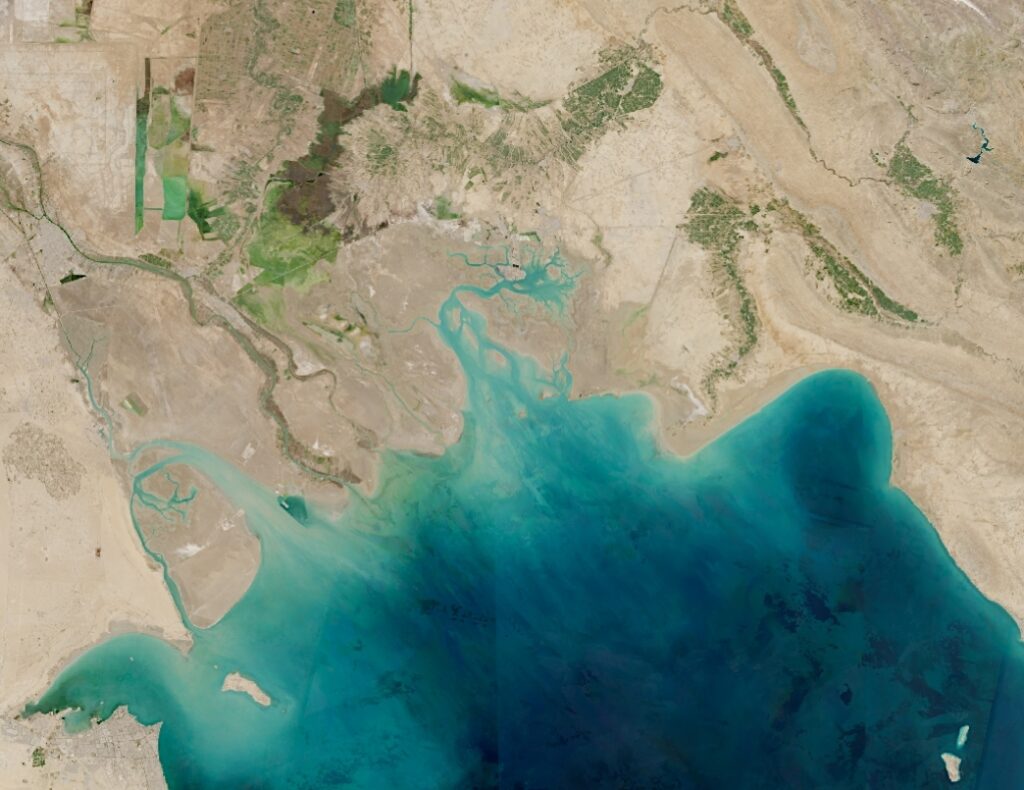
It is the most important watercourse flowing to the ROPME Sea Area due to its significant geographical, environmental, historical, and economic importance. It is formed by the confluence of the Tigris and Euphrates rivers in Al Basra, southern Iraq, before continuing its way toward the Gulf.
Diverse Ecosystems
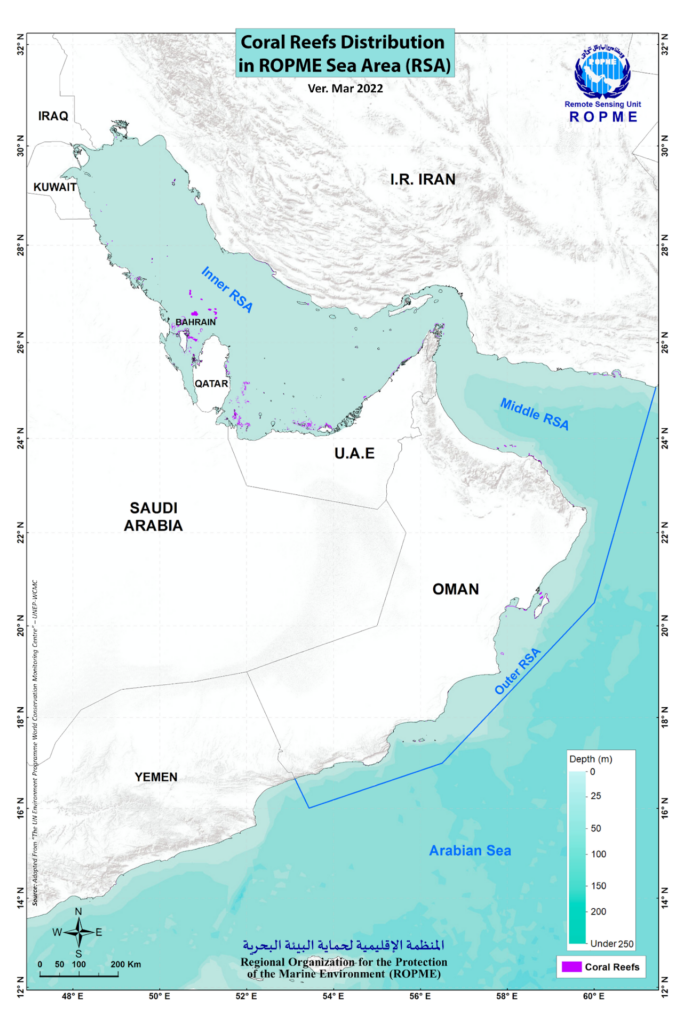
Coral Reefs
RSA coral reefs are among the most heat- and salt-tolerant in the world. Found mainly in Bahrain, Saudi Arabia, Oman, and the UAE, they support diverse marine life but are increasingly threatened by bleaching and dredging.
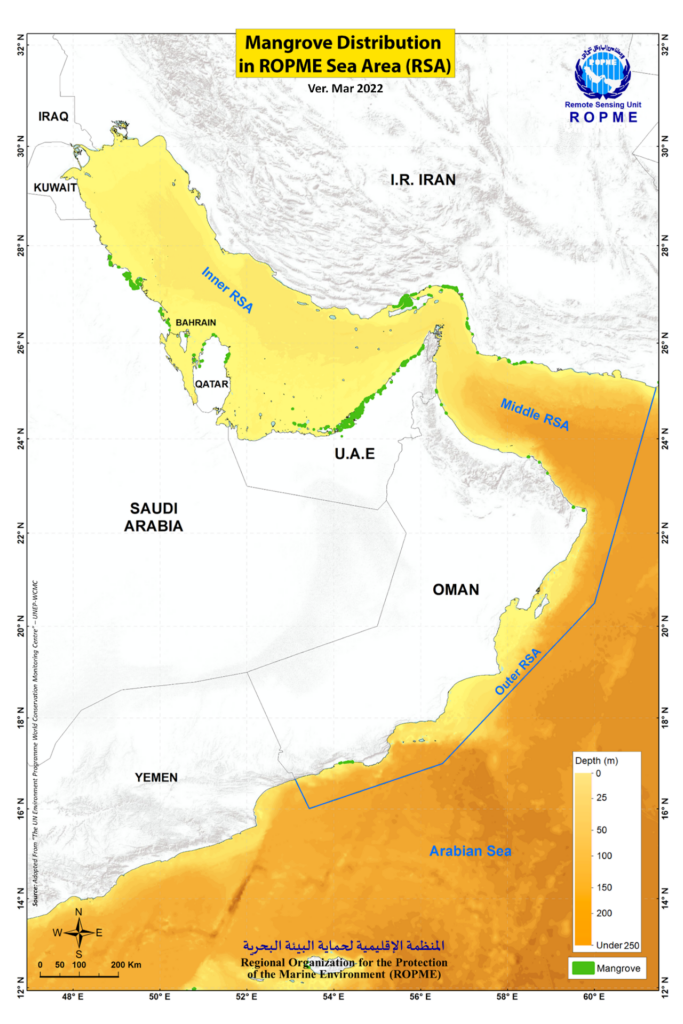
Mangroves
Mangroves, especially Avicennia marina, grow along tidal shores and protect coastlines, support shallow waters fisheries, and provide rare greenery in the region’s arid environment
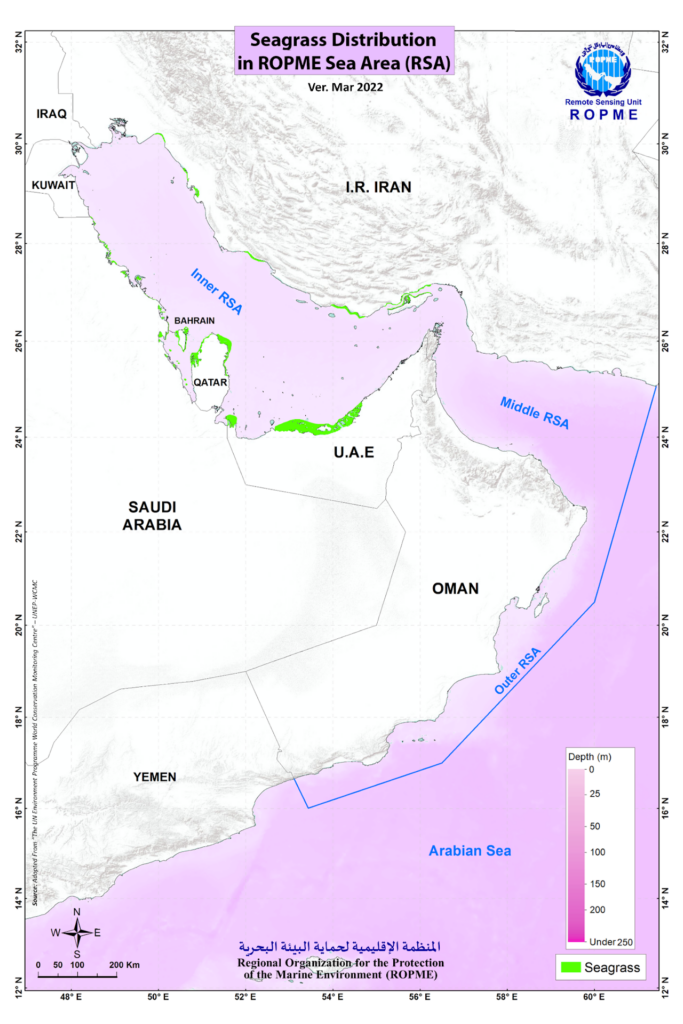
Seagrass
Seagrass meadows in shallow RSA waters support turtles, dugongs, and fish nurseries. Mainly Halophila and Halodule species, these ecosystems are key for biodiversity and carbon storage but vulnerable to sedimentation
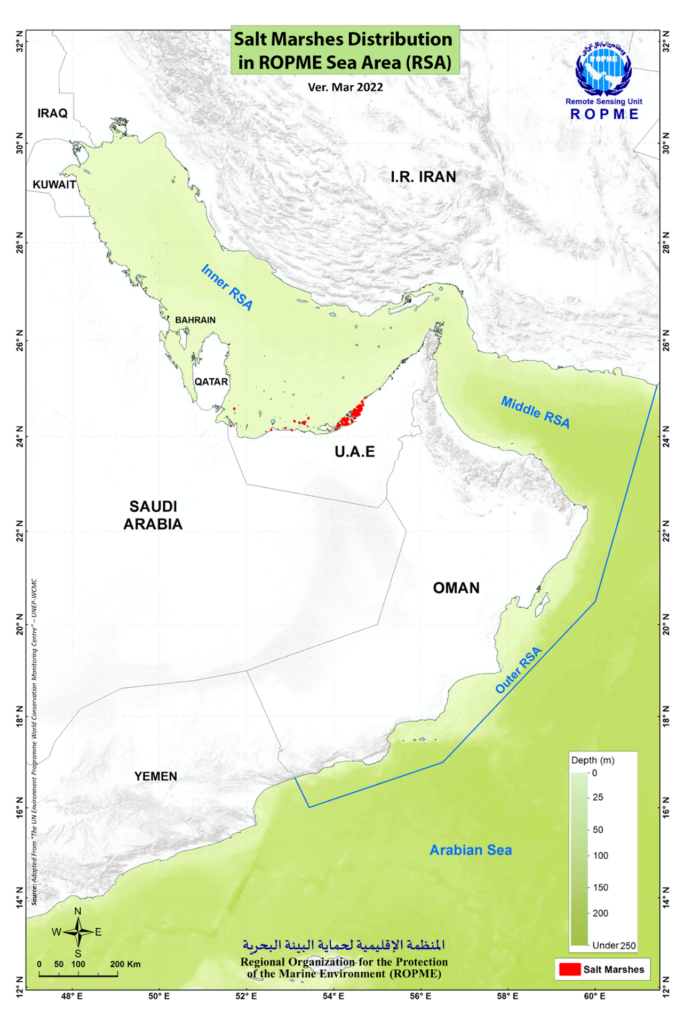
Salt marshes
Salt marshes grow in tidal flats and sabkhas, mostly in UAE around Abu Dhabi. They host salt-tolerant plants and birds, helping stabilize coasts and filter nutrients in fragile zones.
Distinct Habitats
Dugongs
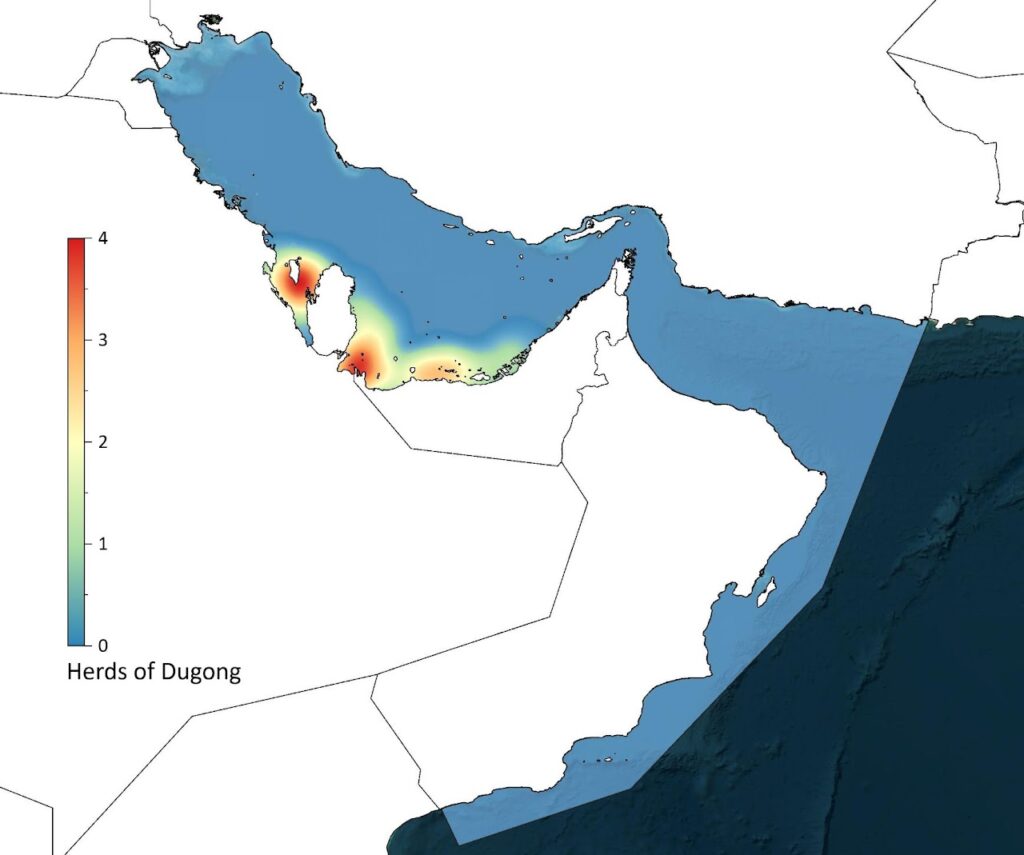
The ROPME Sea Area hosts the second-largest population of dugongs in the world, after northern Australia. These gentle, seagrass-feeding marine mammals are mostly found in the shallow, warm coastal waters between Bahrain, Qatar, and the UAE, where extensive seagrass beds provide ideal feeding grounds. Dugongs in the RSA are listed as Vulnerable on the IUCN Red List, facing threats from habitat degradation, boat strikes, and fishing gear entanglement. Their presence is a strong indicator of seagrass ecosystem health, making them a flagship species for regional marine conservation.
Bird Life
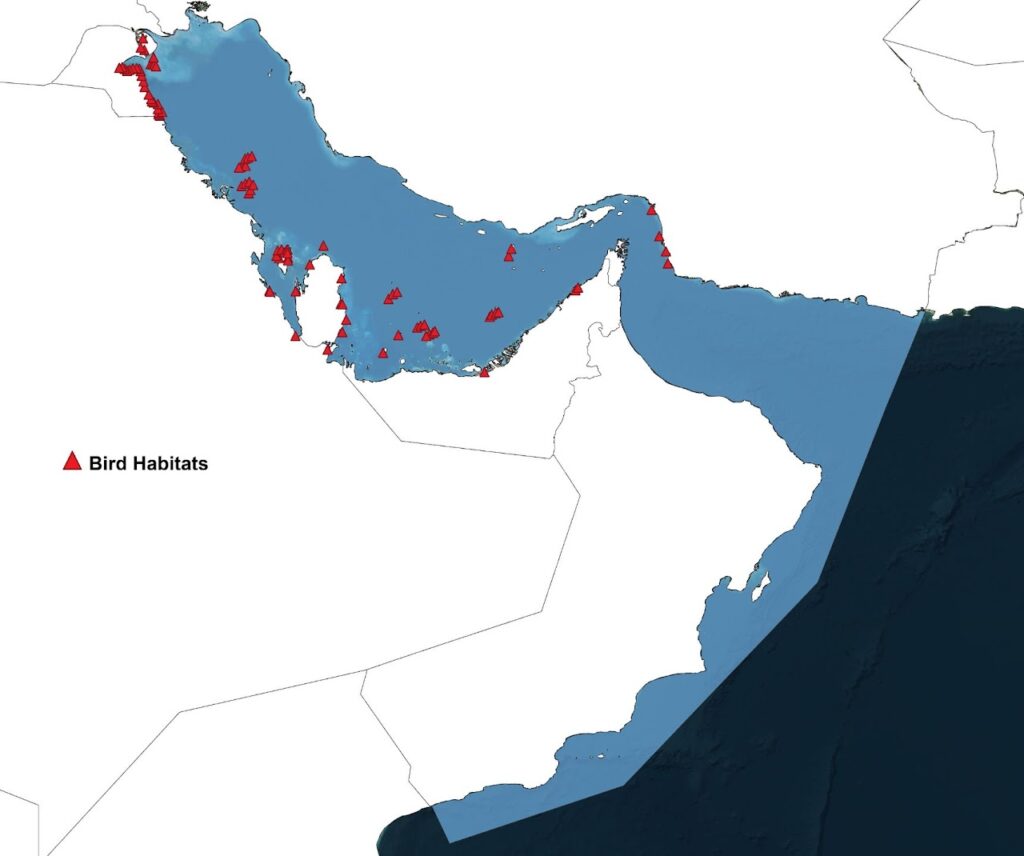
The coastal zones and islands of the RSA support a rich diversity of bird life, including resident species, migratory shorebirds, and breeding colonies. Salt marshes, mangroves, tidal mudflats, and remote islands serve as essential stopovers and nesting sites along the Central Asian–West Asian Flyway. Notable species include flamingos, ospreys, terns, and various sandpipers. Many small offshore islands in Bahrain, Kuwait, and Iran act as undisturbed bird sanctuaries, highlighting the importance of habitat protection in maintaining regional avian biodiversity.
Sea Turtles
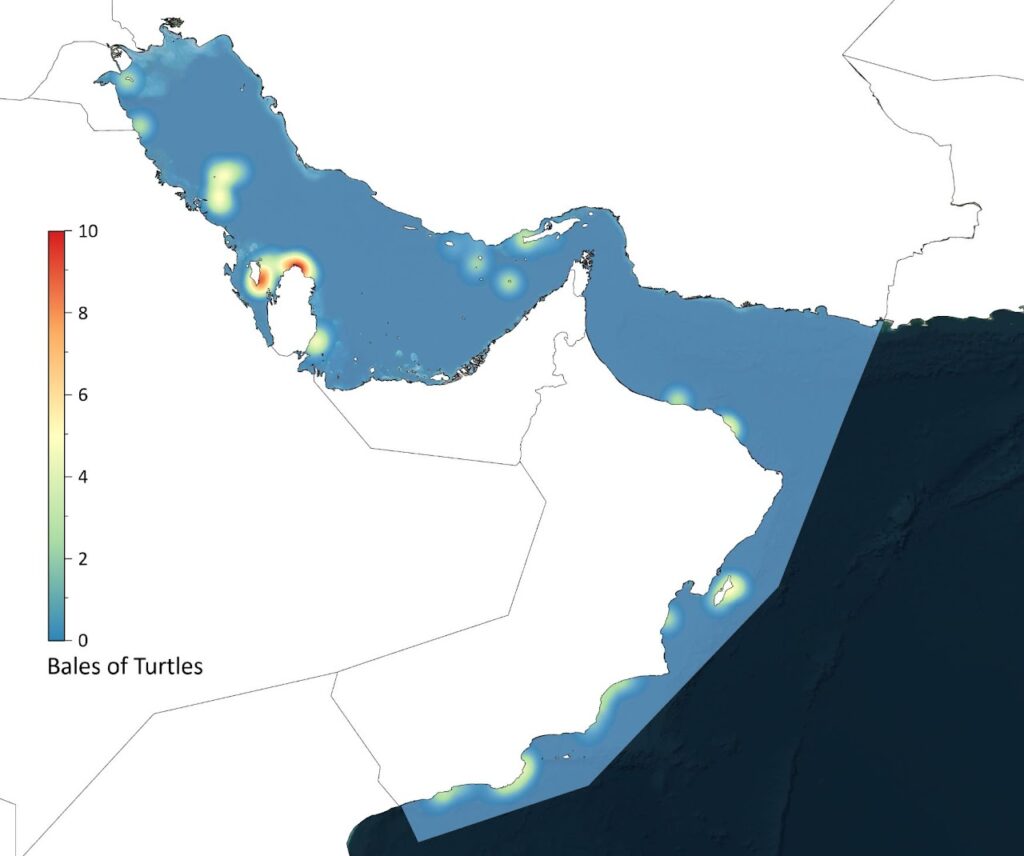
Five species of sea turtles are found in the RSA: the Green, Hawksbill, Loggerhead, Olive Ridley, and Leatherback turtles. Of these, the Green and Hawksbill turtles are the most common, regularly nesting along the coasts of Oman, Qatar, Bahrain, I.R.Iran, and the UAE. The region’s beaches, coral reefs, and seagrass beds provide critical habitat for feeding, breeding, and nesting. However, coastal development, light pollution, and marine debris pose growing risks to these ancient mariners. Protecting nesting beaches and reducing bycatch are key regional priorities.
Islands
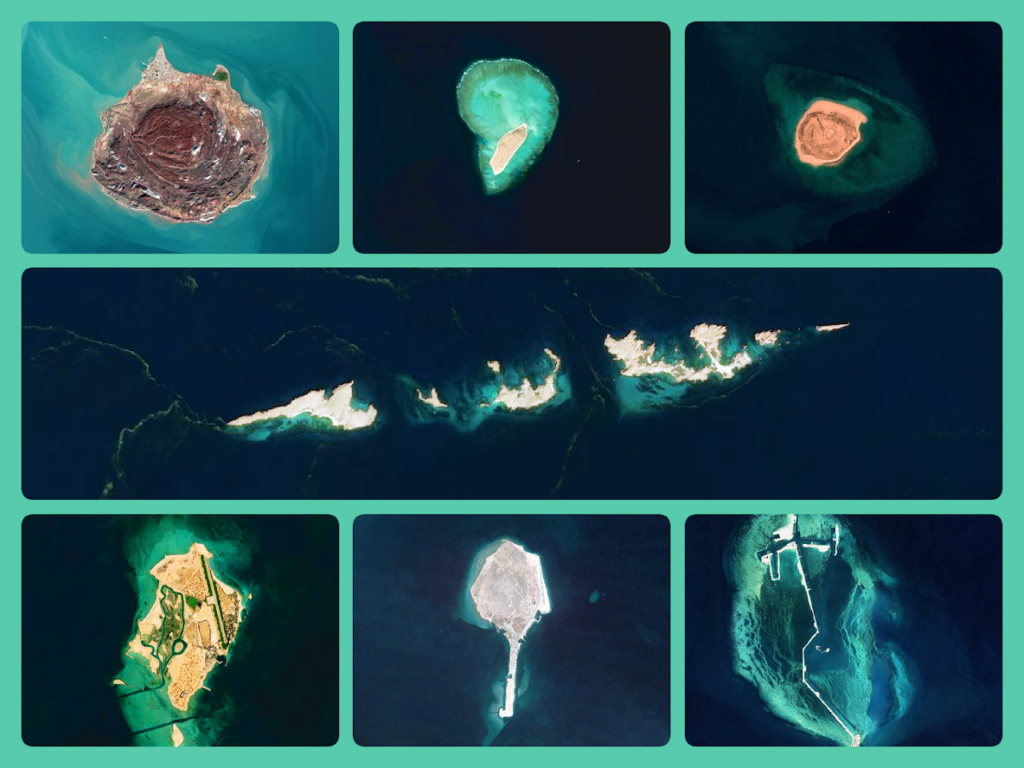
The ROPME Sea Area contains a high number of islands, with over 130 islands scattered across its waters, including major archipelagos such as the Iranian islands of Qeshm, reaching 1500 Km² in area, and small coastal islets that don’t surpass 500 m², many of which are ecologically sensitive or culturally significant.
These Islands were exploited for various purposes, ranging from oil production facilities under big environmental pressure to virgin land as a marine protected area.
Oceanographic Parameters
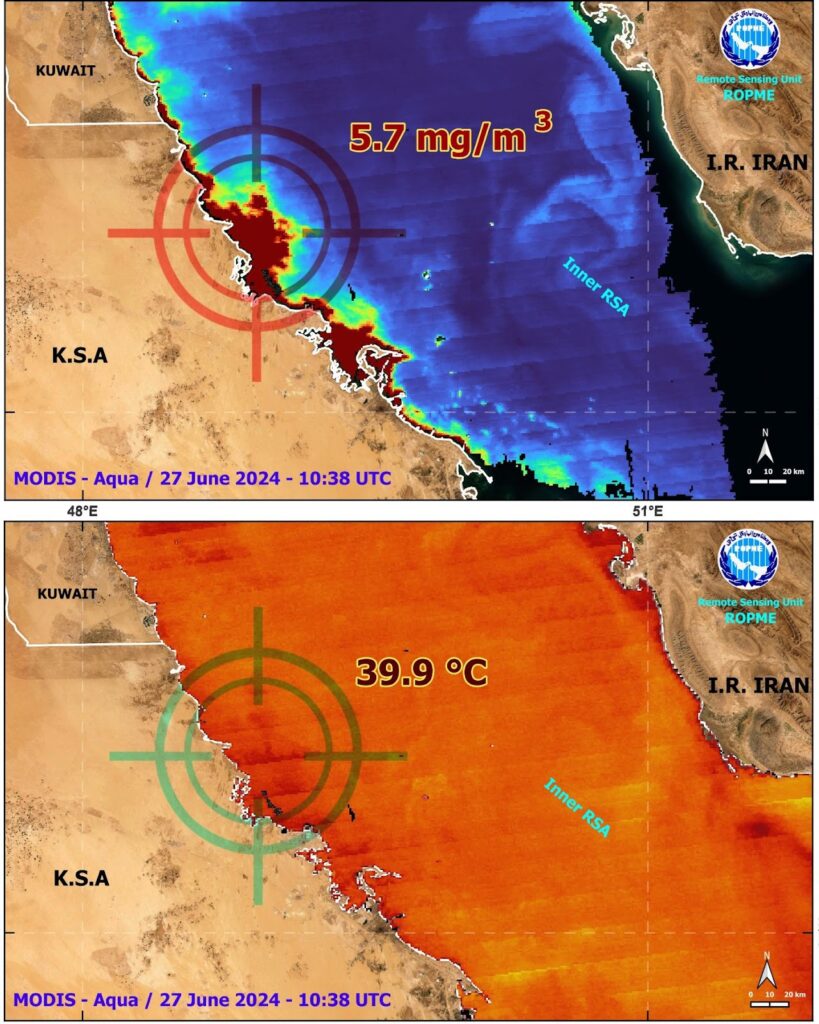
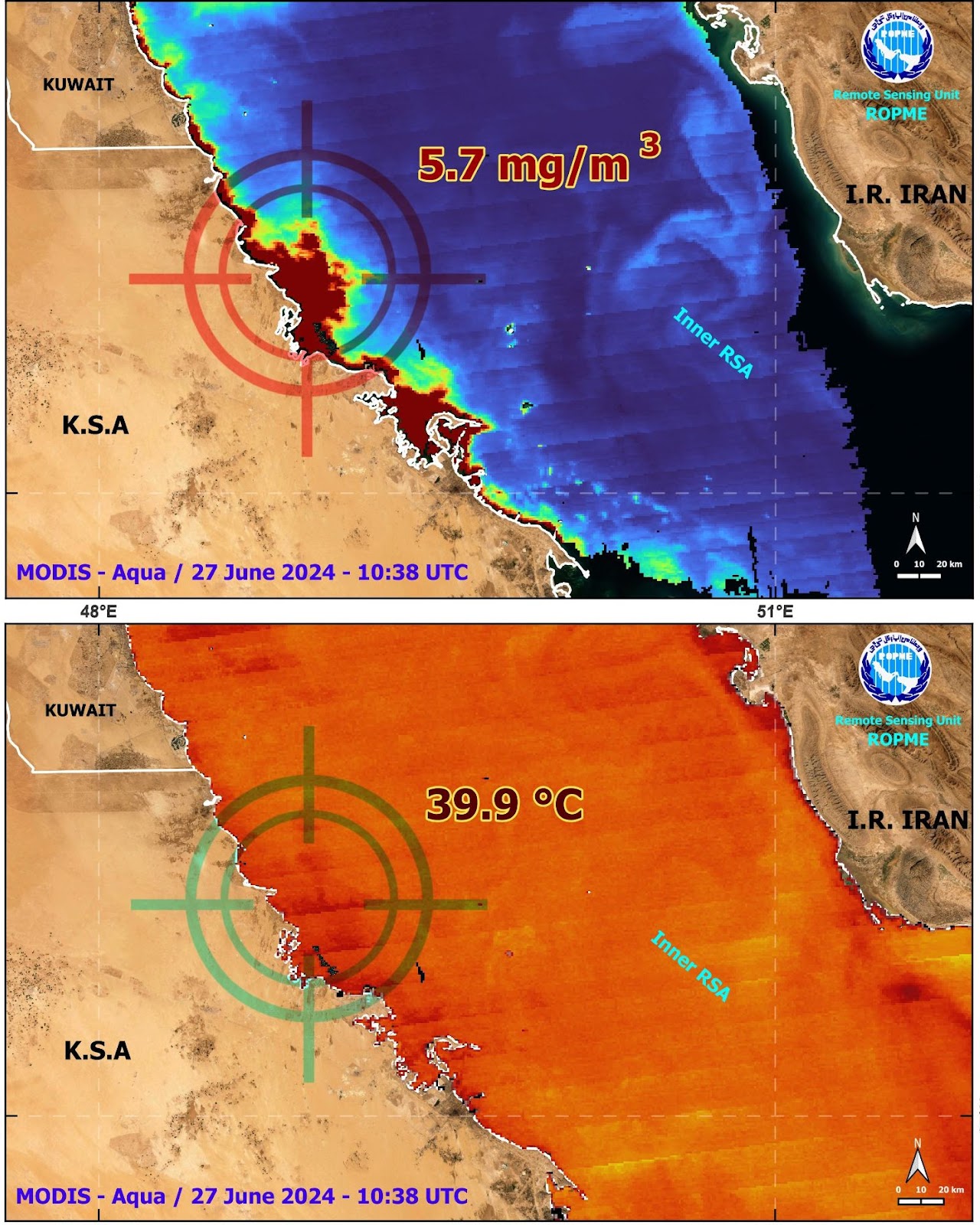
Monitoring physical, chemical, and biological oceanographic parameters such as SST, salinity, turbidity, and chlorophyll a is critical for understanding the health of the ROPME Sea Area.
The ROPME Sea Area experiences some of the highest sea surface temperatures on Earth, often exceeding 40 °C in summer, with salinity levels reaching over 42 PSU, especially in the northern basin in shallow areas.
These harsh conditions are worsened by the chronic high chlorophyll-a concentration, especially during the winter season when Algal blooms are the most frequent in the region, with concentrations reaching 6 mg/m³.
Satellite data provide regular observations of key marine indicators, including sea temperature, algal productivity (Chl-a), and turbidity.”